

By Judith Canty Graves
“Native plants give us a sense of where we are in this great land of ours. I want Texas to look like Texas and Vermont to look like Vermont.” – Lady Bird Johnson
By Judith Canty Graves
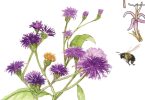
In recent years there has been an increased awareness of native plants as we learn about the effect of climate change and environmental stresses on pollinators. Gardeners everywhere are trying to reverse the trend of pollinator decline by selecting plants that are appropriate to their home environment and region.
Like so many others, I am learning about the importance of native plants in our environment, but my awareness is growing beyond that. As I research this topic, I am becoming aware that our own yards are complex ecosystems. Our gardens and yards are living habitats where birds, insects, flowers and soil all depend on each other.
As gardeners, we need to think in terms of what plants are best suited for our yards. There are many shrubs, trees and flowers indigenous to the mountains of NC. Having a variety of vegetation that is appropriate to our region can create attractive environments for beneficial insects and many types of birds.
One excellent place to find out about local flora is Carolina Native Nursery, located in Burnsville. Bill Jones, the founder and president, talked to me about why people should be interested in native plants. “A lot of us moved here for the natural beauty of WNC, so it makes sense to continue this in your own landscape,” he says. “Native plants do better because they have evolved over the millennia to the weather, soils and environment. Indigenous plants support the indigenous flora and fauna. These plants have evolved to the nutrient level of the soils and the type of weather.”
On my visits to Carolina Native Nursery I have noticed a great variety of healthy looking plants for sale. Bill and his staff are a knowledgeable resource for gardeners wanting to learn more. Their website is CarolinaNativeNursery.com.
Another important resource for gardeners interested in supporting local plants and insects is The Pollinator Victory Garden: Win the War on Pollinator Decline with Ecological Gardening by Kim Eierman, founder of EcoBeneficial. The book explains the details of pollination and how to attract and support bees, butterflies, bats and other pollinators. This is a must-have book for gardeners! You can learn more about this book and native plants at EcoBeneficial.com/pvg.
Many homeowners are now replacing their grass lawns with meadows of local flowers. The idea is that these meadows will create a thriving ecosystem for native bees, honey bees, wasps, birds and butterflies. Even renters who have small spaces can create container gardens with native plants on their patios.
Regardless of your situation, take a good look at your home landscape this year and consider how you can improve your environment with plants that are indigenous to your region.
Judith Canty Graves is an Asheville gardener with a background in photojournalism. Follow @TheObservantGardener on Instagram to see new garden photos daily.
Great article! I’ll definitely be looking into native plants for my yard this year