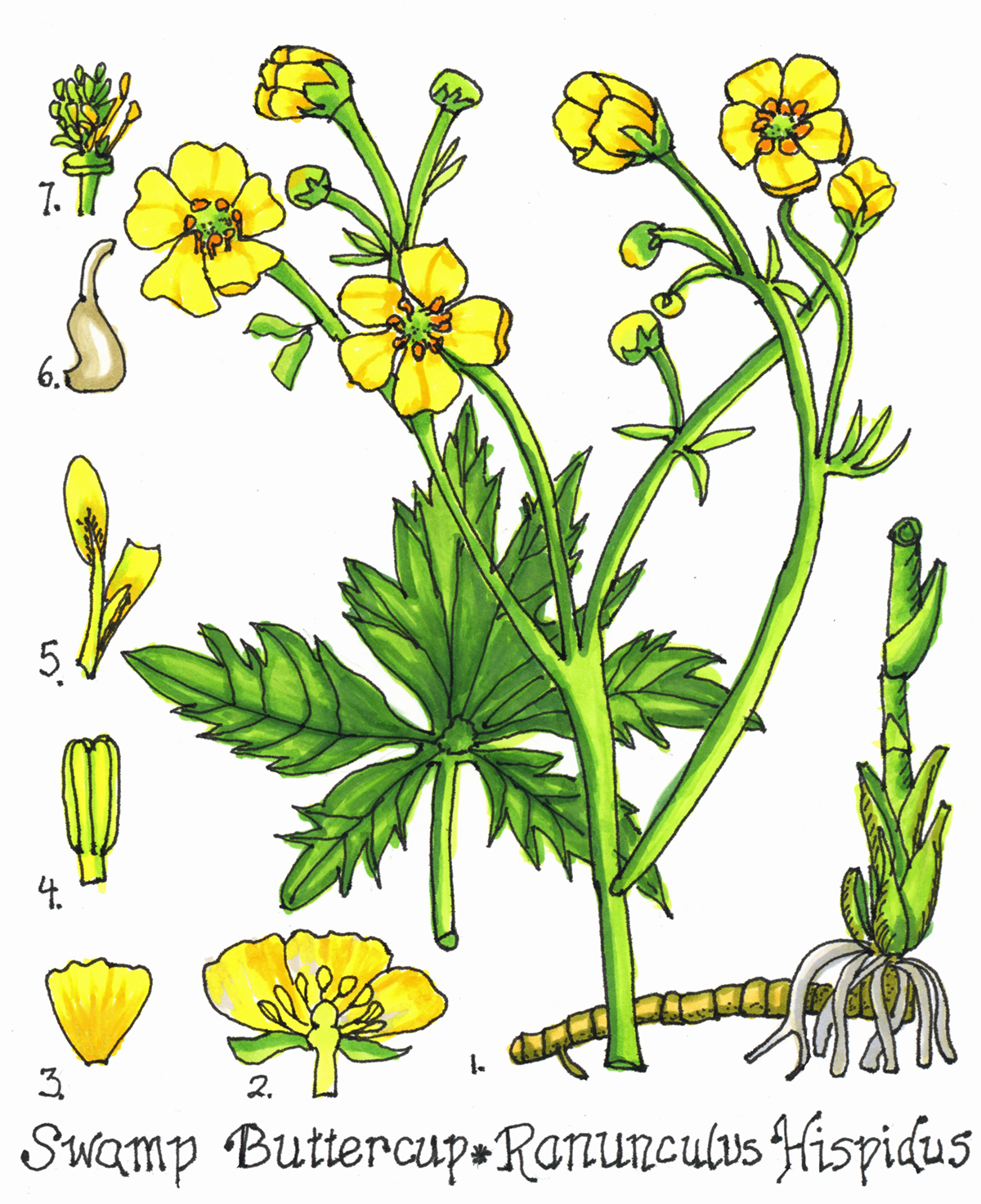
Stephanie Sipp, illustrator
The Literary Gardener
By Carol Howard
As we pull a few weeds from our vegetable plots under the summer’s sun, perhaps we dream of the evening’s glorious fireworks on the Fourth of July. If so, we might take a moment to rest in the shade and let our thoughts drift back to those founding gardeners of the American Revolution.
Facing a daunting 32,000 British troops in New York in the summer of 1776, General George Washington set aside time from his military planning to write home to Mount Vernon with instructions about gardening. He directed his estate manager to establish an ornamental garden of American native plants and trees. Washington favored dramatic local species, such as the tulip poplar, with its stately hardwood column and majestic height. American gardens were to be grand, impressive affairs. What an extraordinary set of plans for the commander in chief to be thinking about as he confronted overwhelming military odds, notes garden historian Andrea Wulf.
If the timing of Washington’s decision to plant the garden was remarkable, so was the patriotic call for native species. Generations of colonial gardeners had mixed local crops with familiar Old World European vegetables, fruit trees and ornamentals. Today, a native species garden is a sensible, sustainable choice, but in 1776 it was revolutionary. Colonial estate owners who wished to show off their wealth and taste through a garden design of rare exotic plants would think twice before deliberately planting a bush from the wilderness that encroached on their well-ordered grounds. After the American Revolution had ended, and the new nation was struggling to define itself, Washington’s fellow Virginian Thomas Jefferson waged an agricultural public relations campaign. He disputed the European scientists who claimed that American crops were weak and that the American climate was unwholesome. He single-mindedly set out to prove them wrong through planting experiments and by sending abroad samples of hearty American flora and fauna. Jefferson considered Georgia farmers’ successful planting of rice seed he had sent them so important to the young nation’s reputation that he placed that feat on a list of his patriotic achievements, alongside the Declaration of Independence.
Benjamin Franklin, for his part, believed that agriculture was the only “honest way” for the young nation to gain wealth. The small, thriving farm became the image of American independence. Ever the innovator, the man who flew a kite in search of electricity also grew beans in order to replicate an Asian food curd that fascinated him, which he called “tau-fu.” In this case, the tofu was made from kidney beans rather than soy.
Washington, Jefferson and Franklin—along with John Adams and James Madison—all befriended or visited the Philadelphia home and gardens of the famed botanist and horticulturist John Bartram and his renowned naturalist son, William Bartram. The cultivation and trade of native and imported seeds, the new agricultural experiments, the celebration of the American landscape and even some early forms of conservation were all of interest to the founding fathers and their distinguished botanist colleagues. Today, visitors to our area may find it fitting to honor the founding gardeners by hiking along Bartram’s Trail in the breathtaking Nantahala region.
Carol Howard is Dean of the Faculty at Warren Wilson College. Located on more than 1,100 acres near Asheville, Warren Wilson offers innovative educational programs ranging from Sustainable Agriculture and Ecological Forestry to Traditional Music of Appalachia. For further reading, see Andrea Wulf, Founding Gardeners: The Revolutionary Generation, Nature, and the Shaping of the American Nation (2011).