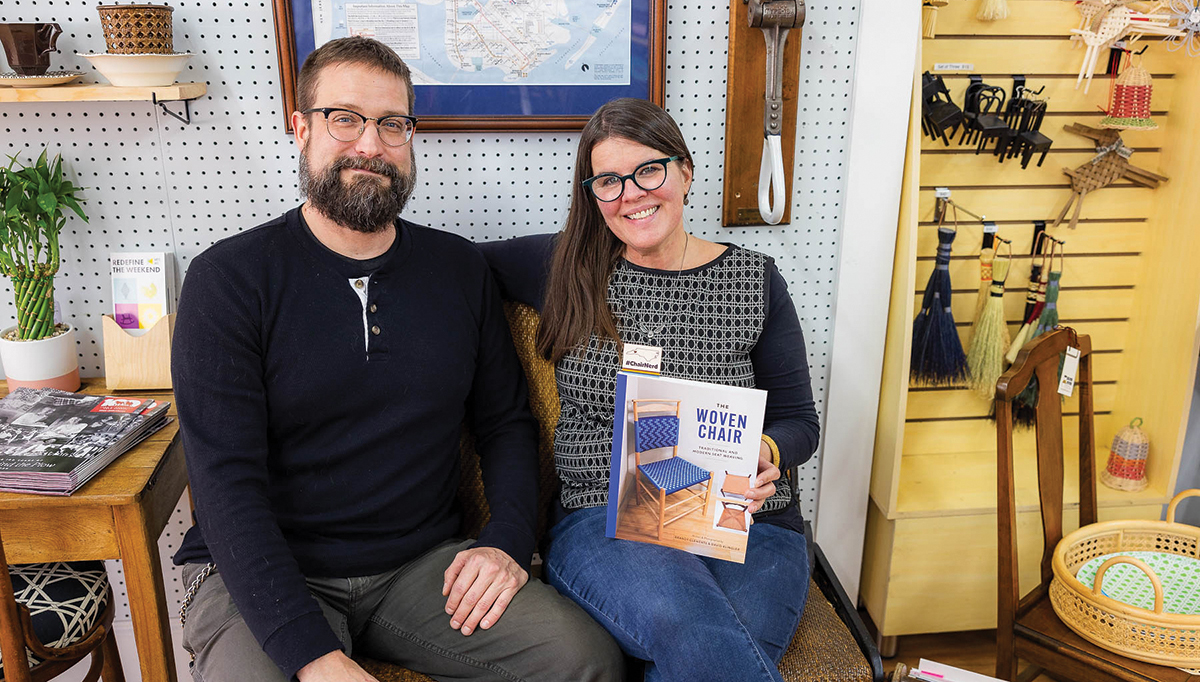
Dave Klingler and Brandy Clements. Photo by Robert Alan Grand
Brandy Clements and Dave Klingler, owners of the Silver River Center for Chair Caning and instructors of chair seat weaving, call themselves “Chair Nerds” for their embrace of this traditional—and practical—craft. Clements is a fourth-generation practitioner of the art and Klingler’s interest dates back to the early 2000s when the couple met and, eventually, opened a small shop.
In 2021, during COVID, they began writing a book to share their knowledge. Despite some daunting setbacks, including final edits due when Helene hit in 2024, The Woven Chair: Traditional and Modern Seat Weaving has now been published by Blue Hills Press.
“We obviously weren’t able to work on it for all of October (2024) and most of November due to connectivity issues, cleaning up and looking for a new shop,” says Clements. Their River Arts District studio, located at CURVE Studios & Garden, was flooded during Helene. They had occupied the space for 10 years, and were able to save about 100 chairs, but little else.
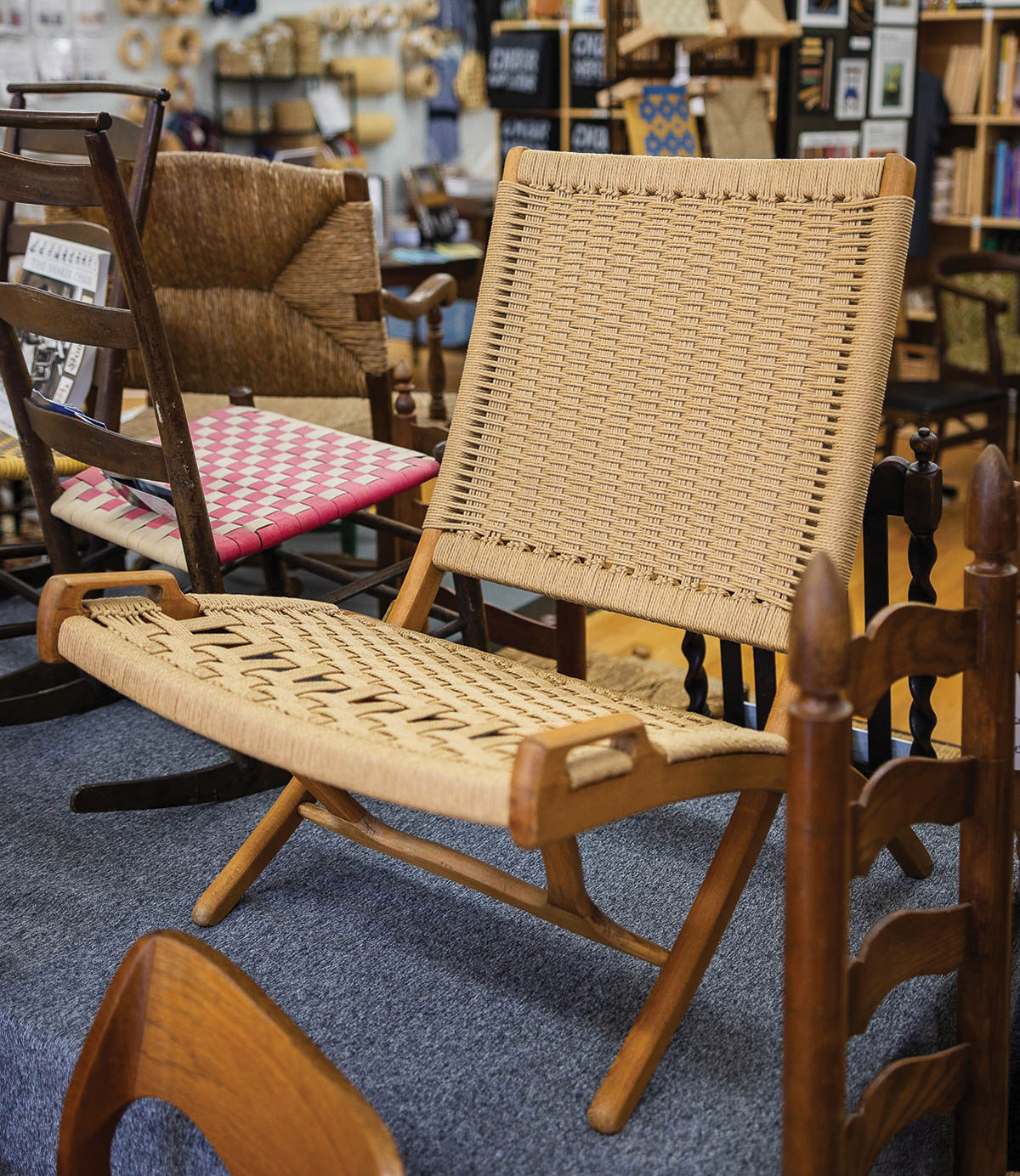
Yugoslavian Folding Chair. Photo by Robert Alan Grand
“In early 2025, our colleague David Johnson in Los Angeles (who wrote the foreword) experienced the wildfires, so the final edits were made to the introduction to stress the importance of preservation of traditional craft,” Clements says.
At the Silver River Center, now located in Weaverville, Clements and Klingler teach classes throughout the year. “Many colleges have professional craft programs and many younger students discover us through the craft school circuit (Arrowmont, Penland, John C. Campbell Folk School),” Clements says. “We teach in elementary, middle and high school.” Their space also functions as a museum with a collection of chairs comprehensive in terms of construction, seat design and history.
The book is a resource to those who can’t attend classes, and, Klingler believes, benefits those who use it. “Learning a new skill keeps your brain nimble,” he says. “Working with your hands connects people to their project and the entire history of the piece. The more you know about something, the more you appreciate it. The sense of accomplishment when finishing a project never gets old. The Woven Chair includes repair methods for common structural issues, a tools/skills library and instructions on the Yugoslavian Folding Chair, a Danish cord weave that isn’t found in readily available manuals. Step-by-step instructions are presented as skill-building exercises, giving weavers the ability to apply methods to a variety of projects instead of a recipe for a single chair frame.”
The book also makes a place for seat weaving in today’s world. “I thought it was important to include work by our colleagues to show that the craft is a historical craft but it is also being practiced by contemporary makers, many of whom are doing innovative things, and their work is shown in this book,” says Clements. “Our career would not have been possible without the support of the broader craft industry, so it was important to show that there is a contemporary chair caning community, that it’s not a ‘lost art.’” And, she adds, “Chairs are special. They hold memory as well as your body. They reflect culture, time and place as well as memory and craft.”
Learn more and purchase the book at SilverRiverChairs.com. Silver River Center for Chair Caning is located at 32 North Main Street, Weaverville, and is open by appointment. Local craft shops and bookstores also carry the book.