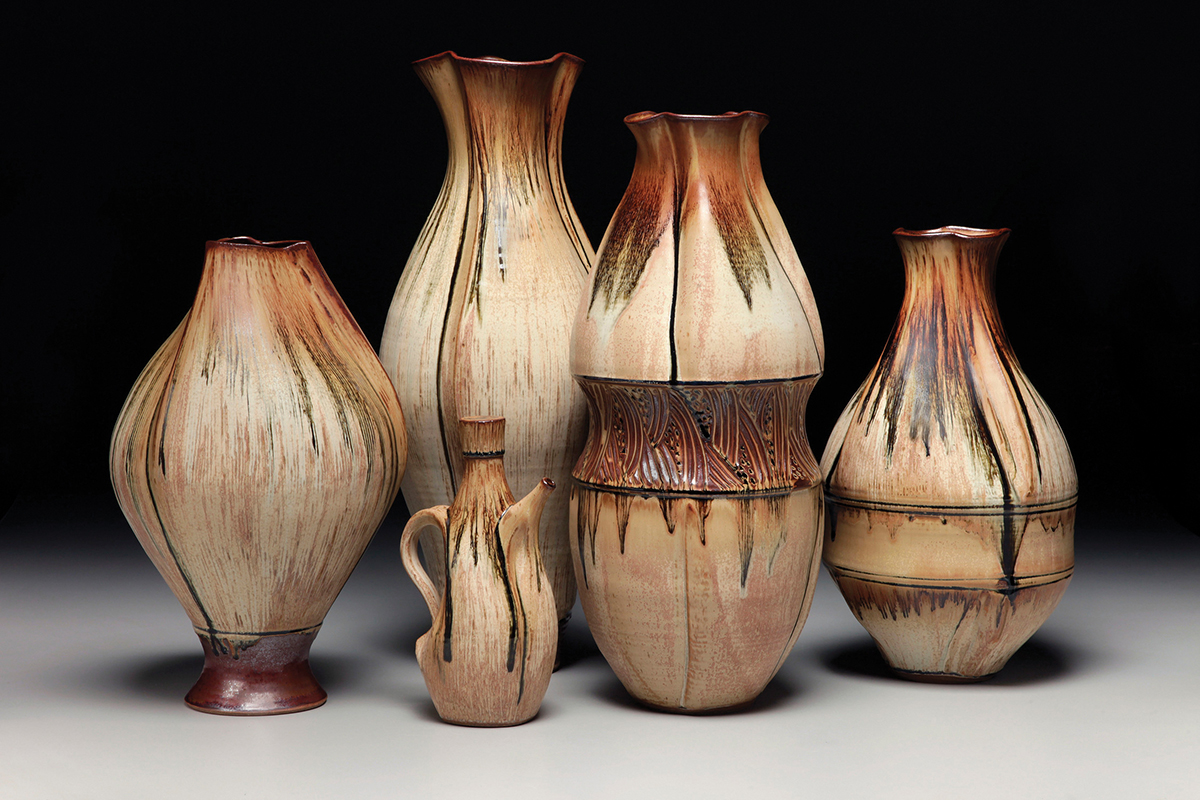
Sarah Wells Rolland, artist
By Emma Castleberry
For many members of the Southern Highland Craft Guild, the destruction of Hurricane Helene extended beyond physical workplaces. Artists lost tools essential to their livelihoods, collections built over decades and the communities that had formed around their studios. Some were forced to relocate entirely. As the two-year anniversary of the storm approaches on Sunday, September 27, several artists who were among those hardest hit have returned to full-time work, reopened businesses or established new studios.
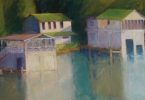
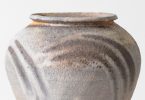
“The recovery journey has undoubtedly been one of the most difficult seasons of my life,” says Sarah Wells Rolland, founder of The Village Potters Clay Center. “There were many days when the devastation felt so overwhelming that the path forward seemed impossible, but then there were also days when I was filled with hope and determination.”
The Village Potters reopened earlier this year after nearly two years of seven-day work weeks for Rolland and her team: fundraising, meeting with donors, writing grants and searching for a permanent home outside the floodplain.
Her own ceramic practice largely stopped as she concentrated on keeping The Village Potters and its community alive. Throughout 2025, she traveled to teach 15 workshops in eight states, using the work to generate recovery funds and bring attention to the devastation across Western North Carolina.
“As a working ceramic artist, I had to set aside much of my own creative process so I could focus on our recovery, rebuilding and bringing our beloved ceramic community together again,” she says. “Today, I feel I am finally approaching a season where I can return to my studio, my sacred space, and will create again. I believe that when my hands are back in clay, joy will begin to rise in me again.”
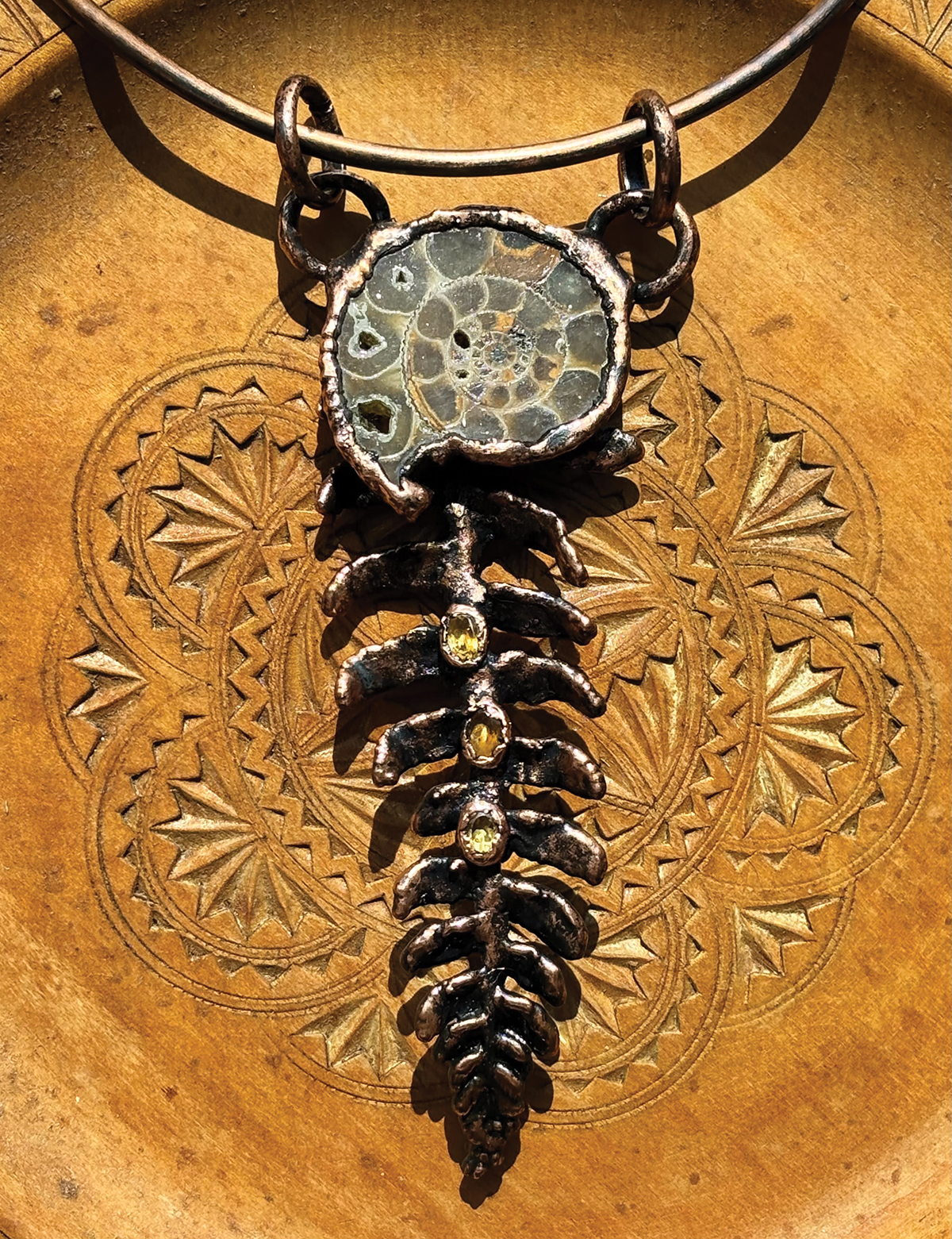
Nina Kawar, artist
For Rolland, like for many other artists, the reopening is a milestone, but not the finish line. The Village Potters is still searching for a permanent home and rebuilding financially after nearly two years of disruption.
“Recovery doesn’t end when the doors reopen, it continues every day through countless decisions, pivots, responsibilities and investments that strengthen the future,” Rolland says.
For Brandy Clements and Dave Klingler, rebuilding Silver River Center for Chair Caning has similarly involved both loss and reinvention. Clements is a fourth-generation chair caner, and the center she operates with her husband is an official education center of the Southern Highland Craft Guild and the nation’s only chair caning school and museum. Before Helene, the business had spent 15 years in Asheville’s River Arts District.
The storm forced Silver River from its longtime home at CURVE Studios and Garden. After Helene, the Clements managed to save about a quarter of the shop, including important chairs and tools, but lost infrastructure, materials and other pieces of the collection.
Silver River Chairs eventually relocated to Weaverville, where the new ground-floor space offers climate control that allows the couple to teach throughout the year. The location also introduced them to a different audience, including more residents from Madison, Yancey and Mitchell counties and others familiar with Western North Carolina’s ladderback chair tradition.
Still, the new space could not immediately replace what they had lost.
“It still took over a year before we were comfortable in the space, before we could unpack our museum and feel settled enough to invite students in for classes,” Clements says.
Students and customers have helped affirm the value of continuing.
“The reaction has been almost as overwhelming as the storm, but in a positive way,” Clements says.
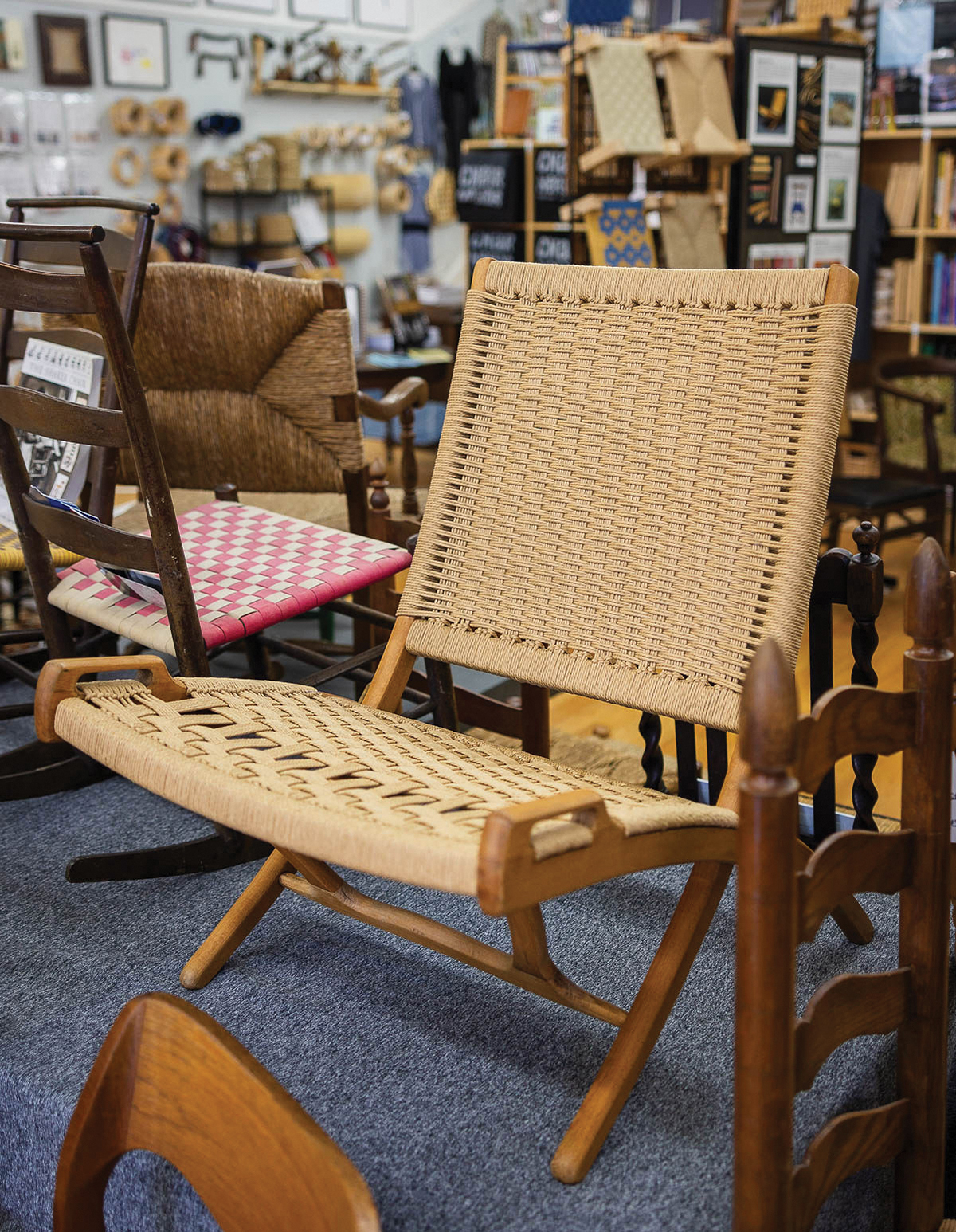
Brandy Clements and Dave Klingler, artists
Today, Silver River is again teaching classes year-round and welcoming visitors to its chair museum. Clements and her husband have also published The Woven Chair: Traditional and Modern Chair Seating, which was released in 2025 after a six-month delay. Their long-term goal is a live-work arrangement where they can teach from a home studio, while they are beginning to explore the possibility of sending the museum collection on tour.
“Just because we are operating in a new space, it doesn’t mean it is a light switch and everything is better than ever,” Clements says. “It’s constant adaptation, continuously settling in.”
For jeweler and sculptor Nina Kawar, Helene brought an abrupt end to a ceramic practice she had spent 16 years developing. Kawar had joined the Southern Highland Craft Guild in August 2024. One month later, her studio at Marshall High Studios was destroyed by flooding.
“Rebuilding my career has been a journey that has asked me to slow down and honor my body, while navigating this pivot with patience and trust,” says Kawar. “Beyond the physical, the hardest part has been the inner work of finding peace, trusting my creativity and letting go of an identity that was washed away in the storm.”
Financial assistance from the WNC Craft Futures Fund and the Adolph and Esther Gottlieb Foundation helped Kawar replace tools, materials and furniture and begin rebuilding her practice. Her recovery has also altered the direction of her work. Before Helene, Kawar had been experimenting with copper electroformed jewelry for about a year and a half.
“Fortunately, this jewelry survived the flood as it was left in my car before the storm, becoming my saving grace and the foundation for my next creative chapter,” Kawar says.
Kawar has since expanded that work while rebuilding her clay practice. Her new body of work, Embodied Circuit, combines salvaged porcelain abstract sculptures with copper electroforming and explores resilience, embodiment, awareness and transformation.
“Although I still consider myself a sculptor, I am embracing this new chapter as a jeweler alongside the rebuilding of my clay practice,” Kawar says. “Now that I have reestablished a studio and have dropped back into a creative flow, seeds I had planted over four years are starting to bloom.”
For Kawar, as for Rolland and Clements, the word “recovered” remains complicated. Studios can reopen and tools can be replaced while the emotional consequences of losing years of work continue to unfold.
“Recovery to me embodies both physical and emotional phases,” Kawar says. “I have recovered the tools, materials and space I need to create, while emotionally it has not been as linear.”
Across their different craft traditions, recovery has not meant restoring everything exactly as it was—it has meant creating something new.
“My focus is rarely now on what we lost but on what we’re building,” Rolland says. “I believe our strongest days are ahead of us.”
Learn more at TheVillagePotters.com, SilverRiverChairs.com, NinaKawar.com, and CraftGuild.org.