Michael Gard, artist
By Emma Castleberry
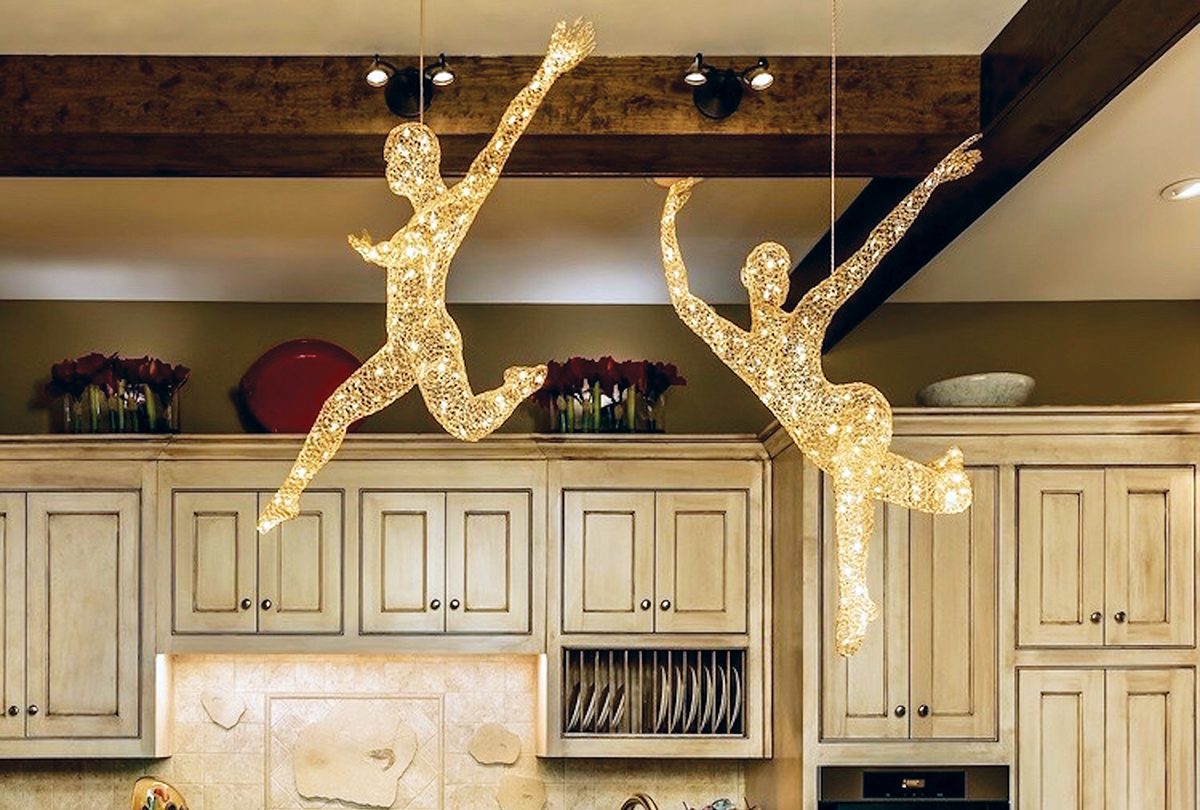
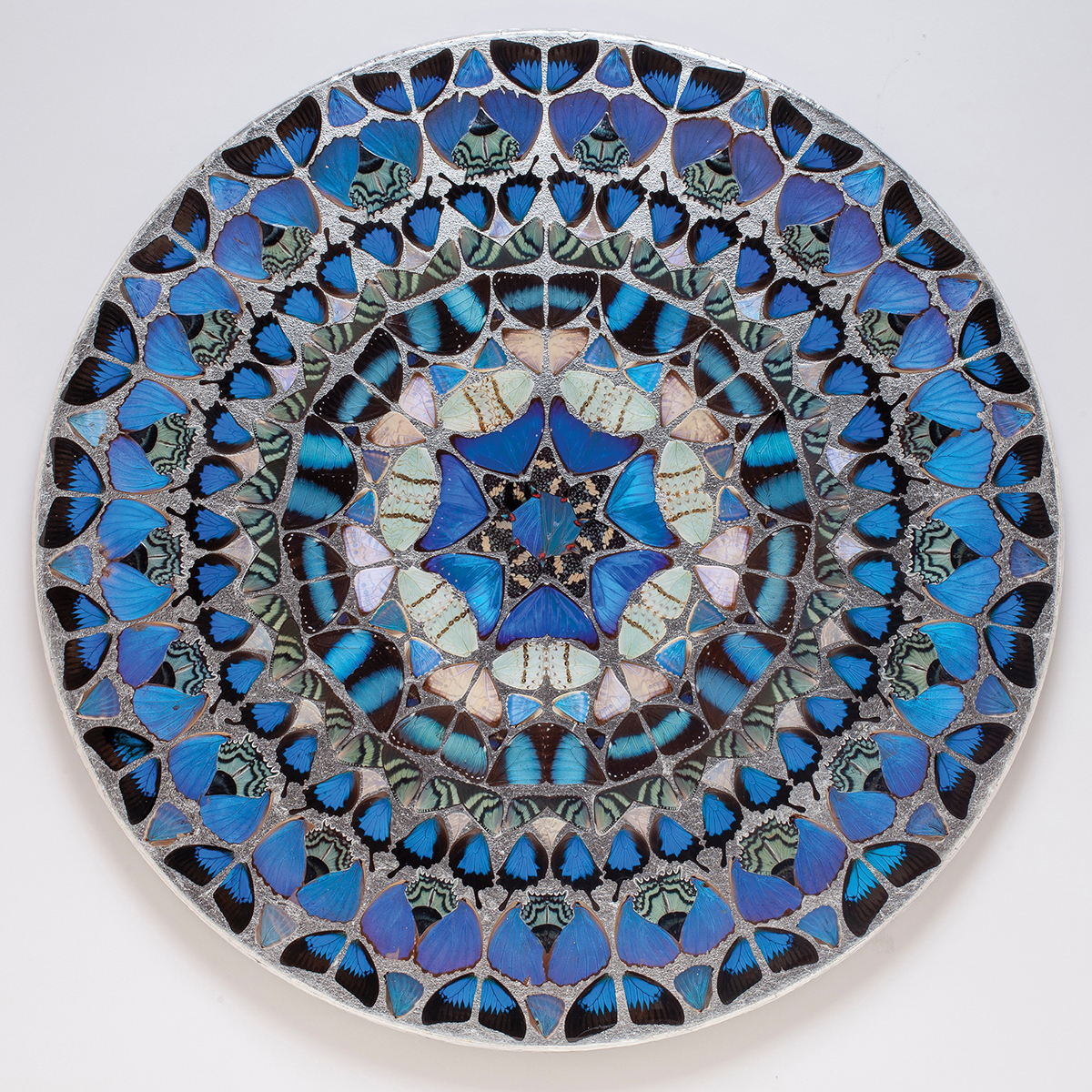
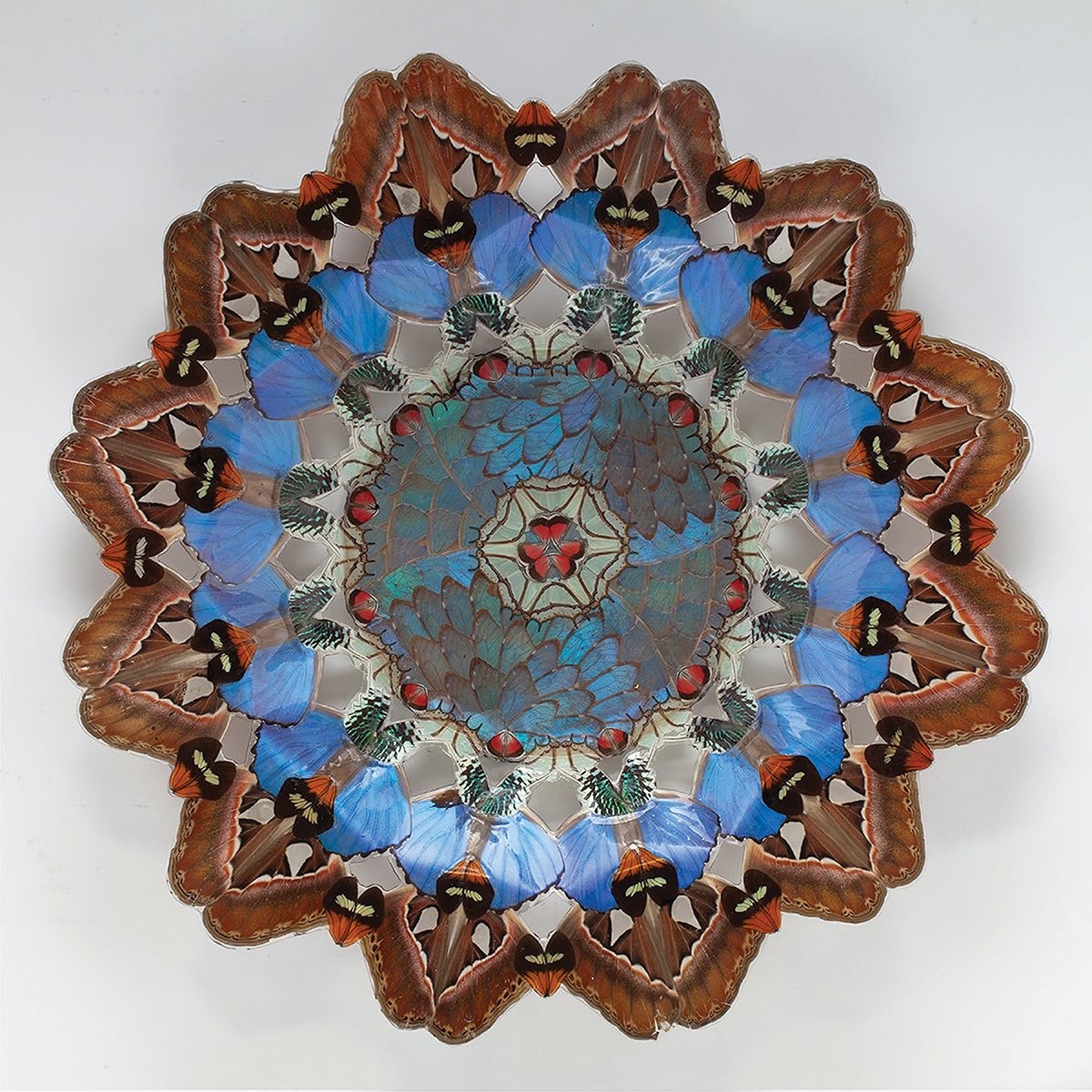
For nearly four decades, artist Michael Gard has transformed wire into delicate, suspended sculptures of dancing human figures. More recently, he has turned his attention to butterfly wings, arranging them into mandalas that reflect the symmetry of nature.
In August, Gard was juried into the Southern Highland Craft Guild in both metal and mixed media, an uncommon achievement that recognized two dramatically different bodies of work.
Michael Gard, artist
“It’s certainly nice to have both recognized,” says Gard, who relocated from San Francisco to Asheville in April of 2025. “I’ve worked in wire for 38 years, but only started making mandalas during the pandemic.”
Gard’s wire sculptures originated in his teenage years, when he began experimenting with materials in his high school’s art classrooms. He started by creating a one-inch sphere of steel wire, followed by a three-inch sphere and then an opening box.
“At that point, my mother’s friend asked me to make a three-inch sphere in silver, and that was my first sale,” he says. “Over the years the wire pieces have become bigger, figurative dancer mobiles. My largest piece, a 13-foot winged figure, has been lit and rotating in the Peace Center in Greenville, SC, since 2014.”
While his wire sculptures explore the human form and movement, Gard’s butterfly-wing mandalas emphasize symmetry, color and repetition. Measuring up to 72 inches across, the botanical compositions feature exotic butterfly wings preserved in resin and assembled into elaborate circular patterns reminiscent of Andalusian tilework.
“I’ve always made circular or spherical artworks,” Gard says. “Mandalas—the Sanskrit word for ‘circle’—assembled from butterfly wings were first produced by a Brazilian craftsman named Carlos Zipperer in the 1920s. Those were presented as decorative tea trays. My innovation to preserve the wings uses lamination and resin, which make the works vastly more durable and displayable.”
Michael Gard, artist
The butterflies used in his work come from farms in tropical regions where the species are native. Gard imports dried specimens, primarily through wholesalers in Peru and Indonesia, using online translation applications to communicate with his international suppliers.
“Butterflies are farmed around the world in the areas to which they are native,” Gard says. “This feeds demand from the decorative specimen framing industry, scientific collections and live flight butterfly houses. In general, butterfly farming is an ecologically benign practice, since it necessitates preservation of large areas of forest, beneficial for countless species. Unlike mammals, wild Lepidoptera will thrive regardless of collection or farming, as long as their habitat remains.”
Although his two art forms share a fascination with pattern and precision, Gard deliberately maintains their distinct identities.
“I like that I can switch between two very different media,” he says. “At this point in my career my hands cannot weave wire every day, so mandala days provide rest. Both media require long periods of concentration and repetitive motion that most people couldn’t do. I find it meditative rather than maddening.”
Learn more about the artist at MichaelGard.com and Mandalas.MichaelGard.com. Learn more about the Guild at SouthernHighlandGuild.org.