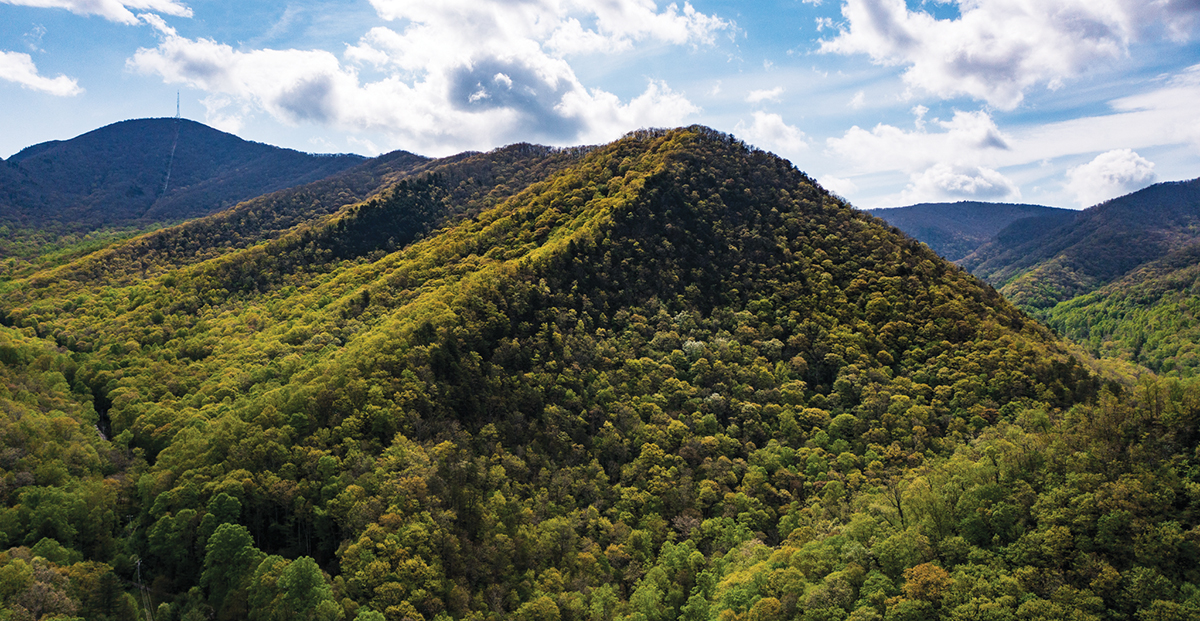
Pisgah Creek area
By Lauren Stepp
The Southern Appalachian Highlands Conservancy (SAHC) has transferred 1,060 acres in Haywood County to the State of North Carolina, placing the land into public ownership under the management of the North Carolina Wildlife Resources Commission (NCWRC).
The newly protected acreage includes properties near Mount Pisgah, Cold Mountain and White Oak Mountain, with land added to both Pisgah Game Lands and Cold Mountain Game Lands, as well as a large tract adjoining Great Smoky Mountains National Park. Together, the sites form important buffers around existing protected areas and help connect large blocks of conserved land across the county.
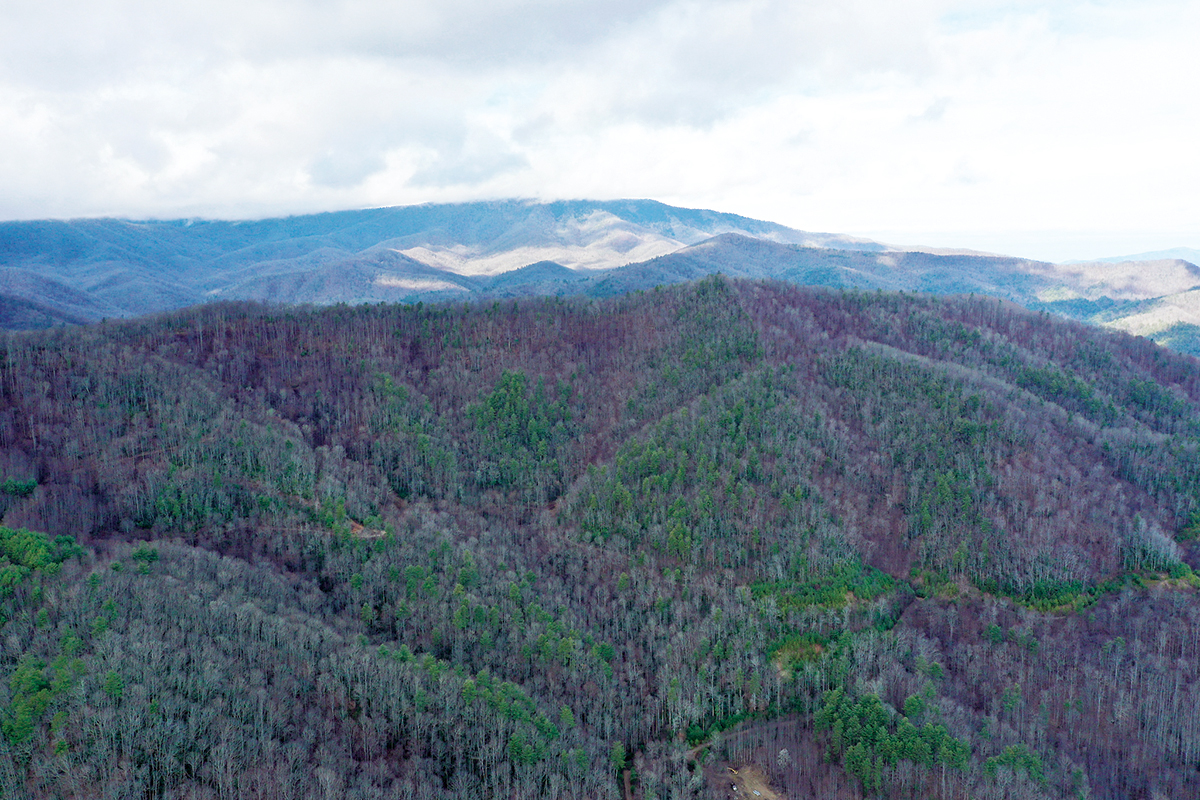
White Oak Mountain. Photo by Adams J. Wood
Hanni Muerdter, SAHC’s conservation director, says the transfers build on a long-standing partnership with NCWRC that has protected more than 4,000 acres of game lands across Western North Carolina.
“Working together for over 20 years, we have an understanding of what might be good projects to partner on,” says Muerdter. “And, as a small staff, SAHC has limited capacity to manage land for public use, so we are grateful to be able to transfer land to our agency partners to enable suitable land to be enjoyed by the public.”
That partnership allows SAHC to take action when large, high-priority tracts come on the market, particularly those vulnerable to development pressure. In some cases, SAHC helps raise funding so NCWRC can purchase land directly. In others, the conservancy acquires property first and later transfers it to the state.
“In each of these transactions, SAHC and NCWRC visit potential opportunities together early on to understand each other’s vision, priorities and needs,” says Muerdter, explaining that the Haywood County properties were a priority because of their scale. Large, intact parcels are increasingly rare, particularly those exceeding 400 acres, and securing them now helps prevent fragmentation before subdivision drives up the cost of protection.
Geography also played a key role. Haywood County is shaped like a bowl, with many of its water resources originating on the high slopes around the county’s outer rim. Because water flows downhill from these elevated areas, protecting land along the rim is critical for maintaining water quality and supporting healthy waterways. “More development at the high elevations would make flooding impacts worse downstream,” says Muerdter.
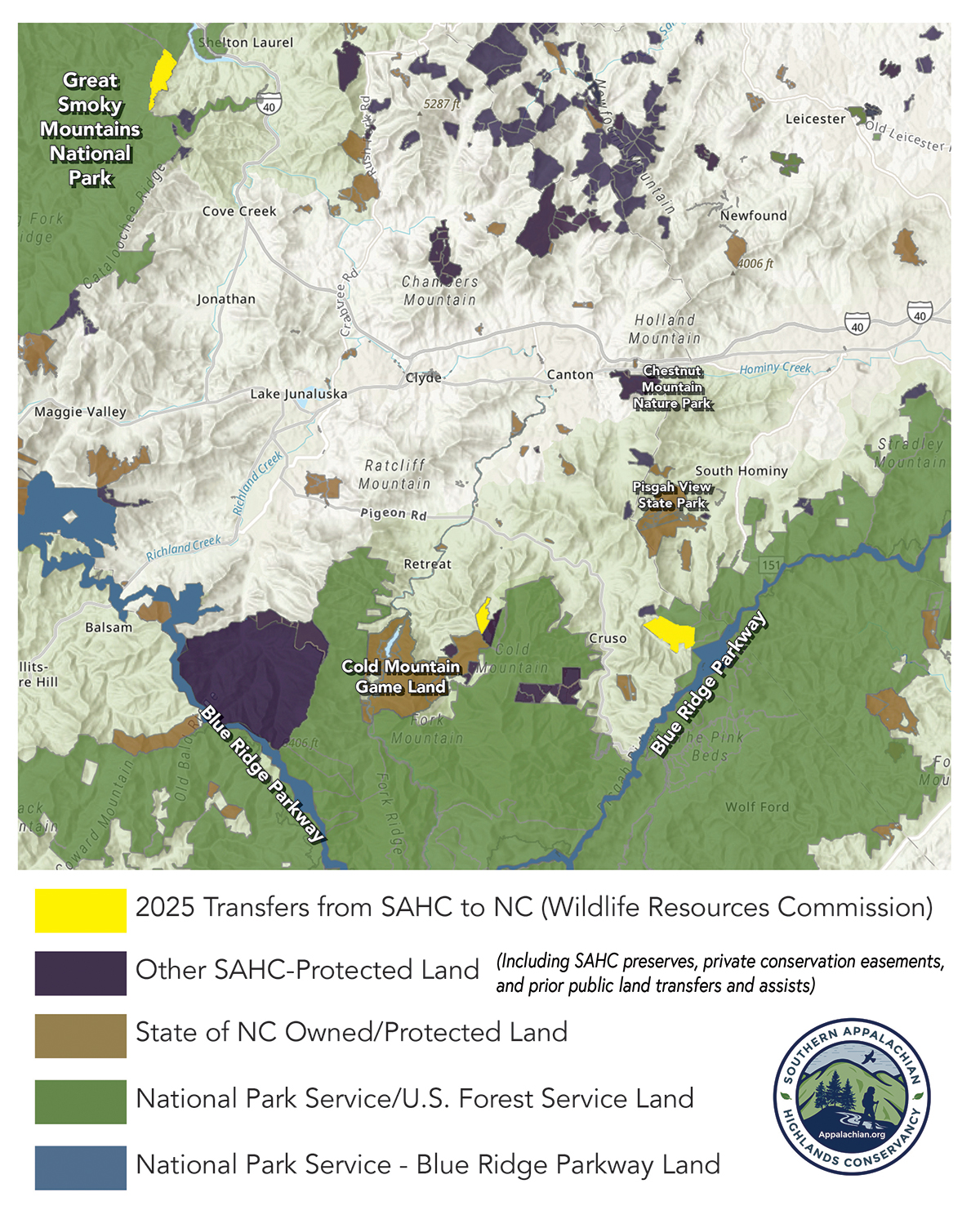 The proximity of these tracts to national forest and park lands further enhances their ecological value. The White Oak Mountain tract, for example, borders both the Great Smoky Mountains National Park and Pisgah National Forest, creating an important corridor for species that rely on large, connected landscapes. Other tracts strengthen protection along Pisgah Creek and Dix Creek, both of which feed into the Pigeon River watershed.
David Stewart, a biologist with NCWRC, says the Haywood County transfers deliver multiple long-term benefits for both wildlife and people. “These tracts will help provide important public access to hundreds of acres of public land where there is currently no access or where access is very limited,” Stewart says. “They also give our staff additional opportunities to create and enhance wildlife habitat for a variety of species, as well as areas to conduct wildlife research and survey projects.”
While habitat protection remains central to the commission’s work, Stewart notes a growing focus on public access. “Providing public access will continue to be increasingly important as more people use our public lands here in Western North Carolina,” he says.
For Muerdter, that dual focus defines conservation’s broader role. “I think of conservation as foresight for future generations—both for people and for wildlife,” she says.
To learn more about the Southern Appalachian Highlands Conservancy, visit Appalachian.org.