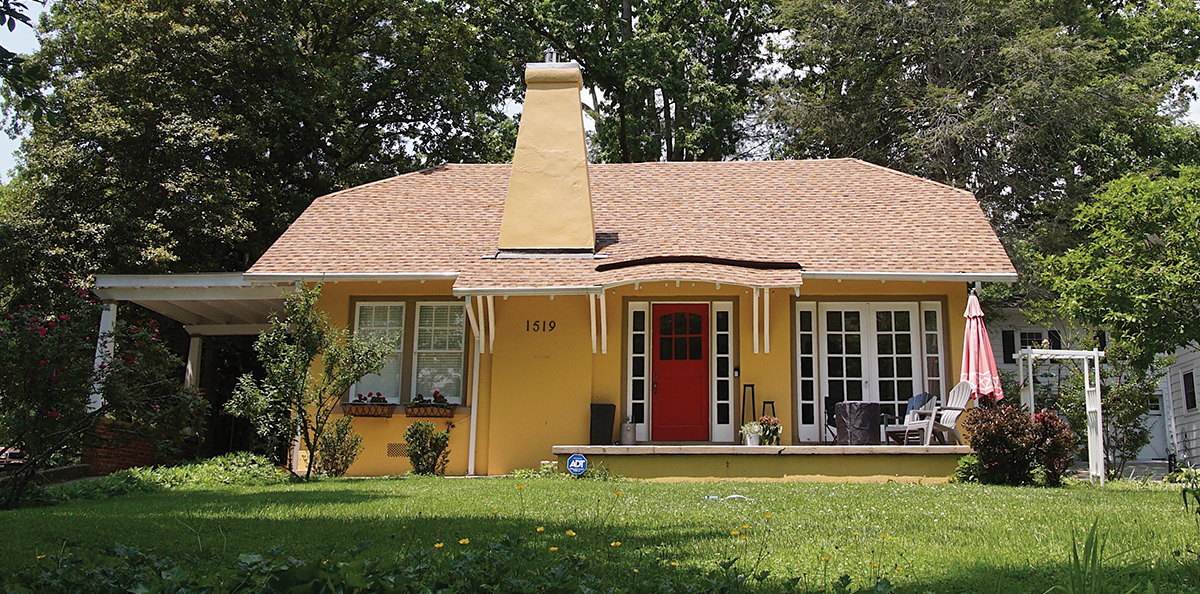
1926 bungalow. Photo by Caroline Cope Khoury
By Lauren Stepp
There is no question that Hendersonville looked different in 1920. The past century has watered down Henderson County’s agrarian roots and flooded the area with tourists, microbreweries and four-lane highways. But when it comes to real estate, not much has changed over the past 100 years.
“Our next-door neighbor was an older man and he just sold his house,” says Kristie Ogletree. “He never even put up a ‘For Sale’ sign; it was bought sight unseen.”
Ogletree lives in a one-story bungalow in Druid Hills, a historic neighborhood just north of downtown Hendersonville. Her home was built in the Roaring Twenties when prospective homebuyers felt the same pressure to claim a slice of Appalachia as folks do in today’s market. Hoping to put down roots, families of yesteryear turned to the Hendersonville Times-News to search for property listings. It was here, in the folds of the town’s daily newspaper in July 1923, that the breakneck growth of Druid Hills began.
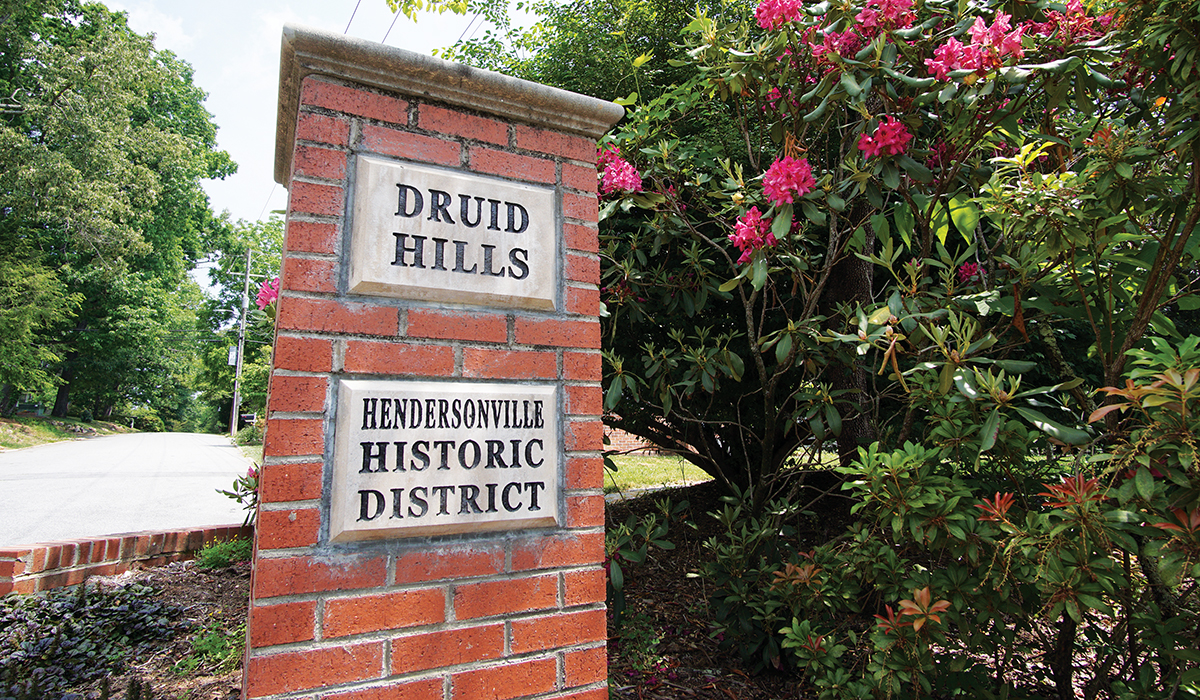
Photo by Caroline Cope Khoury
Developed by the Hendersonville Real Estate Company, Druid Hills emerged as a “suburban village” with “over a mile of paved streets, ornamental entrances and tennis courts.” Though many individuals purchased land in the up-and-coming neighborhood, investors bought many of the 133 lots with plans to “sell at a profit before the next payment was due,” the Hendersonville Times-News reported on January 15, 1975.
Needless to say, the location was sought after. That is because a major road paving project completed in the early 1920s made it possible to live farther away from downtown. But Druid Hills was also desirable because landscape architect Earle Sumner Draper designed the neighborhood to be so. Inspired by the garden city movement, a method of urban planning that emphasized green space, Draper followed the existing contours of the land, cutting streets that curved and incorporating pocket parks.
“The neighborhood speaks to a fascinating chapter in Hendersonville’s history: its embrace of the larger garden city movements that flourished across the country,” says Caroline Cope Khoury with Explore Up Close, a boutique travel company based in Western North Carolina and upstate South Carolina. “With its curvilinear streets, ample green spaces and diverse styles of homes, Druid Hills perfectly embodies the modern design ideals of the day.”
Khoury offers scenic driving tours of the Druid Hills Historic District, which was listed on the National Register of Historic Places in 2000. During the tour, guests can observe the “intrinsic charm” of multiple architectural styles. The Leander Justice House, for instance, is the neighborhood’s oldest home and was originally used as a farmhouse. There is also the Campbell L. Boyd House, a two-story Tudor Revival with a sweeping gable roof.
Built in 1926, Ogletree’s bungalow was previously owned by Virginia Byrd, a widow who continued to live in the house until at least 1949. When Ogletree and her husband purchased the house in 1982, the walls—both inside and out—were a quirky, bright yellow and there was a sense of camaraderie in the neighborhood. Though the bungalow has since been repainted, those sentimentalities have remained unchanged.
“When we moved in, there were eight to ten kids just on our road,” says Ogletree. “We’d close off the street and let the kids ride their bikes, share food and get together. Now, the generations are changing and we’re the oldest people here. But when someone moves in, we still make sure they feel welcome.”
To learn more about Druid Hills, visit HendersonvilleHPC.org.