Orlene Simmons
By Lauren Stepp
In 1961, a white student threatened to hang Oralene Simmons. She was 17 at the time, studying at her desk in Treat Dormitory at Mars Hill College (now Mars Hill University) when she heard voices outside her room. One boy wondered what would happen if he threw a brick through Simmons’ window. Another student mentioned he had a rope. “We could hang her off that big oak tree,” he said.
Simmons remembers feeling sick to her stomach. In the countless moments of prejudice she experienced as the college’s first Black student, she turned to Martin Luther King, Jr.
“I often read his speeches and would find strength in them,” says Simmons, who clung specifically to an excerpt from King’s November 1956 speech at Dexter Avenue Baptist Church: “Let no man pull you so low as to hate him.”
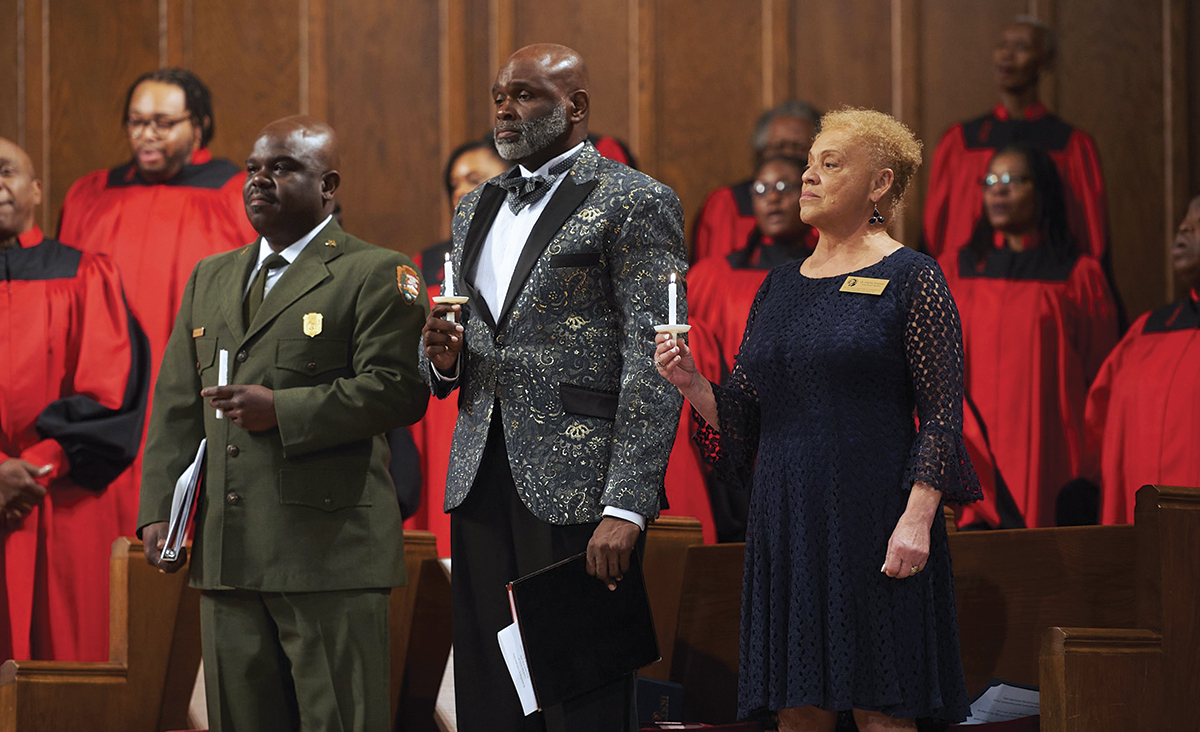
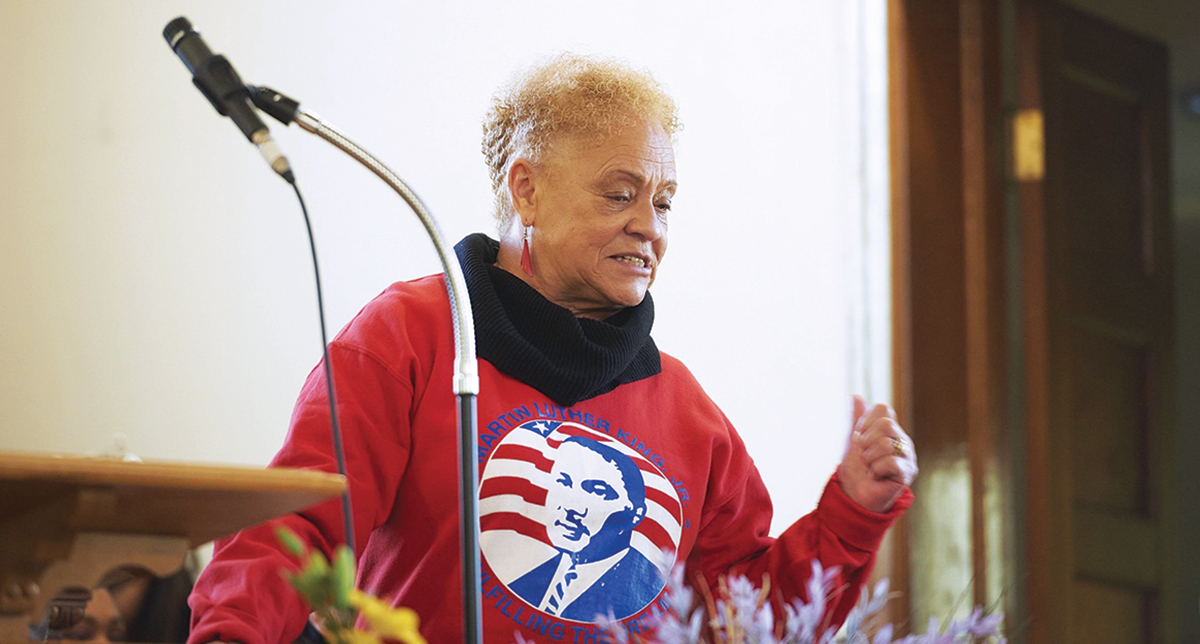
Oralene Simmons. Photos courtesy of the Dr. Martin Luther King, Jr. Association of Asheville and Buncombe County
But Simmons also thought of her great-great-grandfather, Joseph Anderson. Anderson was a slave owned by J. W. Anderson, one of the founders of Mars Hill College. In 1854, the board of trustees hired an Asheville contractor to construct the college’s first building. Five years later, when the debts had yet to be paid, the Buncombe County sheriff took Anderson as collateral.
“His imprisonment is the only case known where human flesh and blood went to prison for an institution,” says Simmons. Though the college’s trustees raised the money to free Anderson, he would have otherwise been sold to the highest bidder.
Simmons first learned about her great-great-grandpa when her grandmother took her to the college for a founder’s day play. As the performance unfolded, a seven-year-old Simmons watched a white student in blackface reenact the life of her ancestor.
“At that time, I really couldn’t understand slavery—one person owning another person,” says Simmons. “It was an awful lot for me to take in. But that story was precious. It made me depressed. It made me angry.”
The story lit a fire. During her time at Stephens-Lee High School, Simmons joined the Asheville Student Committee on Racial Equality, an organization that worked to integrate movie theaters, restaurants and other public spaces in Asheville. In her senior year, Simmons decided she would make her own statement. She applied to Mars Hill College, then an all-white junior college, and waited. When a letter finally came in the mail, she had been denied admission.
“It was a disappointment,” says Simmons. “But I thought about the conditions of the South—churches being bombed, buses being set on fire and the violence that had erupted at lunch counter demonstrations.”
Simmons decided not to back down. She contacted civil rights activist William Bagwell, who took the rejection letter to the board of trustees. After an emergency meeting, she was allowed to register for classes.
Today, 60 years later, Simmons is president of the Dr. Martin Luther King, Jr. Association of Asheville and Buncombe County and the founder of the annual Dr. Martin Luther King, Jr. Prayer Breakfast, which has been held each January since 1982. But more than that, Simmons is a changemaker who left an indelible mark on Mars Hill College and the region at large.
“I was so isolated and very alone,” Simmons says of her time at the college. “But I gained self-esteem in knowing who I was.”
To learn more about the Dr. Martin Luther King, Jr. Association of Asheville and Buncombe County, visit MLKAsheville.org.