
Nov. 8 Bond Referendum Can Help Us Change Course
By Robert Turner
Undeveloped green space is a carbon sink. Why is that so important now?
There have been five mass extinctions of life in the history of the planet—four of them caused by climate change as the result of increased carbon-based greenhouse gases in the atmosphere—and each was responsible for eliminating all but a small sliver of life on earth (75 to 95 percent extinction rate). The event that wiped out the dinosaurs was an asteroid, as we all learned in high school, but the other evolutionary resets were brought on by climate change.
What surprises me most about climate change is how quickly we’ve been brought to the edge. We’ve been emitting greenhouse gases from the burning of fossil fuels since the Industrial Revolution began around 1750 with the burning of coal in England, but emissions really took off in a single generation—in my generation. We’ve doubled the amount of greenhouse gases floating through the atmosphere in just the last 30 years, since 1990, and after Al Gore published his first book on climate change. As David Wallace-Wells writes in his terrific book The Uninhabitable Earth: Life After Warming, most greenhouse gas emissions—more than half—have come “since the premier of Seinfeld.” The planet has been brought from relative stability to the edge of catastrophe in one lifetime.
Part of the reason for this dramatic increase in greenhouse gases is explained by a global population that has doubled in my lifetime from 3 billion to 7.75 billion people, with more people around the world buying cars and cell phones and refrigerators and air conditioners, each with its own carbon footprint.
What does climate change mean? The United Nations Intergovernmental Panel on Climate Change (IPCC), the “gold standard” for science in this area, says two or three degrees of warming means hundreds of millions of climate refugees, flooded coastal cities, deadly droughts and heat waves that reduce food production, many more devastating wildfires, much more frequent and catastrophic hurricanes and more frequent rain event flooding, the kind that used to happen every 1,000 years but now visits almost annually. Global warming means more desertification and a reduction in farmable land. Crop yields drop off faster for each degree of rise in global temperatures, and if unchecked, yields in the largest grain-producing regions could drop by 50 percent.
At just two degrees warming, 400 million more people will suffer from water scarcity, as we’re already seeing in the American West, and the equatorial band around the planet will become, literally, unlivable because of the number of heat-related deaths. Southern Europe could experience permanent drought. Tropical diseases like malaria and dengue fever would turn up in places like New York and Chicago. But we’re facing a global warming trend of more than two degrees Celsius.
The IPCC says that if we enforce all the commitments in the Paris Accord (most of which haven’t been implemented yet), we can still expect 3.2 degrees of warming, which will mean the collapse of the ice sheets and the eventual flooding of cities like Miami and New York and 100 other large coastal cities around the world. Many scientists now expect a 4-foot rise in sea level by the end of this century. Two-thirds of the world’s biggest cities are within a few feet of sea level. The economic cost of flooding from sea rise alone could devastate our world economy and put billions of people on the move.
If we stay on track now, and do nothing, the UN says we can expect 4.3 degrees of warming by the end of this century, which would be catastrophic, but feedback loops could mean much more warming because there is enough carbon in the Arctic permafrost, as it warms and thaws, to double greenhouse gases and bring on 6, or even 8 degrees of warming, which is almost unthinkable.
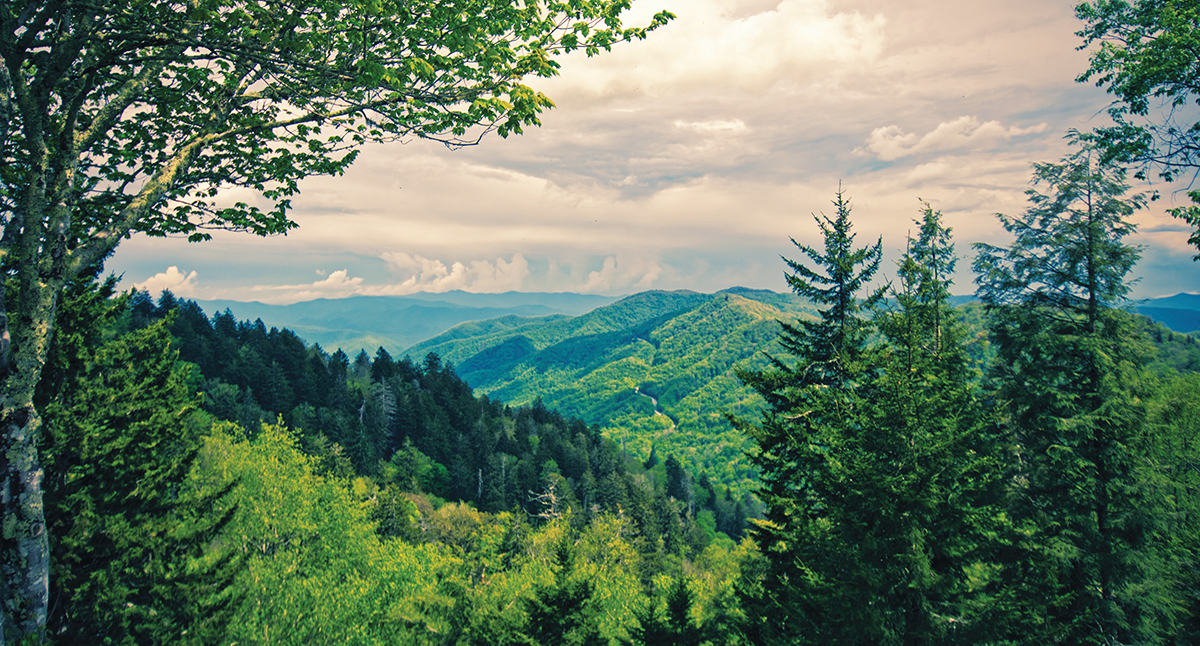
In his book Half-Earth: Our Planets Fight for Life, Harvard biologist E.O. Wilson proposes that we conserve half of the earth’s natural spaces to help mitigate and offset greenhouse gases, and to protect biodiversity so we avoid another mass extinction of living species. President Biden has asked for “30 by 30,” or the conservation of 30 percent of our land by 2030. Buncombe County commissioners have put forth the goal of conserving and protecting 20 percent of our land here in the county.
On Tuesday, November 8, Buncombe County residents will vote on a new land conservation bond initiative to earmark $30 million toward this effort. This is one of those brief moments in our short history of climate change that becomes an inflection point, one in which we might begin to change course to a brighter future—and your vote matters.
Robert Turner is a farmer and author of Lewis Mumford and the Food Fighters: A Food Revolution in America. Learn more at EatYourView.com.




Really well written.