By Gina Trippi
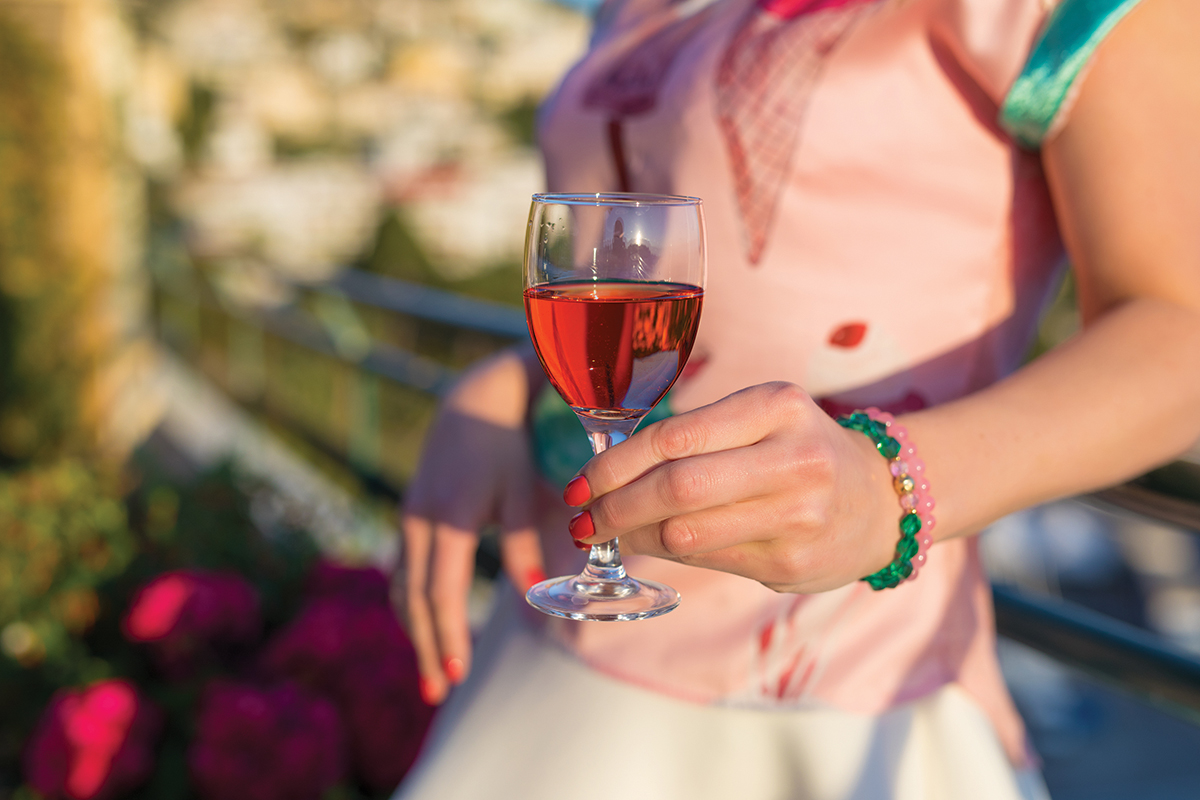
The color of a rosé depends on the method of winemaking and the grape variety. Wine takes its color from the grape skins. The longer the juice of the grape is in contact with the skins, a process called maceration, the more color, aroma and flavor is extracted.
To put this in perspective, think about wines you know. A pale Provençal-style rosé is produced by the direct-press method with little maceration time, hence, a very light pink color in the bottle. But a Tavel rosé typically macerates for 48 hours, giving the wine a deeper, more intense hue. The thickness of the grape skin also contributes to color. Garnacha, a thick-skinned grape, will produce a rosé with a deeper color than rosé made from pinot noir grapes. By contrast, juice for a red wine would likely macerate from a week to a month.
Decanter magazine describes pale rosé as “a relatively modern trend dating to the 1980s.” The color was made possible by technological advancements in cooling. Historically, rosé wines—whether made by blending red and white grapes or with a longer maceration—were more like light reds in color. These wines were low cost and intended for mass consumption. These darker wines were often called “farmer’s wines” and, in turn, led to the perception that lighter-colored wines equated with quality and sophistication.
Let us take this opportunity to dispel some myths and validate another claim concerning dark rosé. First, dark rosé is not sweeter than light rosé. Second, even though dark rosé undergoes a longer process, the wine is generally not more expensive than light rosé. But, what is true, is that dark rosé is more authentic than light rosé.
And, lately, interest in historical research, terroir-driven wines and varietal expression have consumers trending toward traditional styles. Consider Lezèr from Elisabetta Foradori. At the age of 19, Elisabetta took over leadership of the family winery purchased by her family in the 1930s and now situated in the World Heritage Site of Trentino. Rather than follow the crowd pulling up indigenous grapes to plant cabernet sauvignon and chardonnay, Elisabetta hitched her star to Teroldego, an indigenous grape from the Trentino region at the foot of the Dolomites.
Her vineyard sits atop alluvial soil. The vines are at least 30 years old and the juice is vinified in traditional amphora, concrete or steel tanks with extremely limited intervention. The vines, the winery proclaims, are imbued with the same “fiery, energetic personal character” as the winemaker!
Foradori Lezèr (which means “light” in the local dialect) is 100 percent Teroldego and, in this case, lighter than the bold reds by Foradori. The mountainous varietal makes for a fruit-forward flood of cherry and strawberry on the nose and palate with blackberry, cinnamon, cranberry and spicy pepper. Foradori says the production of Lezèr is an exhaustive endeavor, but the result is “the purest expression” of her vineyards.
So, why do you need dark rosé? For versatility!
Gina Trippi is the co-owner of Metro Wines, 169 Charlotte Street, in Asheville. Committed to the community, Metro Wines offers big-shop selection with small-shop service. Gina can be reached at gina@metrowinesasheville.com or 828.575.9525.