
Participants in a Resources for Resilience Resilient Family Adventure™. Photos by Jason Keefer Photography
By Kathleen O. Brown
The Asheville-based nonprofit Resources for Resilience encourages people across the region to participate in its free in-person and virtual training sessions to learn practical ways to manage stress, reset during difficult moments and stay connected.
“Many people are carrying more than usual, including everyday pressures from the lasting effects of Hurricane Helene,” says Ann DuPre Rogers, executive director of Resources for Resilience. “This work is about acknowledging that reality and offering practical ways to steady ourselves and move forward, together.”
Resources for Resilience focuses on simple, research-based practices that help people calm their minds and bodies during stress, recognize when they’re becoming overwhelmed and respond in healthier ways at work, home, alone and with others. Participants gain an understanding of neuroplasticity, the brain’s ability to adapt, and become equipped with key tools to promote well-being in themselves and others.
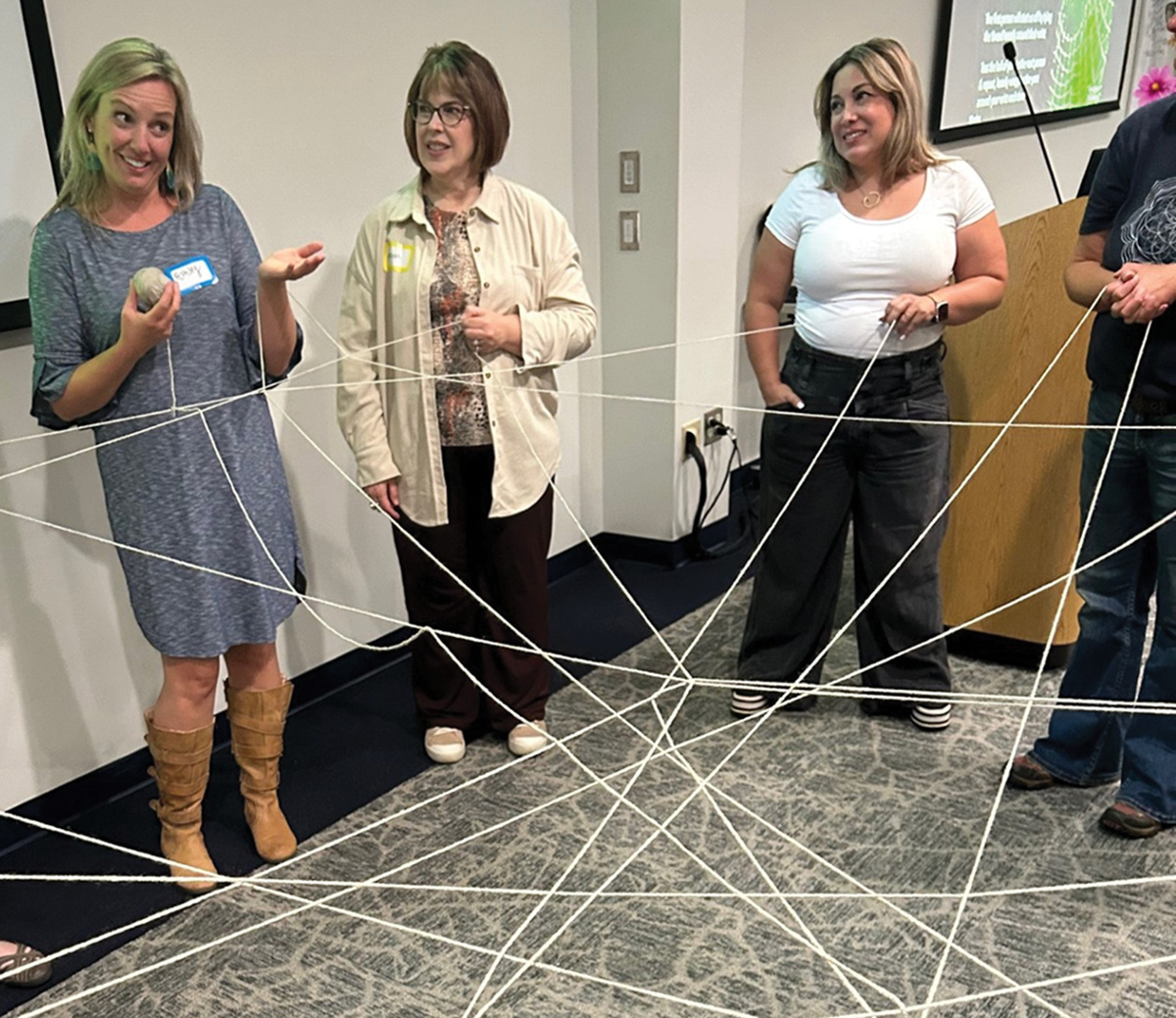
Participants take part in a Resources for Resilience training, learning practical, research-informed tools to manage stress and build resilience in everyday life.
One participant in a recent Resources for Resilience session shares gratitude for the nonprofit’s training. “So much has happened to me personally and professionally since Helene,” says the participant, whose name is being kept confidential due to the sensitive nature of the work. “It’s honestly been awful. I’ve always tried to be a person who is grateful or stays positive during bad stuff that happens to me. But I don’t think I actually knew how to do that. I think it was more like pushing through still carrying all the same weight and just feeling it all over again when I talked about it, but now it feels different. I actually feel different and like I know I can do a little something about it.”
Founded in 2017, Resources for Resilience grew from the efforts of an all-female group of practitioners with backgrounds in social work, nursing, psychology, public health and spirituality. Created in response to the Adverse Childhood Experiences Study which shared growing recognition that stress and trauma shape the lives of individuals, families and communities, these practitioners designed accessible, body-mind-based tools people could use to better understand their nervous systems and to return to a more balanced “resilient zone.”
Resources for Resilience board member Susan Robinson says she has seen the powerful impact of the nonprofit’s work firsthand. “Resources for Resilience has a unique capacity to translate mind-body science into practical tools that help each of us steady ourselves, listen deeply, communicate more effectively and care for ourselves and one another, regardless of age, ability or setting, whether at home, school, work or in our communities,” Robinson says. “We all need the ability to adapt, recover and move forward in the face of daily life, stress, hard times, grief, loss or trauma. Serving on the board allows me to help sustain and expand statewide access to their work, supporting resilience and well-being so individuals and communities can thrive.”
Resources for Resilience offers training and events to anyone looking for healthier ways to manage stress, with particular relevance for educators, healthcare workers, caregivers and first responders. The nonprofit has conducted hundreds of trainings for all types of agencies, institutions and community organizations, including outside of the US in London, England and Bhopal, India.
The nonprofit’s main focus right now is on serving communities in the 25 Western North Carolina counties that were impacted by Hurricane Helene. Community funders and partners working with Resources for Resilience have enabled the nonprofit to offer current workshops and trainings free of charge. Continuing Education Units also are available for eligible participants at select events.
Due to funding limitations, Resources for Resilience can only guarantee that training sessions are free through June so the organization is encouraging WNC residents to take advantage of the opportunity to attend and learn at no cost throughout this winter and spring.
“People often see the start of a new year as the right time to focus on physical health,” Rogers says. “But our bodies are strongest when we care for them consistently, not just once a year. Mental well-being works the same way. It’s not something to wait on until you’re overwhelmed. It’s something you invest in regularly, so you have skills you can draw on any day, anywhere.”
Learn more about Resources for Resilience and its calendar of workshops at ResourcesforResilience.org.