By Casey First
The Brown-headed Nuthatch (Sitta pusilla) is a petite and stocky bird with an appearance similar to a Pygmy Nuthatch. They have a brown crown and a chocolate-brown eye stripe, bluish-gray wings and back, and a creamy white belly that fades into softer bluish-gray feathers. Both the male and female are very similar in appearance. They have a very strong and pointy bill that they use to chisel as they forage on pine bark.
They are probably known best for their unmistakable zigzag gymnastic maneuvers on the sides of trees, climbing headfirst up, down and sideways on tree trunks. They also make a distinct sound that mimics a rubber ducky.
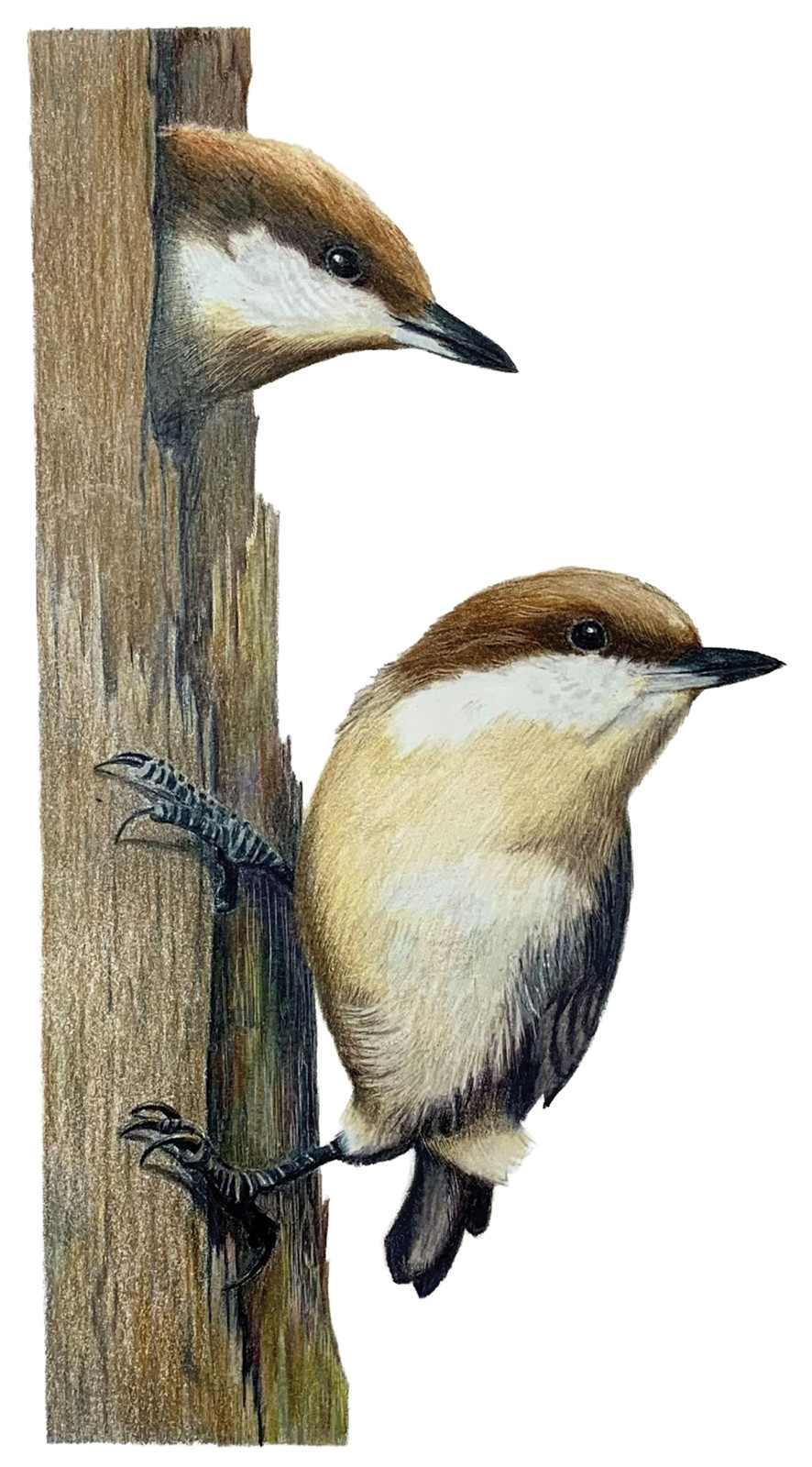
David Ballard, artist
An anomaly in the animal world, they cleverly use a tool to aid in both foraging and caching food. They will put a piece of bark in their bill and use it to pry open other bark to uncover hidden treats. They also use the bark to cover food that they cache for retrieval when food is scarce, such as in winter. Their diet is omnivorous, consisting of insects like spiders, cockroaches and beetles, coupled with seeds like pine and sunflower.
The Brown-headed Nuthatch thrives in mature pine woods and mixed woodlands with deciduous trees such as oak, hickory and sycamore. They also can be found in shrub lands, savannas and thickets. Brown-headed Nuthatches are widespread and abundant in the southeastern US, with their range extending from the Texas border in the West down the Gulf through the Everglades of Florida and up through the Carolinas. Here in Western North Carolina, they can be found in backyards that have thick tree cover, and they will readily come to a backyard bird feeder that is filled with sunflower chips and suet. To get an extra-long view of these beautiful birds and observe their clinging behavior, try offering a tightly packed seed cylinder.
During nesting season in early spring, the Brown-headed Nuthatch will either use existing holes such as those made by a woodpecker, excavate their own nesting hole or make residence in a backyard bluebird box. Brown-headed Nuthatches are one of the few North American bird species that are known to breed cooperatively. About half of all breeding pairs will have at least one helper from a previous generation.
These helpers assist in feeding the incubating female, the nestlings and the young fledglings. Mama Bird carefully makes an intricate nest that is filled with not only pine needles and bark but also soft feathers, cotton, natural fibers and pine seed wings to provide a comfortable bed for the roughly half-dozen eggs that she will lay. Mom and Dad will typically have only one brood per season.
After about three weeks, the fledglings will make their way out of the nest, where they will be, once again, greeted by previous years’ offspring, which help the young birds adapt in their new world and assist in their survival. This multigenerational model has sustained this species, and, in turn, has kept their population from declining. This is good news for them and for us!
Casey First is owner of North Asheville Wild Birds Unlimited, located at 946 Merrimon Avenue, Suite 120. Monthly bird events are free and open to the public, with no registration required. To learn more, visit NorthAsheville.wbu.com. Artist David Ballard lives in Candler. Find his work on Instagram at d.ballard.art.