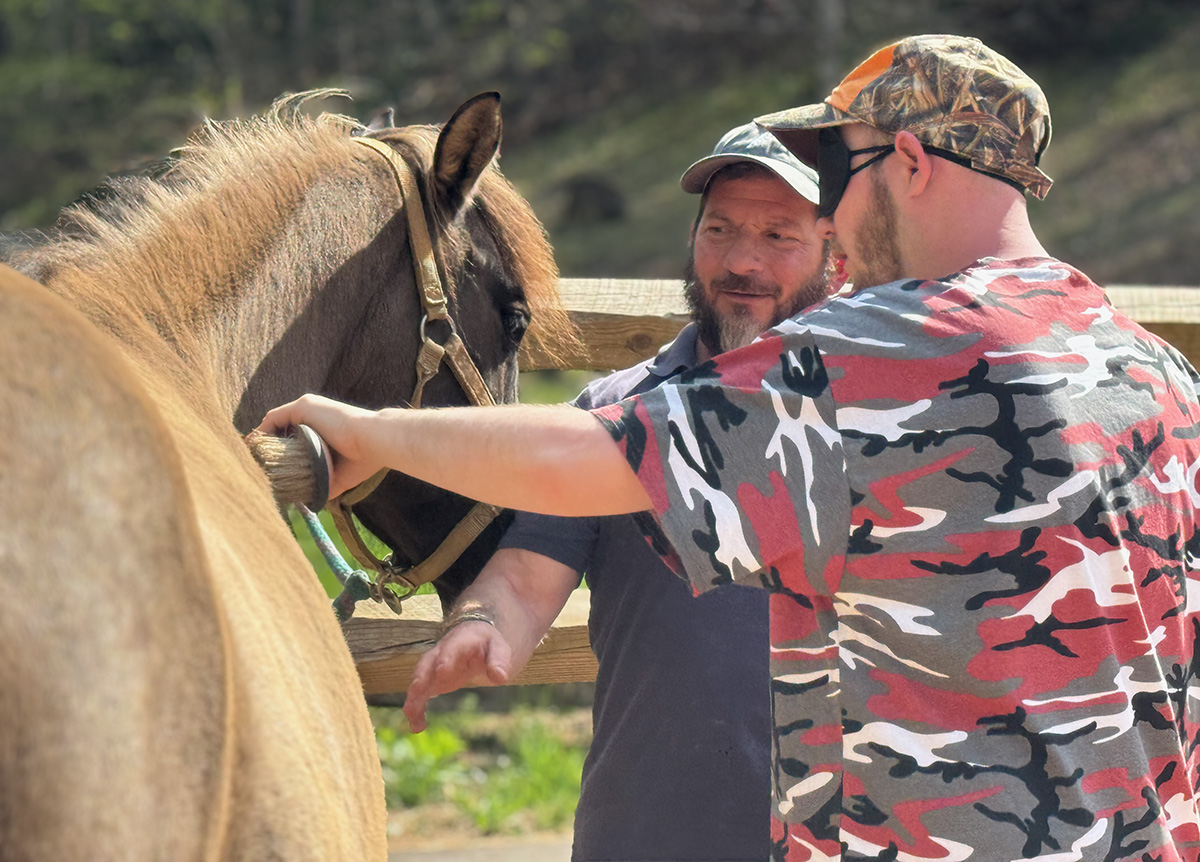
David Dotson wears a mask to groom Daisy, a blind horse
By Emma Castleberry
Missed Path Sanctuary, an equine rescue charity in Pisgah National Forest, came into being more by accident than by design. Co-founders Marc DiFrancia and Mike Cooper weren’t looking to rescue horses, but they came across one—Annie—that desperately needed a home, so they provided one. Then, they found a companion for Annie, and, finally, DiFrancia purchased a riding horse that showed signs of serious mistreatment.
“Seeing how often and how badly horses are mistreated shocked us and stirred something inside us,” he says. “We realized that, whether we’d planned it or not, we were already rescuing horses.”
At Missed Path, horses are not rehabilitated for rehoming or resale—they are given a permanent place to land. “If a horse ends up in our care, it’s already been through enough that we don’t want to risk that happening again,” says DiFrancia. “The first thing we do is give them the space to take as long as they need to soften, unclench and just, well, be horses again.”
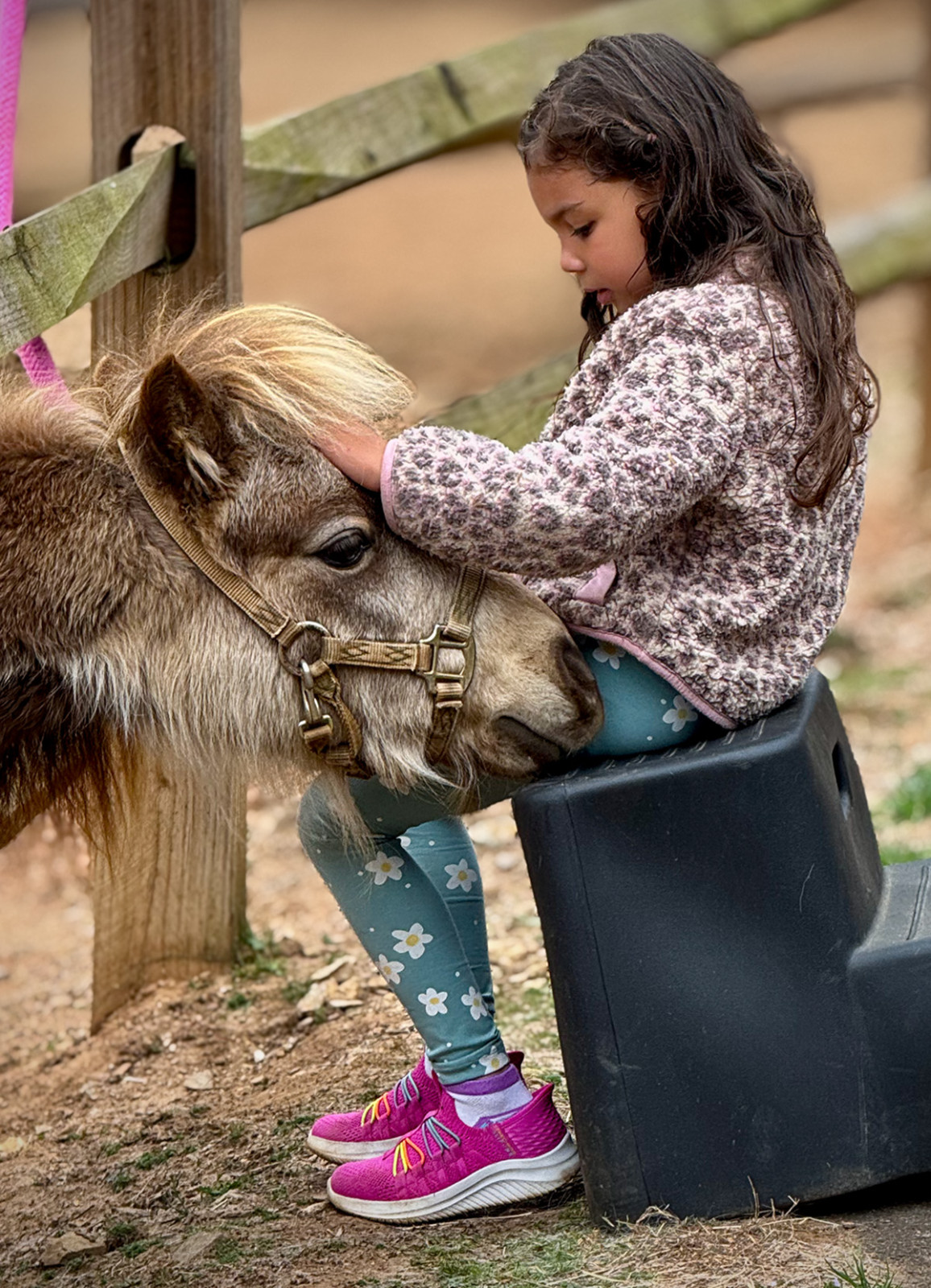
Annie, a miniature horse, meets Emilia Roa. Photos by Mike Cooper. Courtesy of the Missed Path Sanctuary
Missed Path also offers opportunities for humans to interact with their rescued horses through monthly “Open Horses,” an elderly visitation program called “Forever Seen” and a “Reading with Rescues” program for children and schools. “The child sits opposite the horse and reads them their favorite storybook,” says Cooper. “Teachers tell us that these kids come back to the classroom with a renewed confidence around reading aloud.”
The sanctuary’s work is grounded in the belief that horses reflect and regulate human emotion. “They meet you where you are,” says DiFrancia. “They can help regulate your emotional state and bring you closer to their level.”
DiFrancia recalls an interaction between a blind horse named Daisy and David, a visitor with autism. “David chose to groom Daisy while blindfolded, stepping into her world rather than asking her to step into his,” Cooper says. “As he brushed her, Daisy stayed soft and present, and the interaction became a shared act of faith and connection. At one point David quietly said, ‘I can feel her trust through the brush.’ That story captures the heart of the sanctuary beautifully—two beings meeting without posturing; finding confidence and connection through softness, trust and presence.”
The sanctuary was self-funded for many years before becoming a true nonprofit in 2024. After discovering the sanctuary close to her home in Candler, Susan Kern became a volunteer. “Just being around the horses gives me a sense of purpose and peace that the rest of the world does not offer right now,” she says. “Sanctuaries do not run on their own—it really takes people of many different talents to keep one operating.”
The need for support is ongoing, especially given the lifespan of the animals. “We’re very aware that we’re caring for animals who, given the right conditions, can live for 30 to 40 years,” says DiFrancia. “A big part of our long-term vision is making sure that, whatever happens to us, the animals in our care continue to be looked after.”
“The connection we experience with them—the moments of trust, softness and presence—they give more than they take,” Cooper says of the horses. “This mission matters because people need places where healing is actually experienced, not just talked about.”
Learn more and donate at MissedPathSanctuary.org.