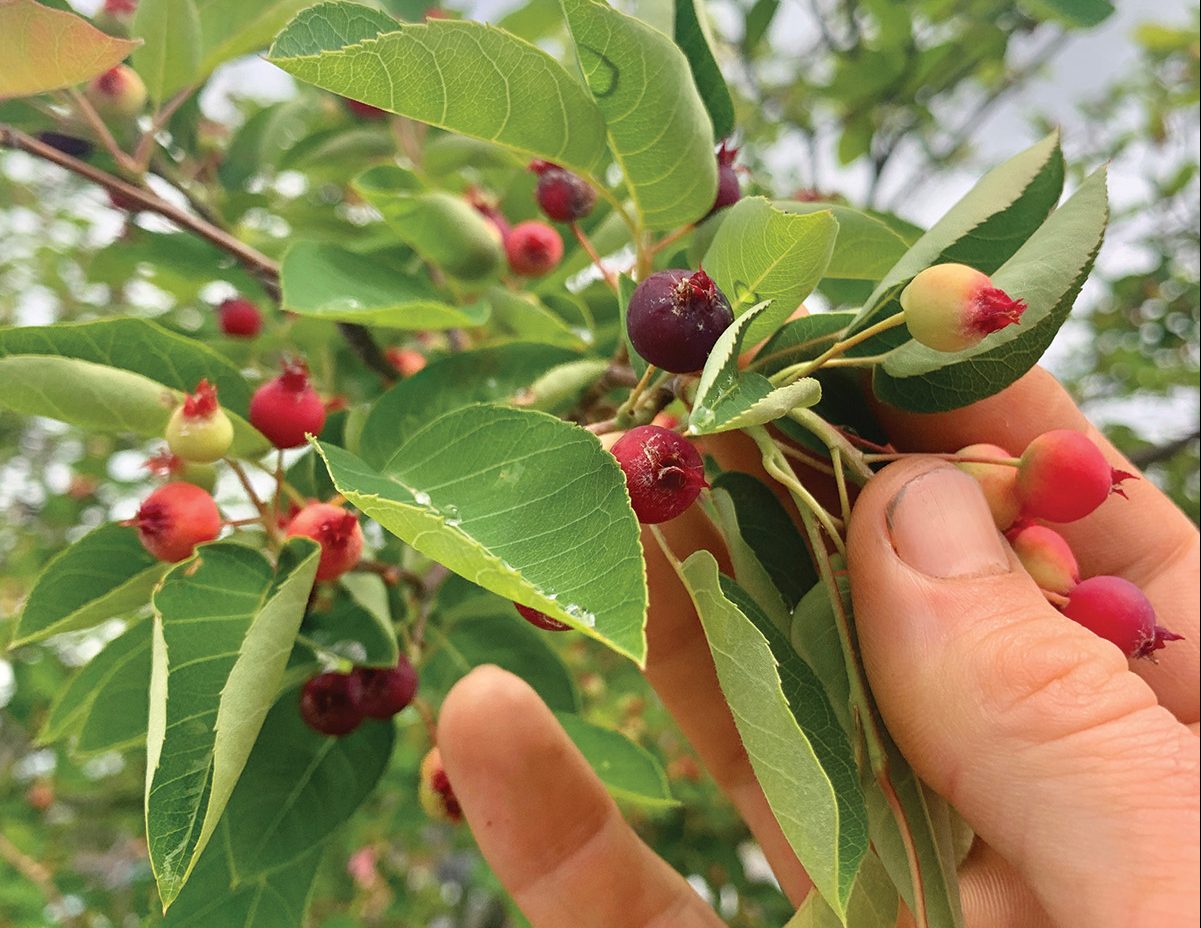
Juneberries in downtown Asheville. Photo by Lyric East
May marked the beginning of berry season with strawberries—necessitating a crouch, a crawl or at the very least a hinge at the hips to gather the ground-dwelling berries. As May transitions to June, we look upwards in our picking to the berry-bearing trees: mulberry and juneberry (also known as serviceberry). Both native to this region, they carry forth the cadence of ripening berries as the strawberries begin to wane. Luckily, there is enough temporal overlap for three-berry pie and other creative combinations of the sweet fruits.
The fruit of the mulberry tree resembles an elongated blackberry, with a small slender stem that comes off with the berry when you pluck it. Juneberry fruits, on the other hand, are more akin to a blueberry in appearance, but with a pinky-purple hue. Both are delicious and have their own unique flavors.
I have never seen either berry make an appearance at area farmers markets (yet!), so my recommendation is to go in search of the trees themselves. Tree berries are a precious, magical thing. They necessitate time and patience. While you can harvest strawberries the very first year you plant them, a newly sprouted mulberry or juneberry tree will take several seasons of growth before producing fruits. That means the best time to plant a tree is right now!
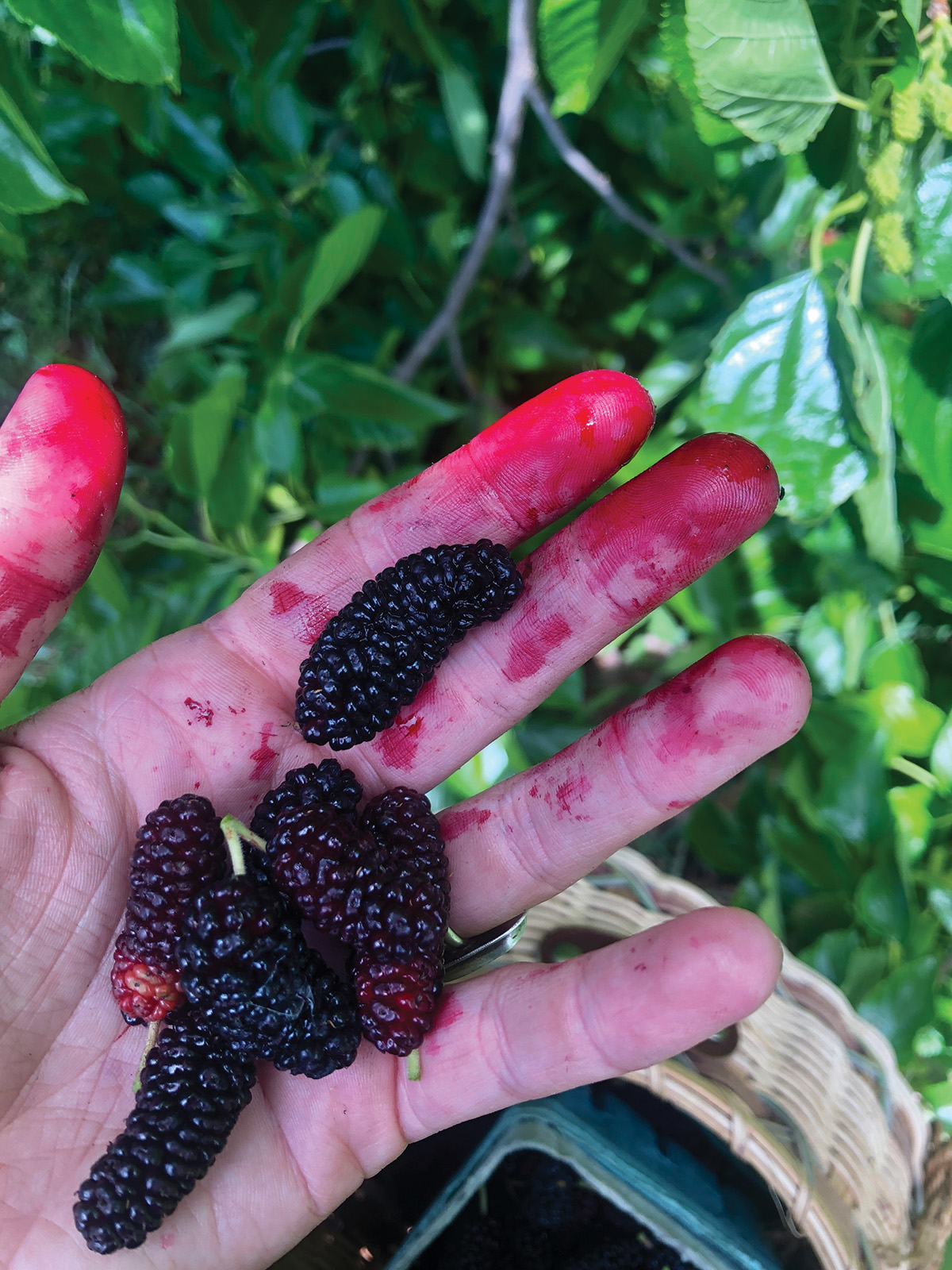
Mulberry stains. Photo by Lyric East
Woody perennials like mulberries and juneberries are often grown from cuttings, instead of seed, and are sold through local nurseries in pots or as bare root plants. This way, you can buy trees that are already at least a year old, which gives a kickstart to the patience of waiting for your harvest.
Carolina Native Nursery in Burnsville regularly stocks both serviceberry and mulberry trees, though availability is always changing. “I think mulberries are one of the most delicious fruits available,” says Shelby Singleton Jackson, head of sales at the nursery. “We have a tree here on the property, and the staff will just go out and pick until our fingers are stained purple.”
Mulberries are one of the fastest fruiting trees you can plant. I have received a hearty harvest from a mulberry just three years after planting, though Jackson advises folks to anticipate around five years before either tree is producing a significant yield. She is also quick to mention that bears and birds share an affinity for both of these fruits, and that some protective measures may prove helpful if you’re really serious about your harvest.
“Some people will use nets to discourage critters,” she says. “We typically just allow the birds to eat some of ours.”
If you don’t live somewhere where planting a tree is feasible, you can still get a taste of the sweetness by gathering from established trees in public spaces. This is both a budget- and family-friendly activity that can become a recurring ritual year after year. The City of Asheville hosts an interactive map of edible perennial foods within city limits, including mulberries and juneberries, which makes it easy to find trees in your area or to plan a trip into town from a neighboring county.
There is one particular tree in Asheville that I’ve been gathering mulberries from every spring for 12 years. I’ve built a relationship with it as it has grown and changed. I’ve noticed tiny sprouts around it grow up into full-fledged trees themselves. I’ve watched it break apart, its branches heavy with fruit and bears and climbing humans. And three years ago, I planted dozens of mulberries on my farm—some cut from that very tree.
Each year, a friend and I have a tradition of gathering juneberries across downtown Asheville. There are so many! The fun for me is in the gathering, as I give all that I pick to my elder neighbor who can no longer drive to pick his own. This simple act of berry picking gives me both a delightful way to spend an afternoon and a great reason to visit my neighbor. Where might the berries lead you?
You can browse the online inventory at CarolinaNativeNursery.com. Explore the City of Asheville Edibles Map by heading to AshevilleNC.gov and typing “Edibles Map” into the search bar. Lyric East is an artist, writer and owner of Wild East Farm. Find her photos and quarterly publications at WildEastFarm.com. Her farm-grown foods are available weekly at the RAD Farmers Market and the North Asheville Tailgate Market.