By Jim Stokley
[Editor’s note: In the spirit of Asheville’s own Wilma Dykeman whose mother and father hailed, respectively, from Buncombe County’s earliest white settlements and from upstate New York, Appalachian People: Natives and Transplants will seek to highlight the shared qualities of Western North Carolina natives and transplants to the region.]
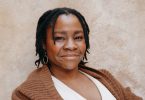
 Kathryn Liss, a resident of Asheville for 27 years, has played a leading role as a volunteer in the early years of the antiracism initiative Building Bridges as well as the YWCA’s Stand Against Racism. “For me,” she maintains, “Asheville has been the best place I ever lived.” But she has also come to believe that “we must both heal ourselves with reflection on our personal interactions and also share with others our vision of a righteous world.”
Kathryn grew up in Chevy Chase, MD—until her father was hounded from his position with the Farm Security Administration by McCarthyites. The Liss family moved to Amagansett on the eastern end of New York’s Long Island, where her parents bought a tavern and cottages. Through no intention of their own, the Elm Tree Inn became “a safe haven for many of the gay men who worked on the Broadway stage and in television and movies,” Kathryn writes. When three men were arrested in 1960 outside the tavern on solicitation charges, she adds, “The bar never reopened.”
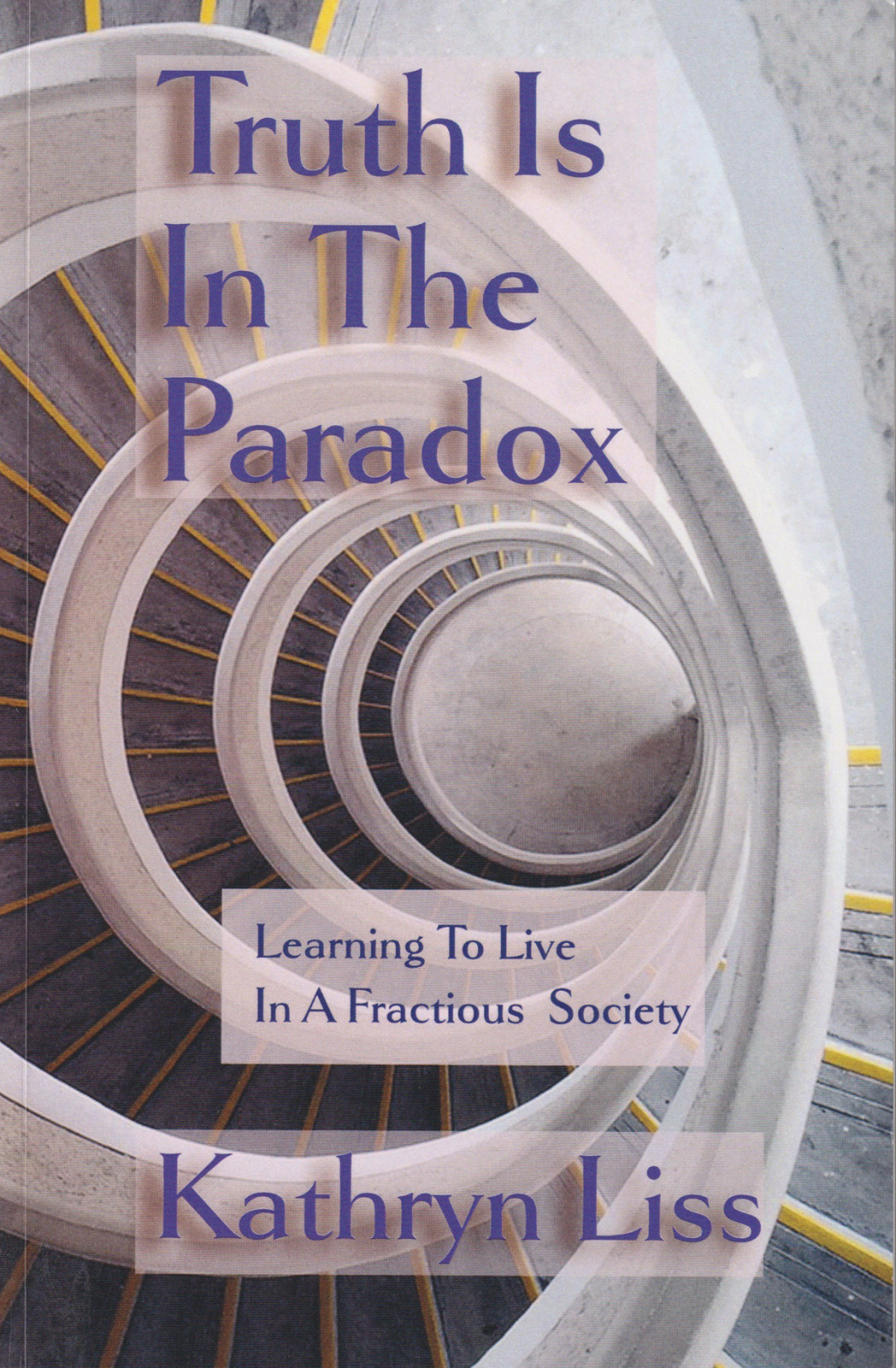
These quotes are from her memoir Truth Is in the Paradox: Learning to Thrive in a Fractious Society (2019). She goes on to recount her rich and varied life at The Bronx High School of Science, the University of Wisconsin in Madison, the Friends World College in Kenya and Atlanta, and an intentional community called Golden Hill near Cornelia, GA, among other places.
She attended the School for International Training in Brattleboro, VT, and wrote her Master’s thesis on experiential learning. At North Fulton High School in Atlanta, she taught cross-cultural communications. While in Atlanta, she also created the Atlanta-Tbilisi Sister City relationship. In 1994, Kathryn moved to Asheville “to help set up peer mediation programs in all the middle and high schools in the county” for The Mediation Center. She worked there for nine years.
“I could have come here with the point of view that I know how to solve problems and come up with the solution,” she says. “But we need to pay attention to the wisdom that’s already here. There’s a culture here that people have developed over generations, a culture based on respect for place, for family and for history. My approach to finding a solution, for example, to Asheville’s economic inequality is to (1) bring people together, (2) make sure it’s a nice mix of people and (3) ask them what they want to do about it.”
Upcoming Events for the Wilma Dykeman Legacy
All events are free and open to the public.
Wonders and Wanders with Wilma, a discussion of Wilma Dykeman’s book The French Broad
Sunday, August 23, 3–5 p.m. at the Asheville Botanical Garden, 151 W.T. Weaver Boulevard, Asheville
Mountain Strong, a conversation about how the Cemetery Remembrance Project is identifying and honoring unmarked Black graves in WNC
Thursday, August 27, 7–8:30 p.m., Weaverville Community Center, 60 Lakeshore Drive, Weaverville
My Story, a discussion by Jim Stokely of Wilma Dykeman’s memoir Family of Earth: A Southern
Mountain Childhood
Monday, October 5, 7–8 p.m., Battery Park Book Exchange, 1 Page Avenue, #101, Asheville
The Wilma Dykeman Legacy is an independent, non-profit organization whose mission is to clarify and promote social and environmental justice through the written and spoken word. Staffed by volunteers since its founding in 2012, the Legacy is supported by community donations. The Legacy owns no real estate; its “home” is its rich website presenting a new article every two weeks about Wilma’s core values of environmental integrity, social justice or the power of the written and spoken word. Learn more at WilmaDykemanLegacy.org.