The story of how Asheville became a culinary destination will come to life during a lunch and learn presentation, The History of Food in Asheville, led by Heath Towson, Asheville historian and proprietor of Mountaineer Motor Tours. The event will be held Wednesday, August 26, from 11:30 a.m. to 1 p.m., at Hatchworks Coworking on South French Broad in downtown Asheville.
The History of Food in Asheville is part city planning history, architectural history, and culinary exploration. The story of Asheville’s food history begins around 1886, when Asheville’s first modern hotel — the Battery Park Hotel — was built by Col. Frank Coxe. The glamorous hotel offered steam heat, running water, Otis Elevators and a fine restaurant where locals went to celebrate special occasions. It was a stay at this hotel, along with its stunning view of the mountains, that attracted George Vanderbilt to build his Biltmore Estate in Asheville.
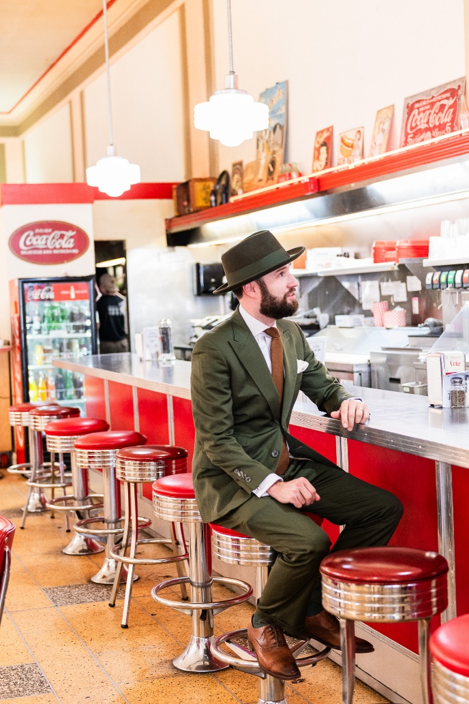
Photo by Cami Calnan Photography at Woolworth Walk Soda Fountain
In the 1920s, there was a building frenzy as the town’s population quickly grew. This included new houses, hotels, and restaurants to cater to a growing tourist trade and new residents.
As the adoption of the automobile became more commonplace, areas of the city like Tunnel Road and Patton Avenue catered to the car in the postwar era. Tunnel Road became an area for teenagers to cruise to drive-in restaurants like Buck’s Drive-In, Wink’s, Babe Malloy’s. It also became home to a new restaurant that would eventually put all of them out of business — McDonalds.
In the 1960s and 1970s, most of downtown Asheville was occupied by governmental agencies and offices that kept local diners in business during the lunch hour. After 5 p.m., however, things slowed down. Asheville had not invested in its downtown since much of its budget was dedicated to paying down debt accrued during the 1920s. The city’s last bond was paid off in 1976.
In the 1980s, artists and locals began to reinvigorate downtown Asheville with new restaurants, renovated apartments in historic hotels and buildings, and the opening of new art galleries. This began to grow the culinary scene.
In 1994, Oscar Wong started Highland Brewing in the basement of Barley’s Tavern. And in 1997, Green Man Brewing began at Jack of the Wood Tavern. Those breweries are still two of the biggest forces driving folks to the city today.
“When folks learn about the history of Asheville, they typically study things like architecture or famous literature. But what about the things that people need to carry on everyday living, like a good meal?” Towson says. “Asheville’s food history and growth of high-quality cuisine is just as unique as its architecture or cultural history, as well as being closely connected to both.”
Admission to the lunch and learn presentation is $40 and includes a lunch buffet, drink and dessert.
Hatchworks Coworking is located at 45 South Broad Avenue, Suite 170, in Asheville. For more information, visit mountaineermotortours.com/event-details/the-history-of-food-in-asheville-lunch-and-learn.