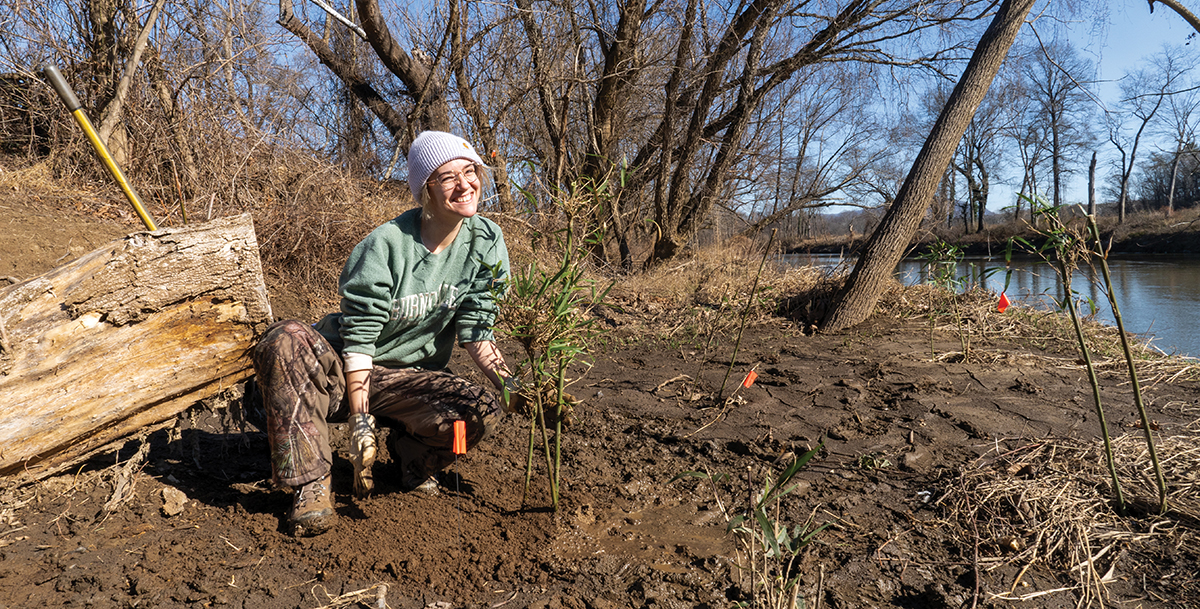
Climate Science student at a rivercane planting at Karen Cragnolin Park
RiverLink and the Eastern Band of Cherokee Indians Cooperative Extension are partnering with students in Warren Wilson College’s Master’s in Applied Climate Studies (MACS) program to advance the restoration of rivercane, a native bamboo species whose ecosystems have been reduced to less than 2 percent of their historic range. Students are mapping existing rivercane stands, researching policies that affect restoration, assessing the potential of planting rivercane along utility easements and developing resources to encourage propagation of the plant.
“We’ve long known the ecological value of rivercane, but Helene emphasized just how effective this plant is at holding streambanks together and preventing erosion,” says Hannah Coats, RiverLink land resources manager. “The plant’s dense network of underground stems, called ‘rhizomes,’ helps hold soil in place even during intense flood events.”
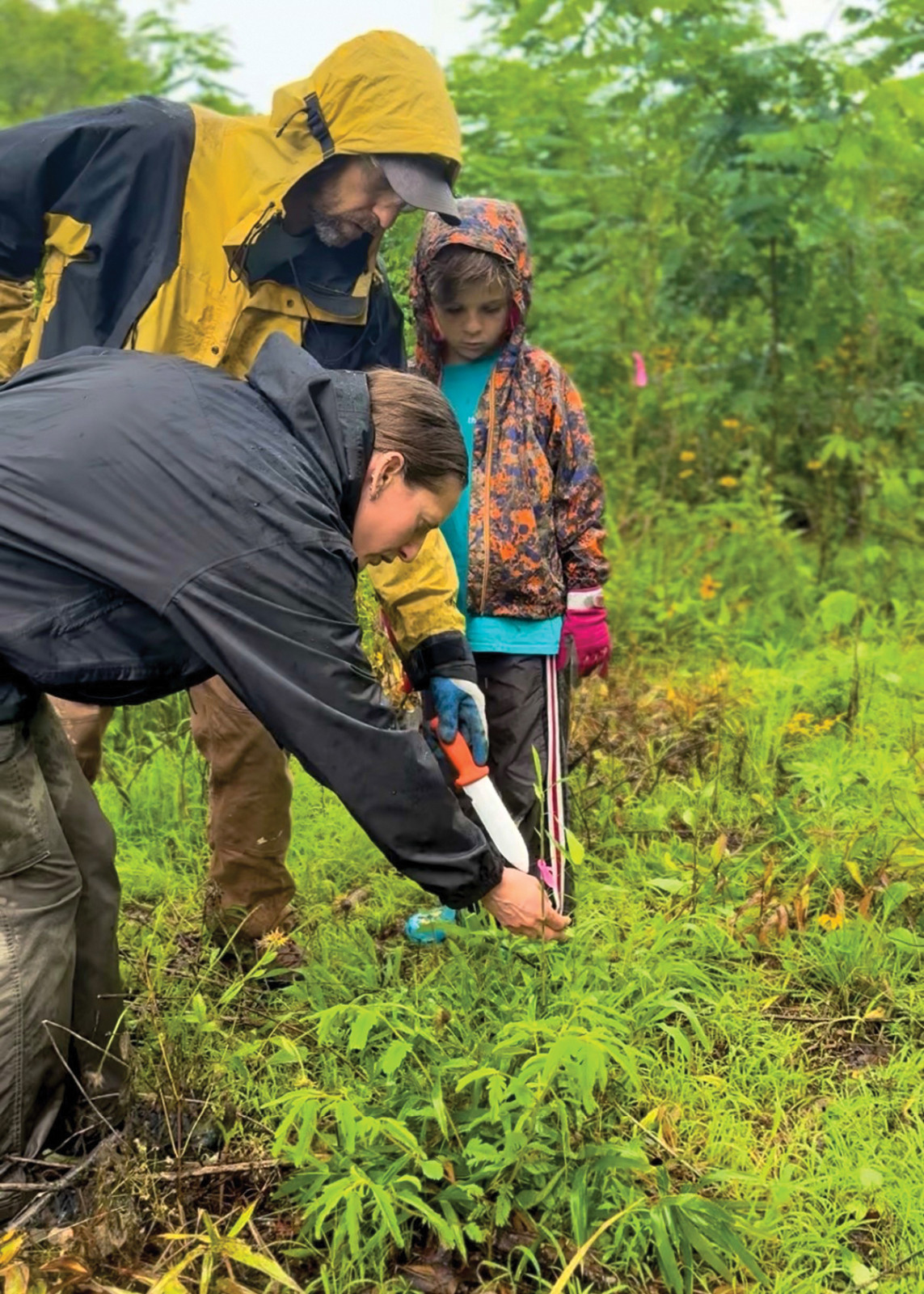
Event along Azalea Road, East Asheville
MACS student Tim Comstock, who came to the project with an environmental chemistry background, says he was surprised to learn about the extent of rivercane’s original range and function.
“What I’ve learned has given me a much clearer picture of how the regional river systems once kept their ecological integrity and the way humans benefited from maintaining—or at least not interfering with—the balance created when every native species occupies its niche,” he said. “In particular, the ability of a true canebrake ecosystem to filter out runoff debris and pollutants is difficult to overstate.”
These characteristics make rivercane particularly valuable in Western North Carolina, but the plant also carries significance beyond its ecological functions. Rivercane has been used by Cherokee people for generations in basketry, blowguns and other cultural practices. Incorporating that history and knowledge into the project has encouraged the students to think about restoration as more than a scientific exercise.
“It isn’t simply about restoring a native plant,” says MACS student Fiona McColley. “It’s about restoring ecological function, supporting biodiversity, strengthening river systems and recognizing the cultural importance of a species that has deep significance for Indigenous communities.”
McColley has worked on GIS mapping, policy research, stakeholder engagement and project communications. Her work has included identifying existing and potential restoration sites and examining planning and policy considerations that could influence future projects.
“One of the biggest lessons for me has been recognizing that restoration is about relationships as much as it is about planting vegetation,” she says. “Successful restoration means understanding the ecological system alongside the people who have cared for and understood these landscapes for centuries.”
The partnership has also provided RiverLink with information that can be applied beyond the students’ academic project.
“The findings from the MACS students’ project have given us valuable data to move our work forward,” Coats says. “This information has already helped us secure additional resources and launch an exciting new rivercane propagation pilot project, which we will be officially announcing soon.”
RiverLink hopes rivercane can eventually become a routine part of stream restoration across its native range, while increased availability through regional nurseries could make the species more accessible for restoration professionals and even home gardeners.
“I hope [this project] demonstrates that climate adaptation doesn’t always require entirely new solutions,” McColley says. “Sometimes it begins by restoring native ecosystems, working collaboratively and investing in the long-term stewardship of the places we all depend upon.”
Learn more at Warren-Wilson.edu/graduate-student-projects.