By Casey First
The Scarlet Tanager (Piranga olivacea) is a medium-sized songbird slightly smaller than a Northern Cardinal and larger than most Warblers. The breeding male is one of the most spectacular birds found in our Western North Carolina forests, with a brilliant scarlet-red body contrasted by jet-black wings and tail. The female looks quite different, with olive-yellow plumage and darker wings and tail. Both sexes have a thick bill that they use to capture insects and eat fruit. Although their brilliant colors make them seem easy to spot, Scarlet Tanagers are surprisingly difficult to find because they spend much of their time high in the leafy canopy of mature trees.
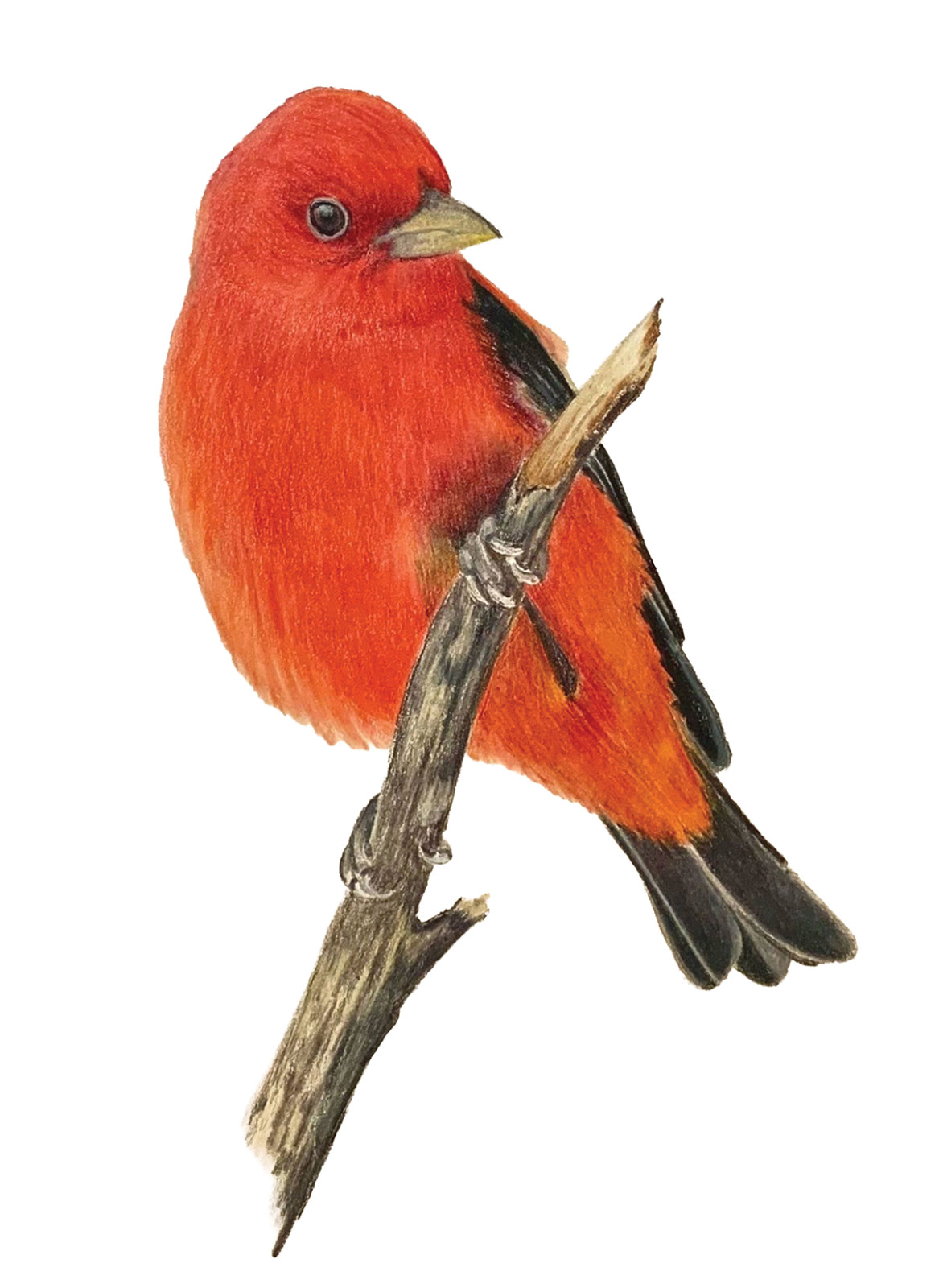
David Ballard, artist
They are primarily insect eaters during the breeding season. Their diet consists of caterpillars, moths, beetles, ants, bees, wasps, flies, grasshoppers and spiders. They also eat berries and other fruits, especially during migration. Scarlet Tanagers are not regular visitors to traditional backyard bird feeders, but on rare occasions they may sample offerings such as fresh fruit, orange halves or live mealworms. Fruit-based suet and bird food containing dried fruit may also help lure them in. However, they are much more likely to visit yards with native berry-producing plants such as mulberries, serviceberries and blackberries.
Scarlet Tanagers breed throughout much of the eastern US and southern Canada before migrating south to spend the winter in South America. Here in WNC, they arrive in spring and can be found in mature deciduous and mixed forests, especially those with large trees and dense canopy covers. They prefer larger tracts of forest and are particularly associated with oak, hickory, beech and maple trees.
As autumn approaches, the male undergoes a remarkable transformation, trading his brilliant scarlet-red feathers for a much less noticeable yellow-green plumage while retaining his dark wings. Most Scarlet Tanagers have departed our mountains once the cooler fall weather of October sets in. Their long migration takes them to the tropical forests of South America, where they remain until returning north the following spring.
Their song is often the first clue that a Scarlet Tanager is nearby. The male sings a hurried series of raspy phrases that many people describe as sounding like a robin with a sore throat. Both males and females also make a distinctive chick-burr call. Learning this call can be especially helpful because it allows birdwatchers to locate these colorful birds when hidden in the tops of trees.
During nesting season, the female Scarlet Tanager carefully selects a location high in a mature tree, often placing her nest on a nearly horizontal branch among leaves. She builds a relatively loose, shallow nest from twigs, grasses, bark, rootlets and other plant material. She typically lays three to five eggs, and the pair usually raises one brood each season. After the young leave the nest, both parents continue feeding them as they learn to survive on their own.
Scarlet Tanagers are considered a species of low conservation concern, although habitat loss and forest fragmentation remain important threats. Protecting large tracts of mature forest is essential to maintaining healthy populations. For those of us fortunate enough to live in WNC, the return of the Scarlet Tanager each spring is a welcome reminder of the richness of our mountain forests. If you happen to catch a glimpse of those brilliant red feathers moving through the canopy, consider yourself lucky as this beautiful bird is often much easier to hear than it is to see.
Casey First is owner of North Asheville Wild Birds Unlimited, located at 946 Merrimon Avenue, Suite 120. Monthly bird events are free and open to the public, with no registration required. To learn more, visit NorthAsheville.wbu.com. Artist David Ballard lives in Candler. Find his work on Instagram at d.ballard.art.