By Emma Castleberry
A new 10.1-mile natural surface trail in McDowell County is laying the groundwork for a more connected and accessible outdoor recreation network in Western North Carolina. Wolfpen Loop, the first completed segment of the future Wilderness Gateway State Trail, offers hikers, mountain bikers and adaptive recreation enthusiasts an opportunity to explore the South Mountains landscape on a trail designed to accommodate a wide range of abilities.
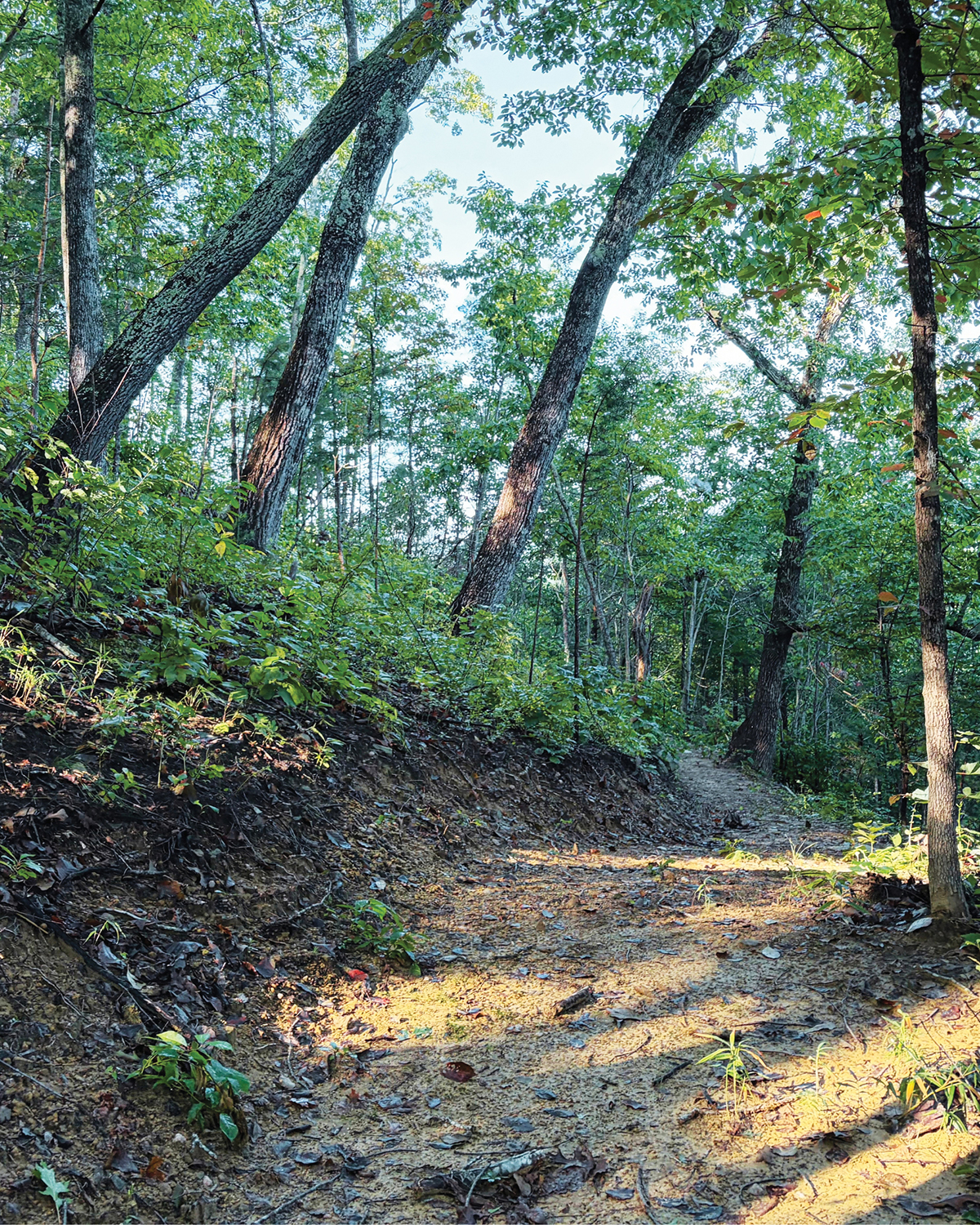 The Wilderness Gateway State Trail is a planned long-distance trail system that will connect communities, conservation lands and outdoor recreation destinations throughout the South Mountains region. Spearheaded by Foothills Conservancy of North Carolina, the project aims to expand access to the outdoors while protecting the natural character of the region. Wolfpen Loop is awaiting formal designation as part of the North Carolina State Trail System. Once designated, Wolfpen Loop will become an official segment of the Wilderness Gateway State Trail.
For Matt Lee of Wild Access Collective, an initiative working to increase mobility access to unpaved nature trails in WNC and East Tennessee, Wolfpen Loop offers an encouraging example of what thoughtful trail design can accomplish. Lee, a WNC native who sustained a spinal cord injury as a teenager, recently explored the trail alongside a group of adaptive and non-adaptive mountain bikers.
“I’m not an advanced or highly experienced mountain biker so I can’t really speak to technical aspects of the trail, but I thought it flowed well and it was nice being under the forest canopy,” he says. “I know Shane Prisby at Foothills has made an effort to incorporate KASA (Kootenay Adaptive Sport Association) standards and I think that was evident with the trail width and other aspects that eliminated pinch points and minimized some common trail problems for adaptive bikes.”
Features such as steps, gates and bollards can prevent people using wheelchairs or adaptive equipment from entering a trail at all.
“I’m grateful that Foothills is taking an approach that considers those differences and seeks to give adaptive trail users choice and more opportunities to explore as far and wide as they choose,” he says.
Rather than attempting to make every trail equally easy, the Wilderness Gateway project seeks to expand the range of experiences available to adaptive users without sacrificing the landscape’s natural character. As additional segments of the Wilderness Gateway State Trail take shape, connections between trails could allow visitors to explore more of the South Mountains region and create a larger network of trails for adaptive riders.
“I think it would certainly help make it a destination and hub for adaptive outdoor recreation, as well as a potential model for other places to see what is possible when you design with intention and commitment to increasing access for adaptive recreation,” says Lee.
For Lee, the promise of Wolfpen Loop is not simply that more people will be able to use one trail. It is that future trail networks could offer more people the freedom to venture into the mountains on their own terms.
“It’s about having choices,” Lee says. “At the end of the day, adaptive users are just people, and people differ in terms of what experiences they want and are looking for. I support any effort that helps provide access to nature and its benefits for as many people as possible.”
Wolfpen Loop is expected to open to the public before the end of the year. Learn more at FoothillsConservancy.org/wgst.