
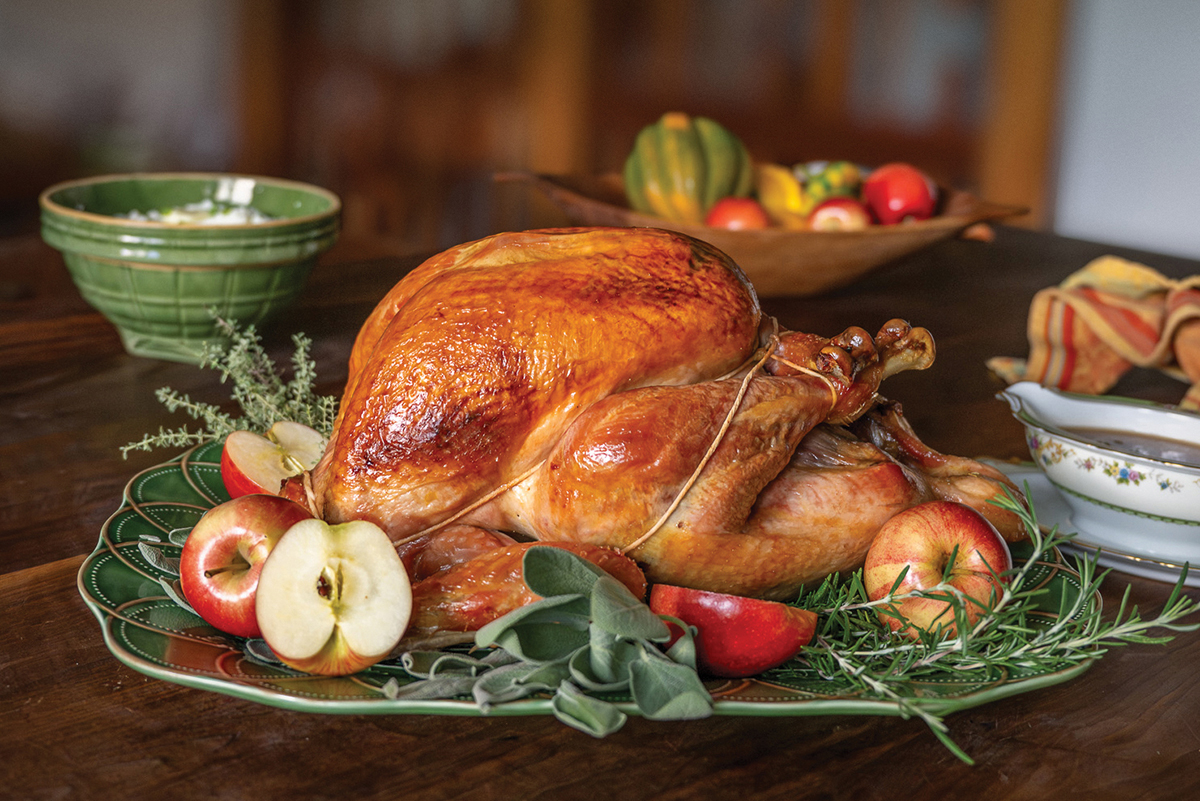
Photo courtesy of Hickory Nut Gap Farm
By Lyric East
Turkey is often on the mind in November. Whether or not you participate in some sort of Thanksgiving event, you are likely not immune to the turkey talk drifting on the autumn breeze. While I don’t personally celebrate the holiday, I do raise organic turkeys on my farm.
This spring we hosted a wonderful intern from UNC-Asheville, who helped with all aspects of the farm. One day while working in the garden, one of our staff mentioned that the first batch of turkeys would be arriving on the farm soon. The intern perked up and asked, “Oh cool! Do they migrate here?”
This endearing question highlighted the fact that non-farmers are largely unaware of how turkeys even come to find their way onto holiday tables. The answer is “not quite”: the turkeys raised on farms for meat in this country do not arrive by autonomous migration. They arrive in a way that could be considered a migration of sorts, though distinctly less majestic—as chicks in boxes shipped through the postal service. A very small number of family farms do hatch their own turkeys from eggs, but this is not common.
If the turkey chicks (called poults) are lucky, they get shipped out to true farms where they will live their lives on pasture, expressing their inherent turkey behaviors, munching on insects and seeds and having ample space to move around. The vast majority of poults, however, do not hit the farm lottery, and spend their lives entirely indoors in cramped, confined feeding operations. Nearly every turkey you can find at a grocery store was raised in this way.
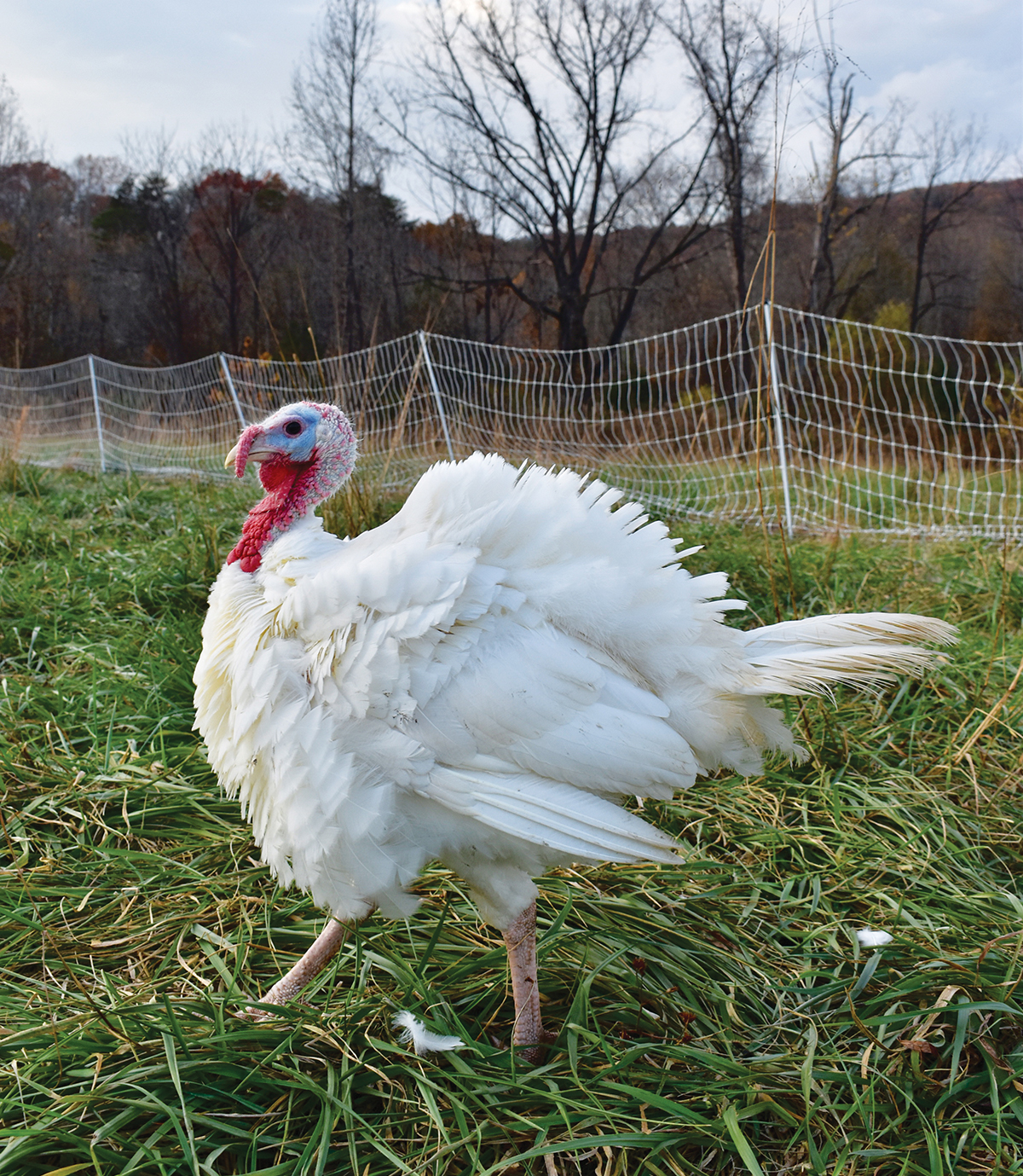
Wild East Farm. Photo by Lyric East
As an organic farmer, it is likely not a surprise that I am utterly against raising animals in confinement. I’m not in the business of forcing my dietary choices onto others, but I certainly am in the business of encouraging everyone to deeply examine their own value system and take seriously the responsibility, and privilege, of choosing food that aligns with those values.
Gratefully, Western North Carolina is home to numerous small farms that are truly raising their turkeys out on pasture for your holiday table. Several producers even offer organically fed turkeys and some folks raise heritage breeds. This range of options gives you plenty of opportunity to find a turkey that fits your value system. You can call or email these farmers directly to ask about their practices, which is not a luxury afforded by grocery store anonymity.
The longest-standing turkey producer in the region is Hickory Nut Gap Farm in Fairview. They have been raising turkeys on their fourth-generation family farm for more than 16 years. “This year, we’re raising close to 700 birds,” says Megan Auten-Cowart, local marketing and event coordinator. This gives Hickory Nut Gap the title of largest turkey producer in the region, in addition to the longest-standing.
Compared to a commercial confinement turkey house raising 20,000 birds in one cramped space, the pastured systems utilized at Hickory Nut Gap and other local farms ensures healthier birds—which correlates directly to flavor and nutrition.
And it is true, when you add it all up, there are fewer than 2,000 pastured turkeys being raised in the Asheville area for Thanksgiving. That means not every holiday table can have a locally sourced bird. But wouldn’t it make your meal that much more meaningful, delicious and connective if you could truly tell your guests the story of where your turkey came from?
Peruse various local turkey offerings and reserve yours at ASAPConnections.org/find-local-food/turkey. Choose to donate a turkey to a family in need at Shop.HickoryNutGap.com. Lyric East is an artist, writer and owner of Wild East Farm. Find her photos and quarterly publications at WildEastFarm.com. Her farm-grown foods are available weekly at the RAD Farmers Market and the North Asheville Tailgate Market.