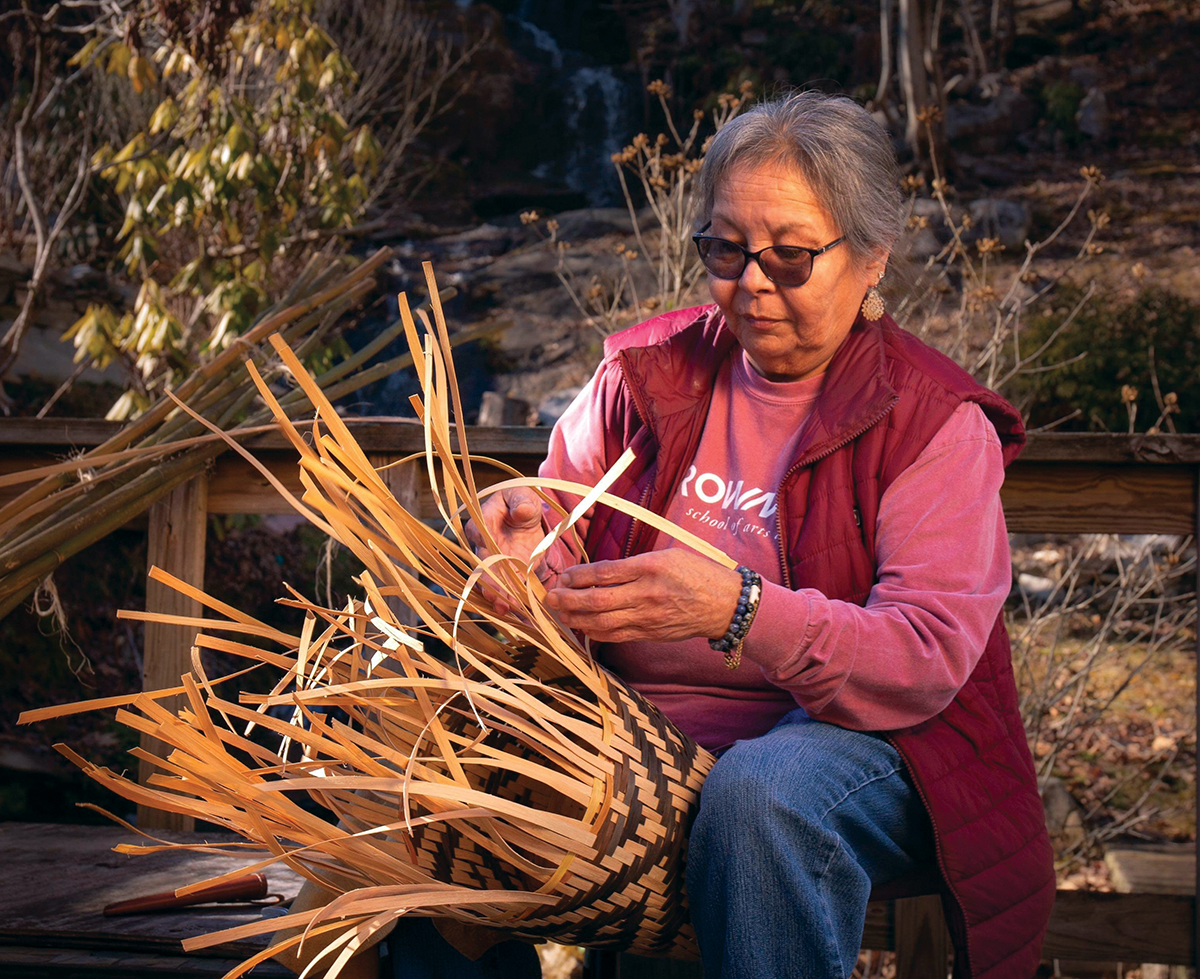
Mary W. Thompson. Photo courtesy of Center for Cultural Preservation
By Gina Malone
Filmmaker David Weintraub began interviewing scientists and Native elders about rivercane more than eight years ago when the topic came up in two of his films. “I thought the story of rivercane, the environment and Native culture was important enough to be the entire subject of a film,” he says. That’s when the new documentary Raising Cane: The Cherokee and Rivercane was born. Then, Helene hit. “It seemed far more relevant now that we’ve begun to realize how vulnerable we are when we ignore the lessons nature is clearly trying to teach,” says Weintraub, executive director of the Center for Cultural Preservation (CCP).
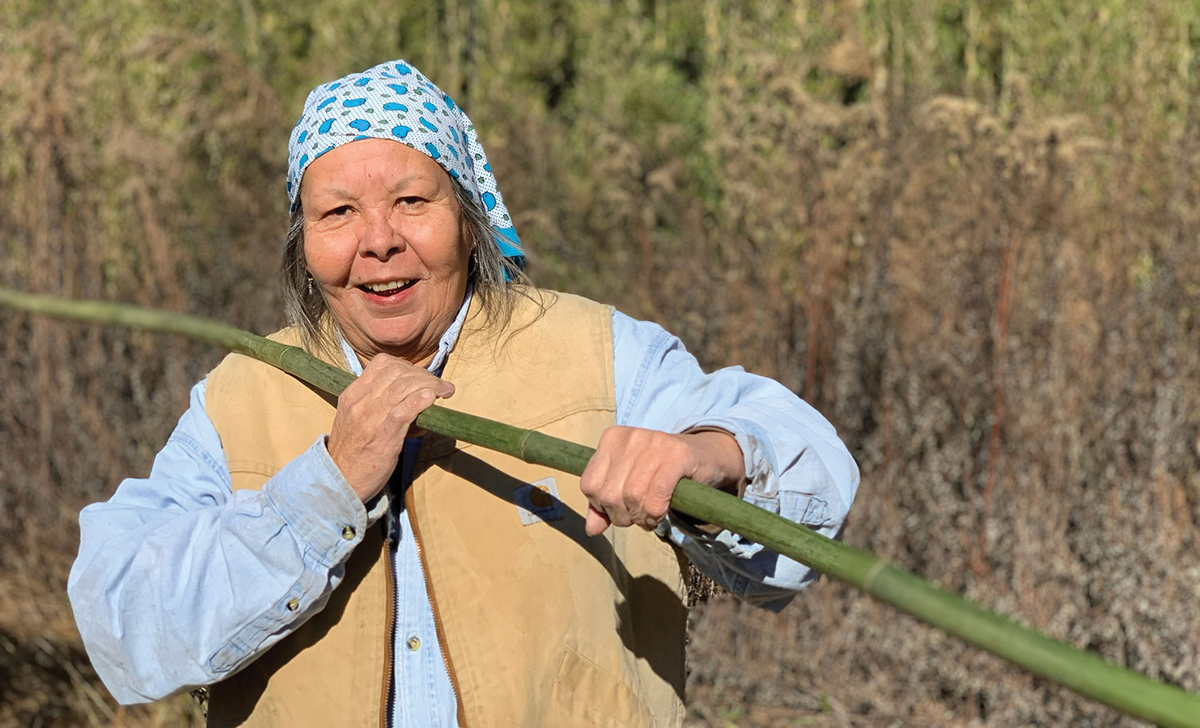
Mary W. Thompson. Photo courtesy CCP
The film will premiere on Saturday, September 19, at 7 p.m. at the Thomas Auditorium at Blue Ridge Community College in Flat Rock. Cherokee elders and conservationists will be on hand to discuss the future of rivercane and the cultural traditions that depend on it and to take questions from the audience. In addition, during the evening, the CCP will celebrate its 15th birthday with music, food and drinks for ticketholders.
“Starting the Center was a dream of mine that it was possible to connect all of the great environmental work that was going on with the vibrancy of the region’s cultural history,” Weintraub says. “Fifteen years later, we’ve produced more than 50 films, nearly 500 oral histories and run hundreds of cultural programs.”
For Weintraub, the film is not an end goal. “I think documentary filmmaking at its best is about starting a conversation, reconnecting ourselves to our history and to the cultures around us and helping us become better stewards of past legacies and nature than we were before,” he says. Accordingly, conservation groups and members of the Eastern Band of the Cherokee Indians are working with the CCP to help restore rivercane which once grew abundantly from New York to Florida. Clearing land for agriculture and creating waterfront properties contributed to the loss of much of the rivercane in the US. “Of course, we’ve noticed that in places where rivercane was still intact during the flood of 2004 and during Helene, that the land was protected,” Weintraub says. “In places where it had been removed, we experienced some of the worst flooding in history.”
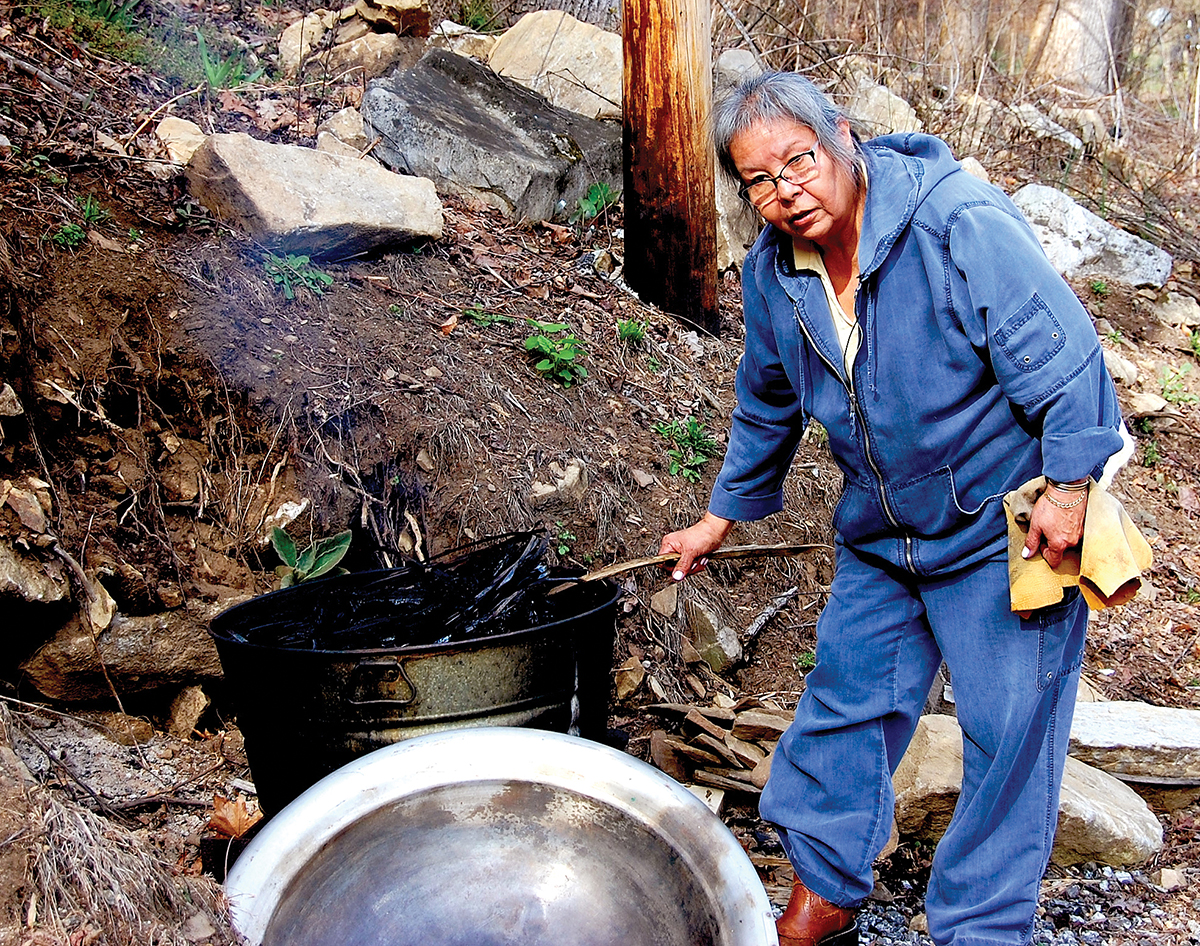
Mary W. Thompson making dye
The woody grass grows in bottomlands and along riverbanks where its underground lateral plant stems, or rhizomes, store carbon, prevent erosion and provide habitat for wildlife. Dense patches of the plants, which can grow 20 feet tall, are called canebrakes. “William Bartram, the 18th-century naturalist, explorer and author wrote that he witnessed canebrakes so thick they were like impenetrable jungles,” Weintraub says. “Only two percent or less remains today.”
Besides its environmental benefits, rivercane has long been of importance to the Cherokee. “We ate it, we made our houses out of it, we used it for decorations, for utilitarian baskets,” says Cherokee elder Davy Arch in the film. “We lined our houses with cane mats to reflect our lineage and our history. It was an invaluable plant to us. We still use it a lot. And it’s an unbroken tradition in our culture to use this plant and to manage this plant as a resource.”
And Weintraub adds, “Like all resources the Cherokee had access to, they didn’t just take it but cultivated it in a way that helped it thrive. The Cherokee didn’t see rivercane as a resource to exploit but a gift that through worthy use helped put the natural world into balance.”
Weintraub remains committed to using his work as a filmmaker, oral historian and environmentalist to create better understanding of how people connect in a mutually beneficial way with nature and its resources. “I’m excited about all the positive feedback we’ve received and how our work has attracted people across the political, ethnic and cultural sphere,” he says. “We are all part of the same common threads. The stronger we see those connections, the healthier our community will become.”
Find tickets for the premiere and learn more about the Center for Cultural Preservation at SaveCulture.org.