Ken Wheeler, artist
By Gina Malone
While a freshman at Western Carolina University in the spring of 1973, Ken Wheeler had resigned himself to the fact that he was about to be drafted, and didn’t sign up for fall classes. Two weeks later, the draft ended and he had to choose from among the handful of classes not already filled. His intended degree at the time, which he would eventually obtain, was Parks and Recreation. One of the classes available was a ceramics class.
Ken Wheeler, artist
“On the first day of class the professor told the class that she really didn’t like P.E. or Recreation majors and that we might want to consider signing up for the other ceramics class,” Wheeler says. “But I just kept my head down and stuck it out. By the end of the semester, I was one of her favorite students. In fact, I loved working with clay so much that I signed up for every pottery class that she taught for the rest of my college career.”
Field trips to Penland School of Craft and to art studios showed Wheeler artists at work. “I was absolutely blown away by the fact that you could actually make a living, as they were, by creating things of beauty with their hands,” he says.
Upon graduation, however, he decided that he needed to find a stable job. For the next five or six years, he worked as an athletic director at a recreational park, a recreational therapist for children with disabilities and a physical education teacher at a youth prison. Not happy in any of the positions, he enrolled at Appalachian State University to study art.
Determined afterwards to work with his hands, he took jobs at a lumber yard and at cabinet and millwork shops to acquire skills. As a child, he says he had become interested in wood while following his father around. “By the mid-nineties, I had enough tools and equipment to start off on my own,” Wheeler says.
Ken Wheeler, artist
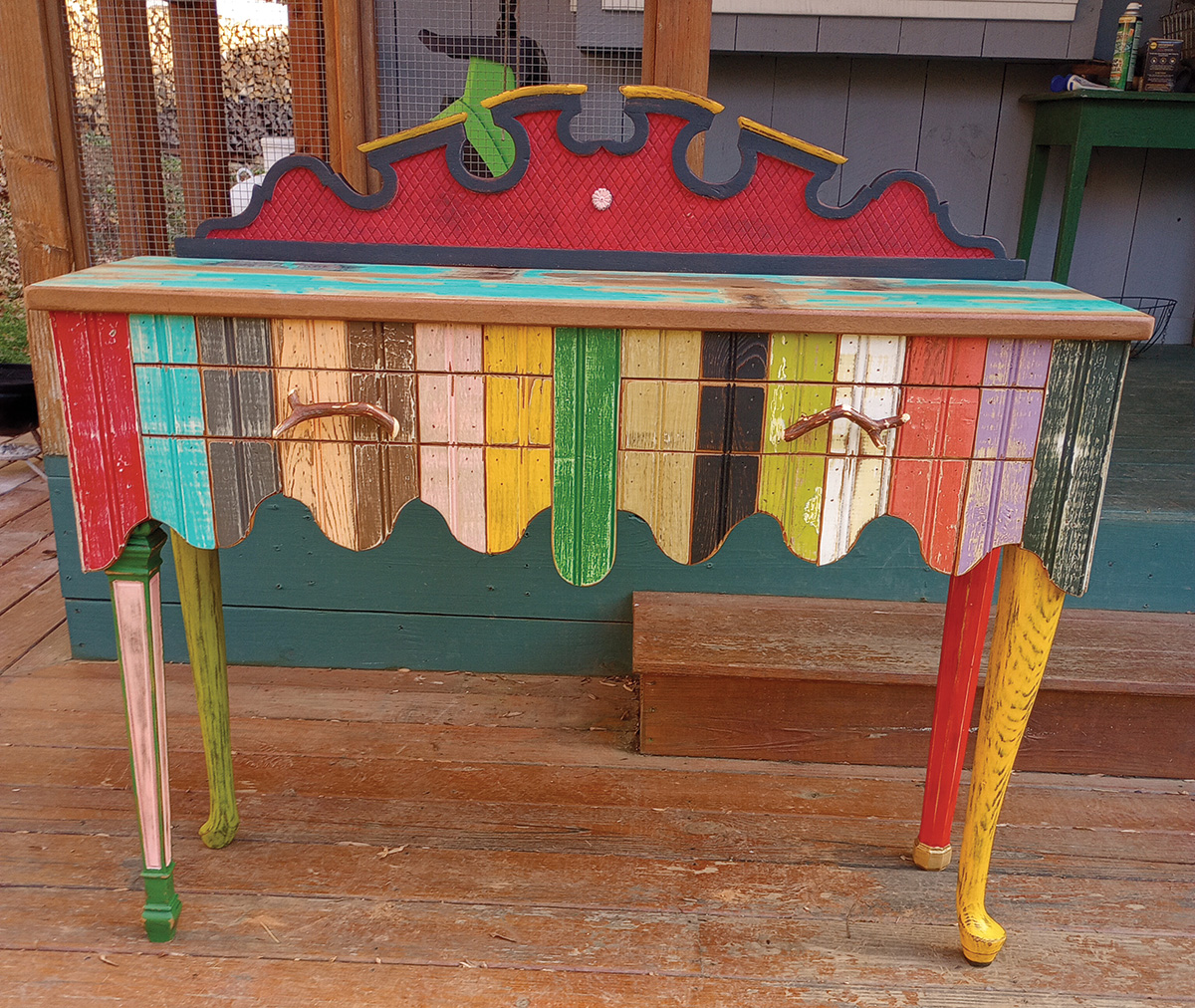
He rented a space in downtown Saluda and began making cabinets and furniture. When someone gave him a book on rustic furniture, that set him on a new path. “Soon, I was making rockers, chairs and tables out of rhododendron that I cut off my property,” he says. He continued the work for 15 years before moving his workshop to a building behind his house.
“Around this time I began remodeling the old farmhouse that my wife and I and our three daughters lived in,” he says. “I ripped a lot of heart pine out of the house and couldn’t bear to trash it or burn it, so I began to make furniture, cabinets and birdhouses out of it.”
After renting a small space at Asheville’s ScreenDoor in 2009, he says, his work began to get noticed by galleries and he became so busy he could hardly keep up with orders. “It has pretty much stayed that way until 2024,” he says. “After Hurricane Helene and the election, it has slowed down a bit, which is just fine with my aging bones.”
Wheeler prefers working with reclaimed wood. “You just can’t reproduce the character of old wood,” he says. “The dings, dents and old paint really add interest. Most of the wood I use comes from dismantled houses and barns.”
Ken Wheeler, artist
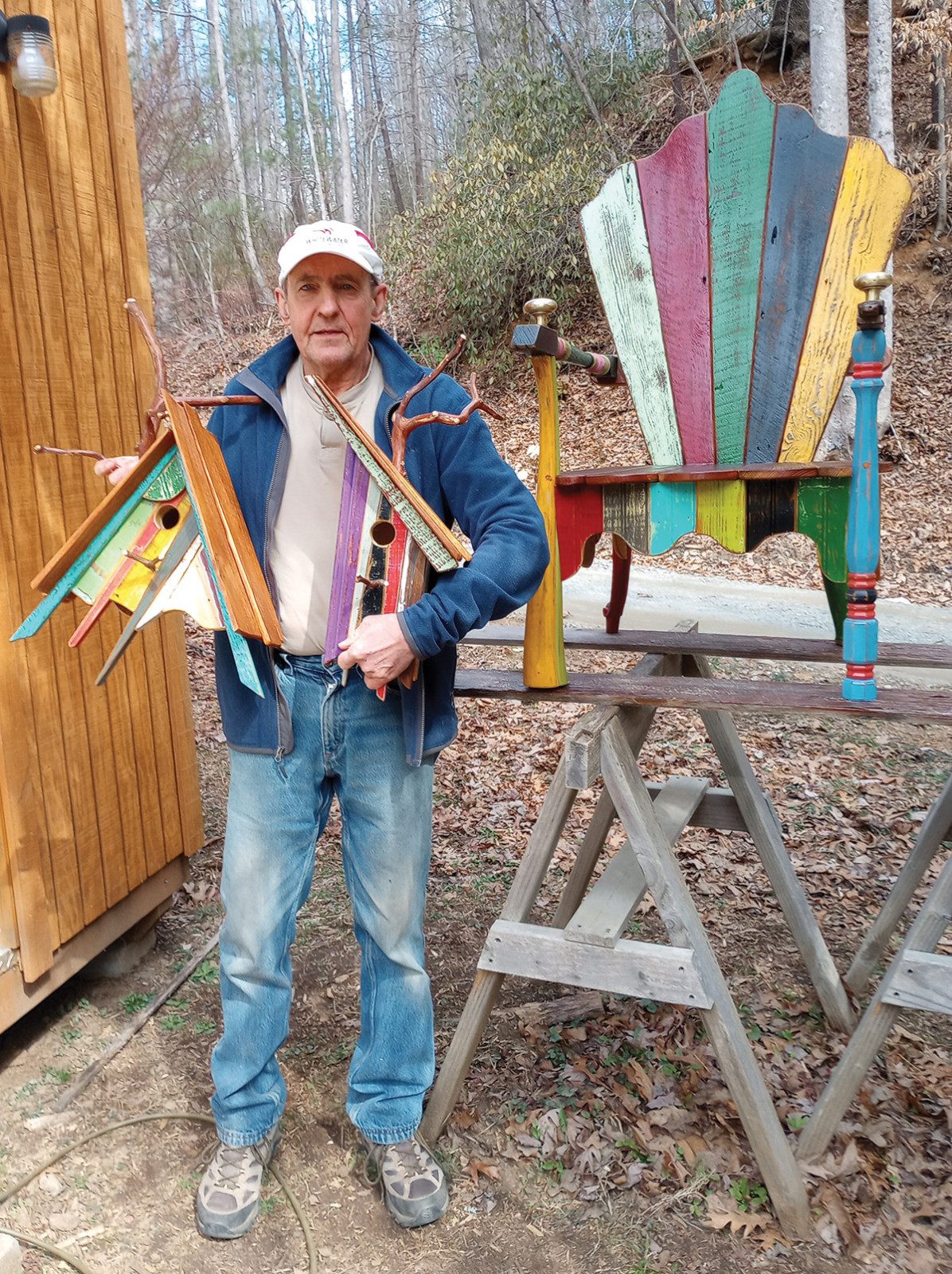
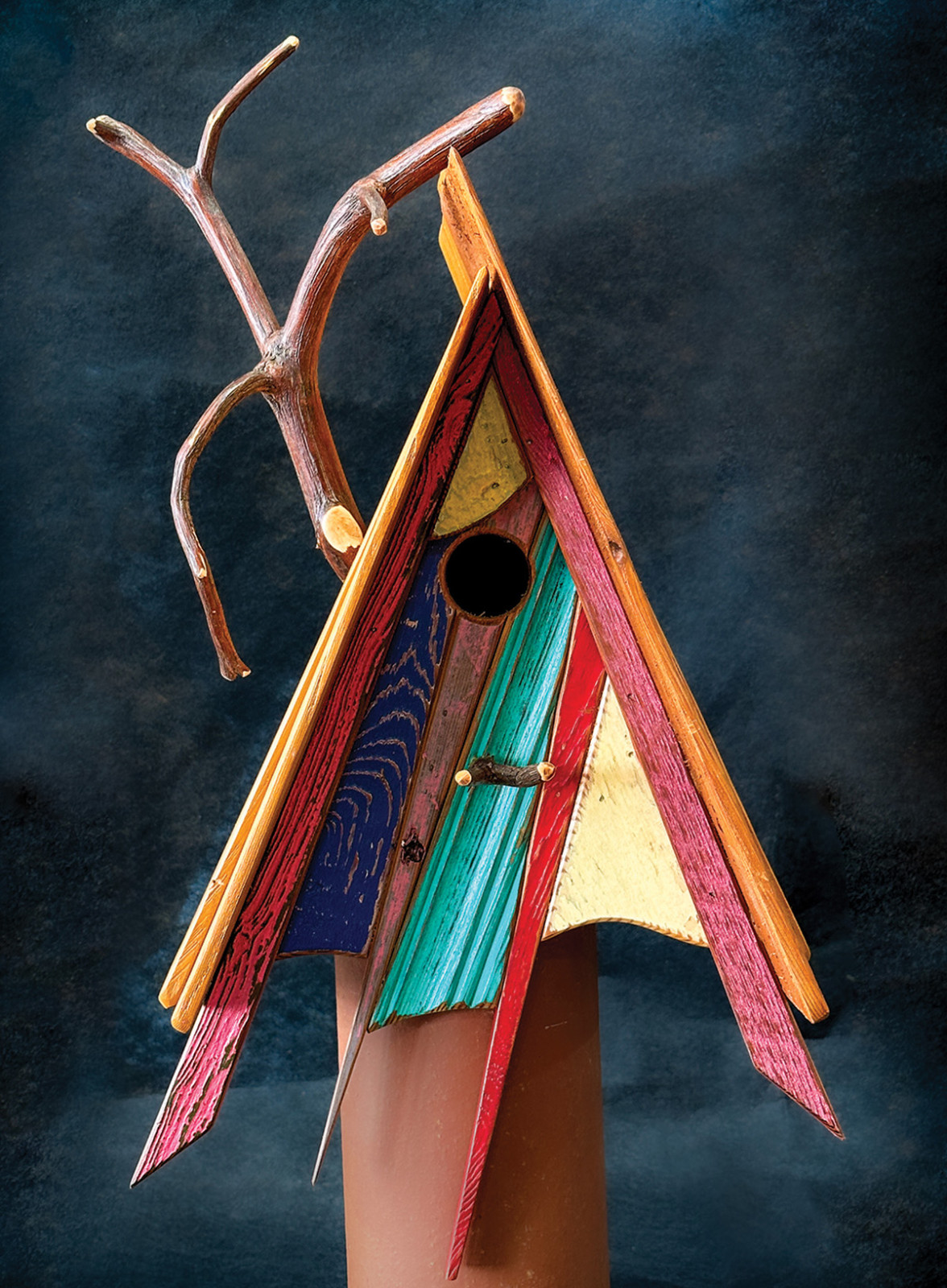
Along with furniture, he has been creating birdhouses for about 30 years. He describes the first ones he made as fairly plain. “One day, I picked up a yellow scrap of wood off the floor and incorporated it into the birdhouse and it really made it pop,” he says. “I started using more and more colors in my work—until the point that it could be too much.”
Flow Gallery co-owner Connie Molland says that Wheeler’s work resonated with visitors from the time his birdhouses first appeared in the gallery early in 2017. “We have been proud to be one of the few places that has continuously sold these unique, upcycled birdhouses,” Molland says. “While they are functional birdhouses, many customers have told me that they keep theirs inside their home, either on a fireplace mantel or simply as wall art. The rocking chairs are hard to keep in the shop as the demand continues to outpace our supply.”
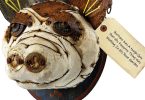
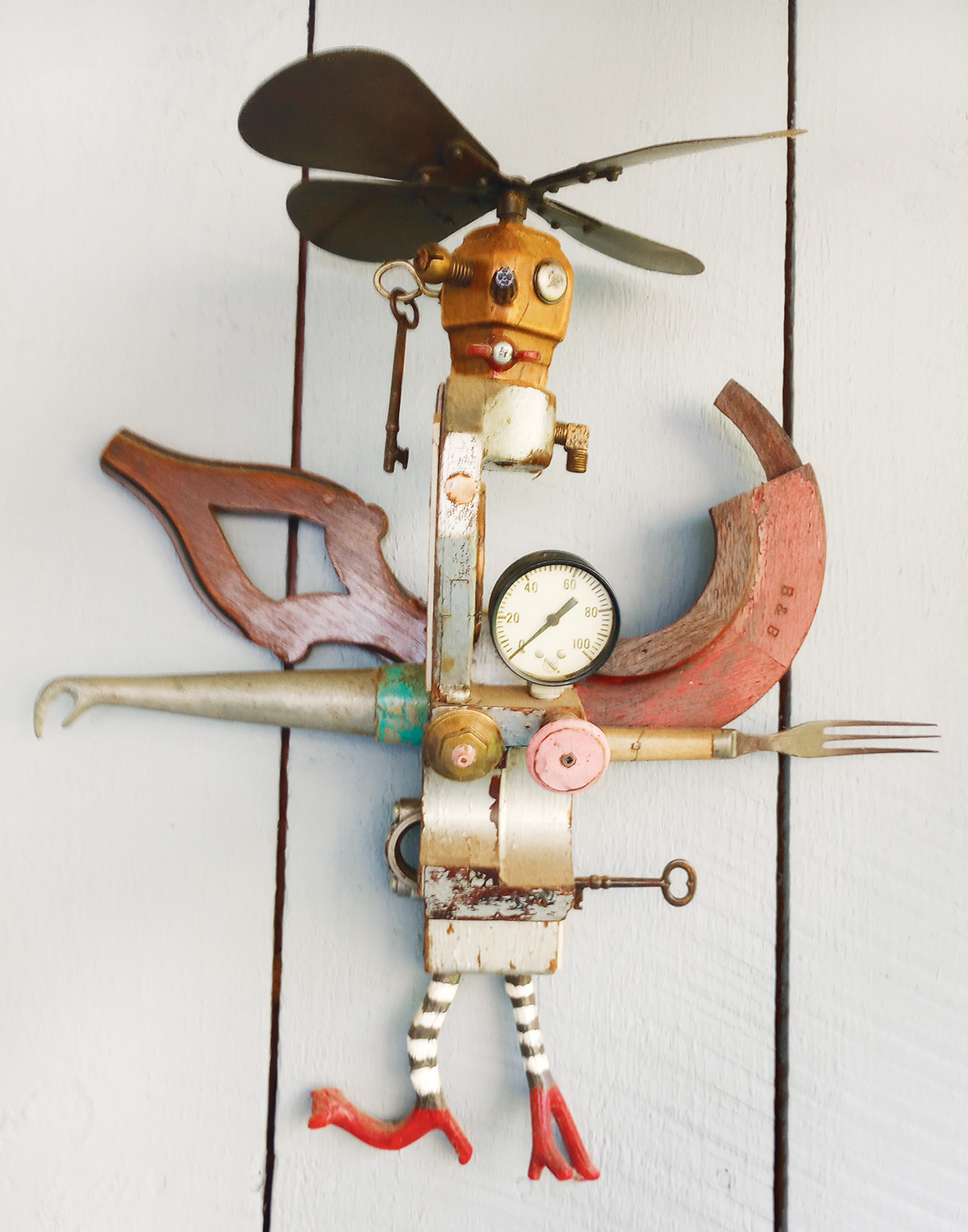
Years ago, Wheeler inherited some old boxes of junk parts from his father and uses the bits to make small wall sculptures that he calls fallen angels. “They usually have an old pressure gauge or TV tube for a head and various junk for arms, legs and wings,” he says. “They are fun to make and each one has its own personality.”
Old wood has become harder to find. Still, “I plan to keep on working as long as I can,” he says, “or until the art bug that I caught more than 50 years ago dies out.”
Ken Wheeler’s work is available at regional galleries including Flow Gallery, in Marshall; Twigs & Leaves Gallery, in Waynesville; and Seven Sisters Gallery, in Black Mountain. See more of his work at FlowMarshall.com.