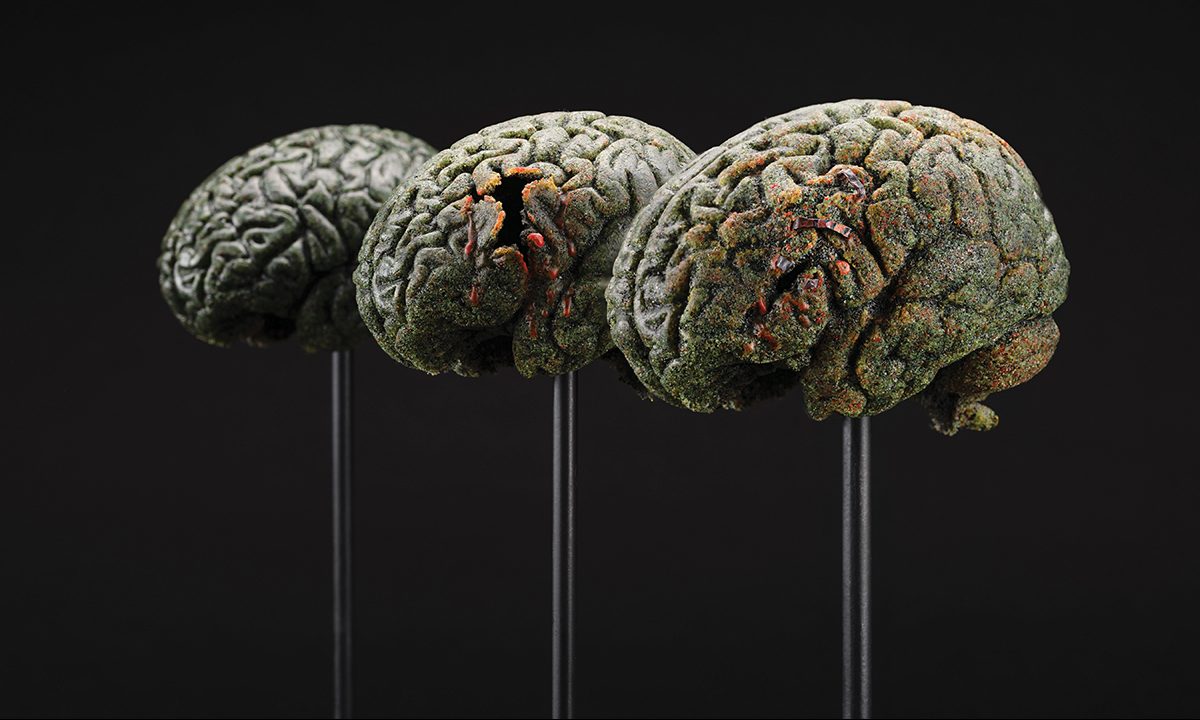
Scars of Service: A Triptych Journey. Geoffrey Bowton, artist
Veteran Obsolete: Geoffrey Bowton, on view at the Western Carolina University Fine Art Museum through December 4, explores the realities of military life through a series of glass sculptures by US Army veteran and Penland School of Craft resident artist Geoffrey Bowton. Using cast glass versions of military equipment and personal artifacts, the exhibition examines the challenges many veterans face as they transition back into civilian life while inviting broader conversations about trauma, identity and healing. The museum will hold a reception on Thursday, September 10, from 5–7 p.m., featuring remarks by the artist.
“At first, the Army offered what I needed: training, stability, purpose and a sense of belonging to something larger than myself,” says Bowton. “I believed I was serving the idea of America I had been taught to value. But after I separated from service, that structure disappeared almost instantly. Reintegration felt abrupt and unsupported, and I struggled to find stability and meaning without the system I had depended on. What once gave me purpose eventually left me feeling abandoned.”
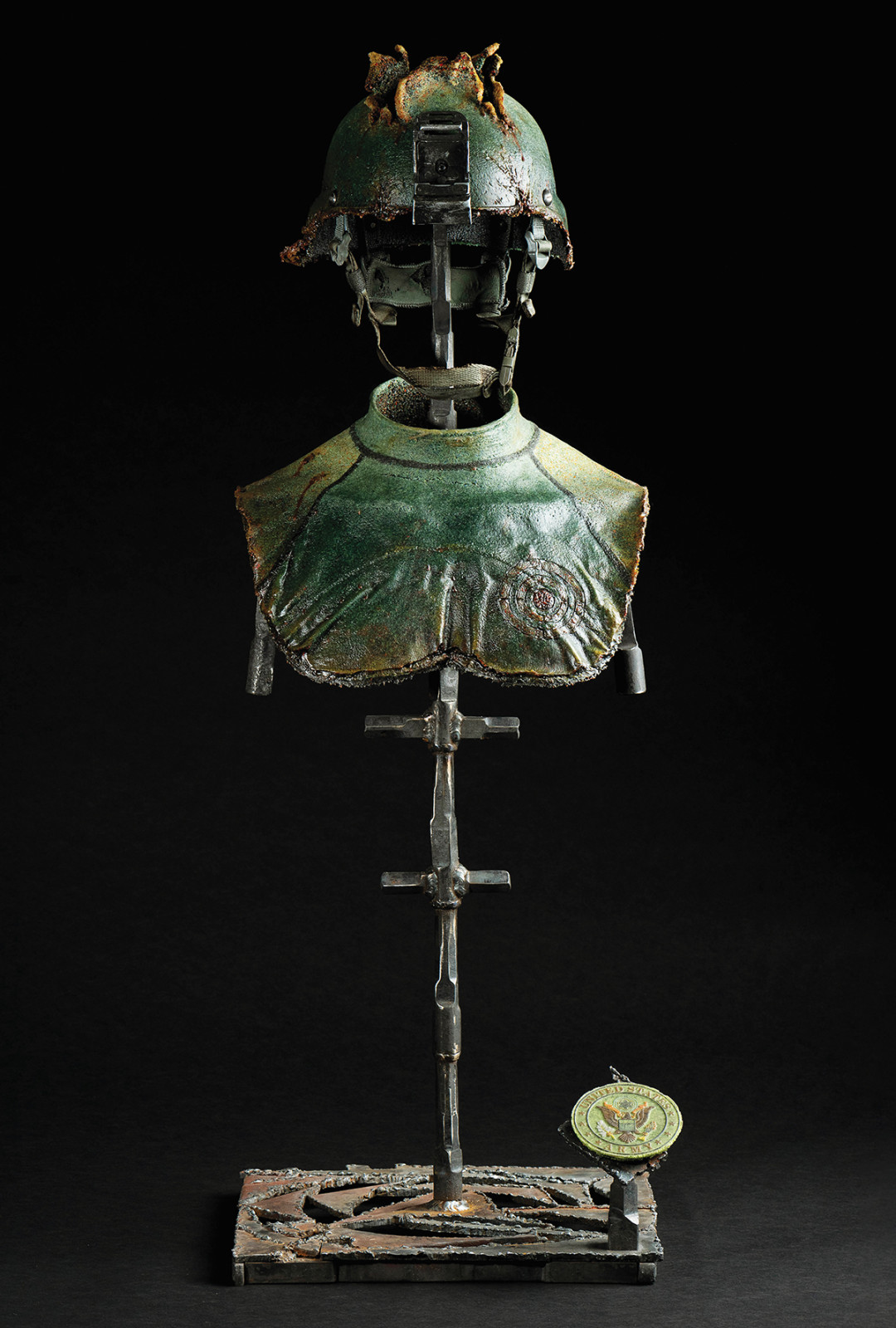
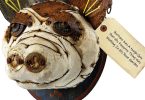
Dancing with the Devil. Geoffrey Bowton, artist
That personal evolution became the foundation for Veteran Obsolete, which transforms familiar military objects into contemplative sculptures. Bowton uses the ancient glass-making technique pâte de verre, in which coarse glass granules are fused together to create delicate forms that preserve the shape of the original objects.
“Glass carries a sense of fragility that other materials do not hold in the same way,” says Bowton. “Because it is so closely associated with vulnerability and breakage, it becomes a powerful material for addressing military service, war and the cost of human life.”
Bowton values the way the hollow glass forms, as opposed to solid cast glass, encourage viewers to imagine themselves in relation to the objects.
“They create a sense of participation,” he says. “The viewer can imagine a helmet, gloves or boots in relation to the body and briefly consider the experience of the soldier. Solid cast glass loses that sense of access; it feels heavy, closed off and less available to the body.”
The creation of this body of work gave Bowton a way to contextualize his military experiences.
“In that sense, I was running toward the fight again, but this time I was fighting for myself,” he says. “Keeping my hands and mind engaged allowed me to unpack difficult memories and begin finding clarity, balance and peace. Veteran Obsolete is about what happens after service, when the structure and identity you depended on are suddenly gone. For me, making this work became a way to face that loss and start rebuilding a sense of self.”
The WCU Bardo Arts Center is located at 199 Centennial Drive, Cullowhee. Museum hours are Tuesday, Wednesday and Friday, 10 a.m. to 4 p.m., and Thursday, 10 a.m. to 7 p.m. For more information about programming, call 828.227.3591 or visit BardoArtsCenter.WCU.edu.