
By Gina Malone
A new exhibit at Mars Hill University’s Weizenblatt Gallery gathers photographs from Tim Barnwell’s nearly 50 years as a photographer and author. Tim Barnwell: Photographs of Appalachia runs through Monday, September 28, and contains about 50 images that document the people, traditions and landscapes of Appalachia, particularly Western North Carolina. An opening reception with live music and remarks by Barnwell will be held Friday, September 4, from 5–8 p.m.
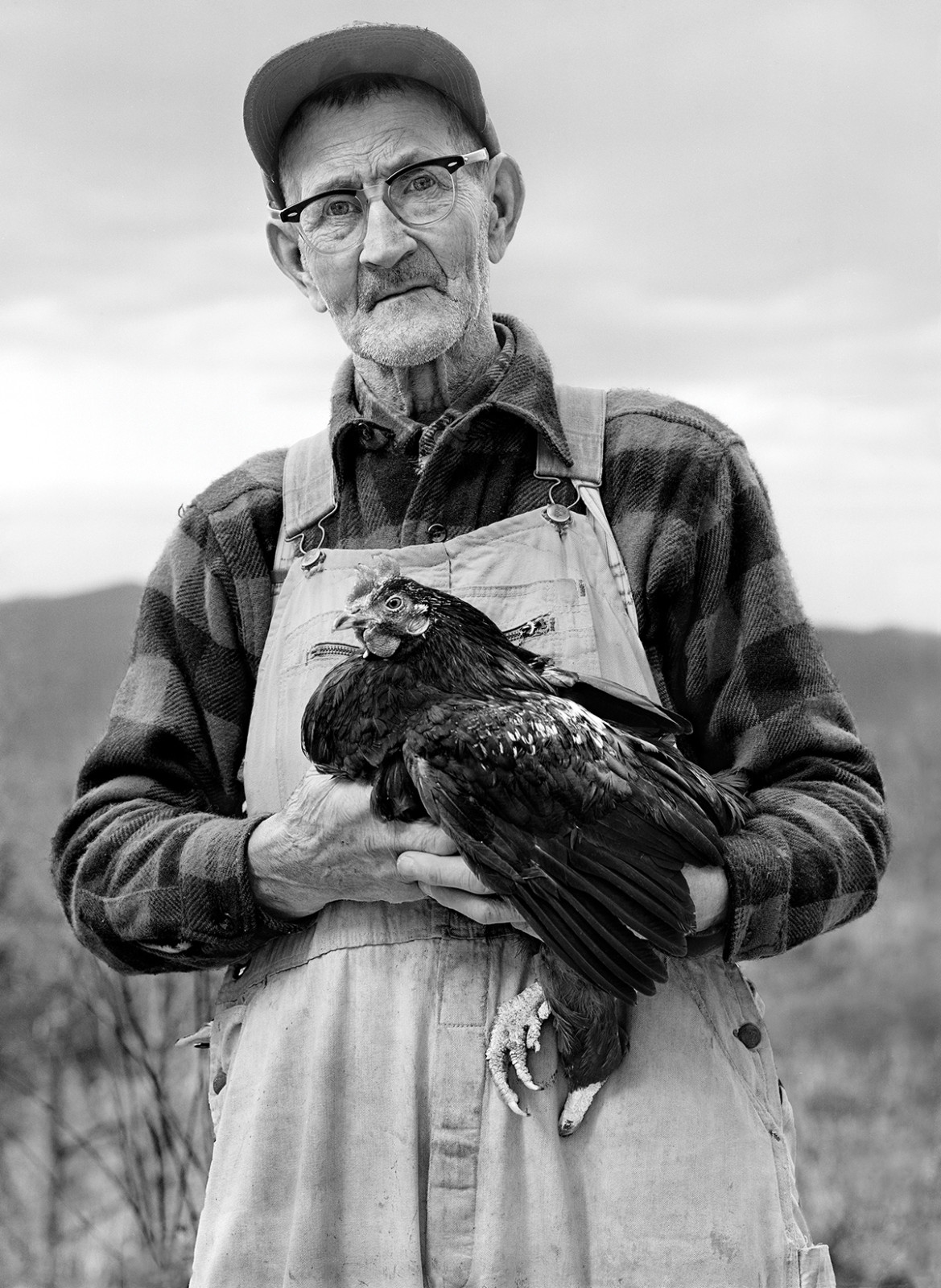
Amos Henderson with his pet chicken. Photo by Tim Barnwell
The earliest photograph in the retrospective was taken when Barnwell was 23 years old. “Looking back over the decades, I can see themes that have developed and deepened throughout my work, but I also find myself reflecting on the people I met and the friendships that grew out of those encounters,” he says. “Many of those individuals have since passed away, and many of the farming practices and traditions I photographed have largely disappeared. The exhibition reminds me that these photographs have become more than images—they are a visual record of a way of life that has changed dramatically during the years I’ve been documenting Appalachia.”
Displayed are photographs from each of his Appalachian-themed books: The Face of Appalachia: Portraits from the Mountain Farm; On Earth’s Furrowed Brow: The Appalachian Farm in Photographs and Hands in Harmony: Traditional Crafts and Music in Appalachia. He has produced five additional books of photographs and has contributed to dozens of other published works.
“Tim Barnwell has a very sensitive eye for an image that tells a powerful story, and he has the strong technical skills to make every image the very best it can be,” says Skip Rohde, director of Weizenblatt Gallery. “He also has a deep empathy for the places and people that he works with. His photos make the viewer want to spend time with each of them, to study the meaning of each part of the picture and what they contribute to the whole. They are artistic, social and very personal encounters.”
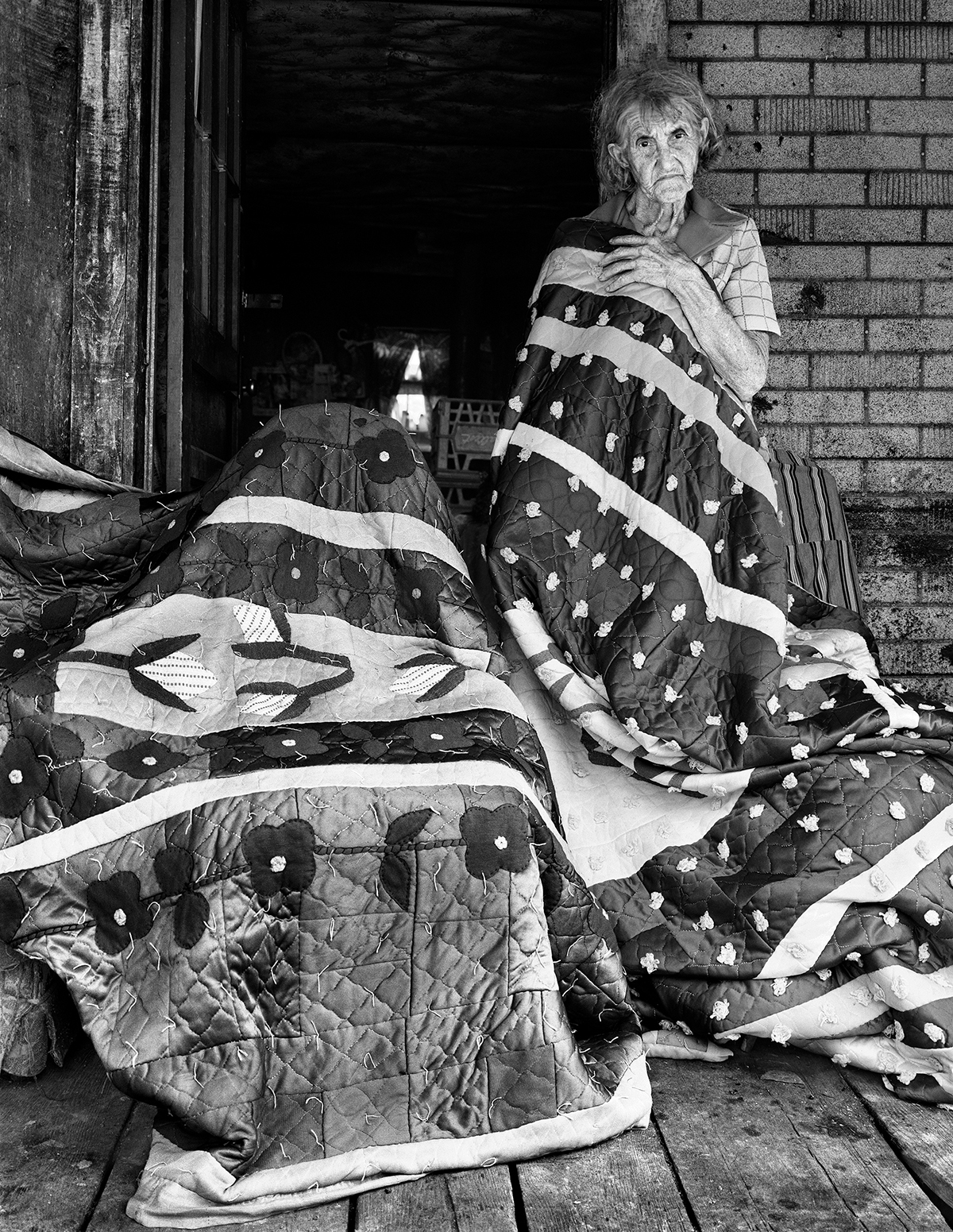
Emma Mills. Photo by Tim Barnwell
Recently, Mars Hill University has established the Tim Barnwell Collection within the Southern Appalachian Archives, ensuring that his photographs, books and related materials are permanently collected for future generations as documentation of changes in the land and the ways that Appalachians live and work. “For example, Mr. Barnwell documents the cultivation of tobacco, an important crop here for many years, but one that is hardly grown at all now,” says Karen Paar, university archivist and director of the Southern Appalachian Archives.
“His work offers an honest portrayal of how people have lived—not shying away from poverty when it is present—while capturing the dignity and individuality of the people. Mr. Barnwell has some beautiful and expansive photographs of mostly rural landscapes in places that now have begun to change, as more people move into the region and build homes in these once more remote areas.”
Barnwell selected images that would present a broad view of his work through the decades, reflect changes that have occurred since he began focusing on the area—and offer an authentic visual record. “Too often, portrayals of Appalachia have focused on stereotypes or sought out the unusual for sensational effect,” he says. “My goal has always been different—to portray the people of this region with honesty, dignity and respect, and to create a lasting record of their lives, traditions and culture.”
Weizenblatt Gallery is located in the Moore Fine Arts Building, Mars Hill University, 79 Cascade Street, Mars Hill. Gallery hours are 10 a.m. to 4 p.m. Tuesday through Thursday, except on holidays. Admission is free. Learn more at mhu.edu.

Thanks for publishing the article about the work of Tim Barnwell, who has spent decades documenting the people and landscapes of Western North Carolina, which is his home.
I have known Tim for many years and I have watched him work to preserve the culture and way of life in the mountains with photographs and oral histories.
Be sure to visit Mars Hill University in September to see Tim’s excellent work!