Wilma Dykeman, who would have been 100 years old on May 20, remains one of Asheville’s most beloved and best known writers. Her first book, a groundbreaking work of nonfiction called The French Broad, came out in 1955, and garnered the first-ever Thomas Wolfe Memorial Literary Award. The French Broad brought the river some much needed attention and has inspired environmental activism right up to the recent Wilma Dykeman RiverWay Plan, a design for a 17-mile greenway and park system between the French Broad and Swannanoa rivers.
Today, the nonprofit Wilma Dykeman Legacy carries on Dykeman’s ideals of social justice, environmental integrity and education through the spoken and written word. Part of the Legacy’s outreach includes the Dykeman Legacy Press. “In early 2016, we decided to commit almost one-half of our assets to establishing the Press,” says Jim Stokely, Dykeman’s son and president of the Legacy. It was a decision the board thought long and hard about, he says. “Due to our extremely limited funds, we could publish only occasionally, so we would apply a very fine filter to possible manuscripts,” Stokely says. “We would look for the highest quality of writing by authors who might not be published elsewhere.”
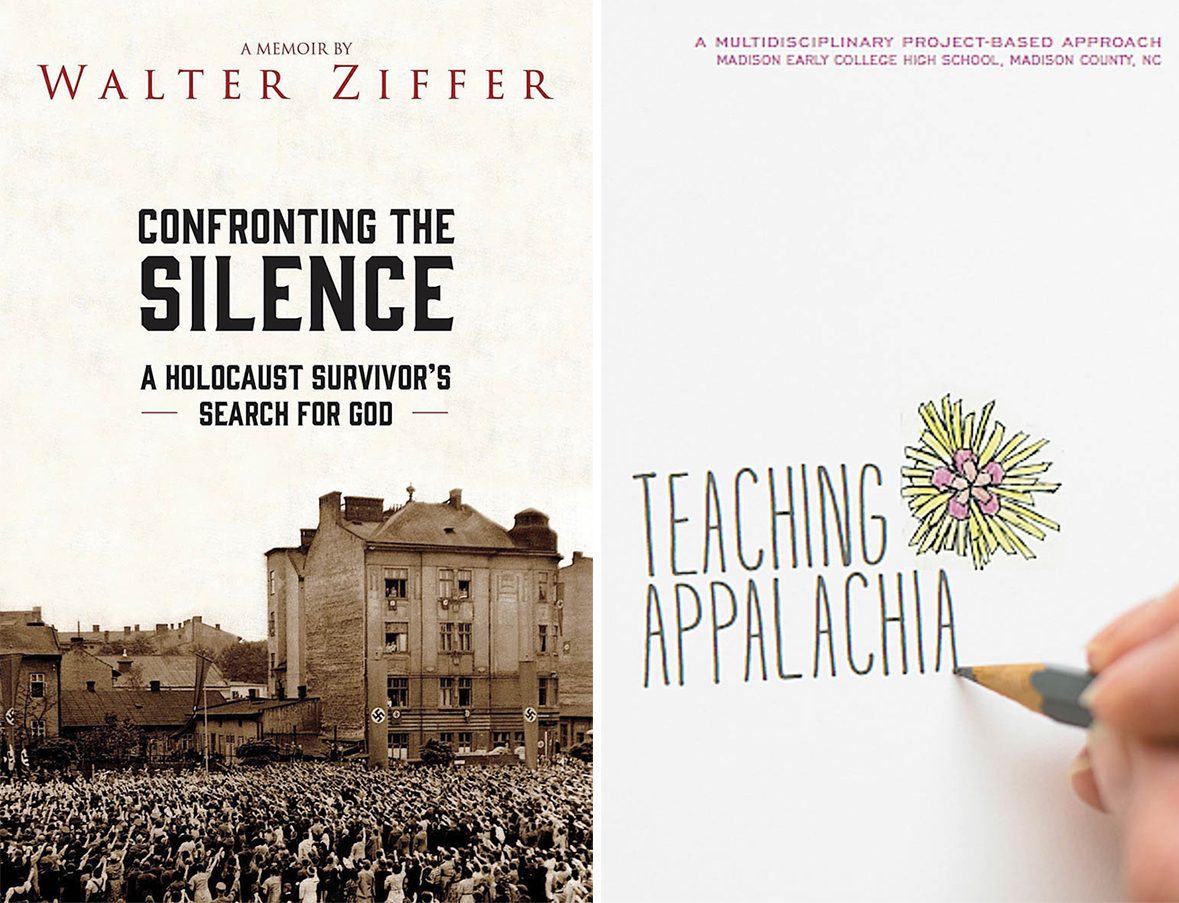
Confronting the Silence: A Holocaust Survivor’s Search for God was the Press’ first book and came out on March 5, 2017. Written by Walter Ziffer of Weaverville, the insightful memoir was published on the author’s 90th birthday.
The next publication, Teaching Appalachia: A Multidisciplinary Project-Based Approach, was a collaborative effort between the Wilma Dykeman Legacy and faculty from the Madison Early College High School in Marshall. Jennifer Caldwell, the school’s principal, was among those involved in implementation of this roots-based approach to learning. “Teaching Appalachia allowed teachers to deliver relevant content across disciplines, which opened the doors to the past, present and future of Madison County,” she says. The students took on the roles of researchers, authors, performers and presenters, she added, “all the while understanding how important it is to appreciate their heritage and culture as revealed through artifacts, arts, crafts, skills, traditional customs, literature and language.”
The publishing committee is considering as its next project an account of life in the Toe River Valley during the 20th century. “The excitement that we and the author feel about this work,” says Stokely, “is testament to one of the Legacy’s guiding values: the power of the written word.”
To learn more about the Wilma Dykeman Legacy and the Dykeman Legacy Press, visit WilmaDykemanLegacy.org.