Children’s Book Highlights the Genius of Spanish Architect
By Lauren Stepp
In 1889, when socialite George Vanderbilt broke ground on his 250-room chateau in Asheville, he recruited the nation’s most sought-after design professionals.
His team included the likes of Richard Morris Hunt, the architect behind the Metropolitan Museum of Art’s entry hall, and Frederick Law Olmsted of Central Park. But Vanderbilt also beckoned a lesser-known figure to the rolling hills of Western North Carolina: a man by the name of Rafael Guastavino y Moreno.

Rafael Guastavino y Moreno. Photo courtesy of Swannanoa Valley Museum & History Center
Trained in Barcelona, Guastavino built a reputation in Spain for reviving a Catalan masonry technique of layering thin tiles to construct robust arches, domes and vaults. When he immigrated to America in 1881, Guastavino quickly wooed wealthy clients with these elaborate, fireproof designs and secured contracts for grand public works like the Boston Public Library, the Plaza Hotel and New York’s Grand Central Terminal.
In 1890, Guastavino’s reputation spread south to the lush French Broad River Valley. Hearing rave reviews from his older brother, Vanderbilt promptly hired Guastavino to add a distinctive flourish to his emerging mansion.
Today, Biltmore Estate visitors can witness Guastavino’s work in the domed ceiling features next to the Winter Garden, the ceiling of the indoor swimming pool and the arches inside the Lodge Gate.
And yet, as Mary Sumner Stephenson notes, Guastavino is underrecognized. “His story is hidden from history,” she says.
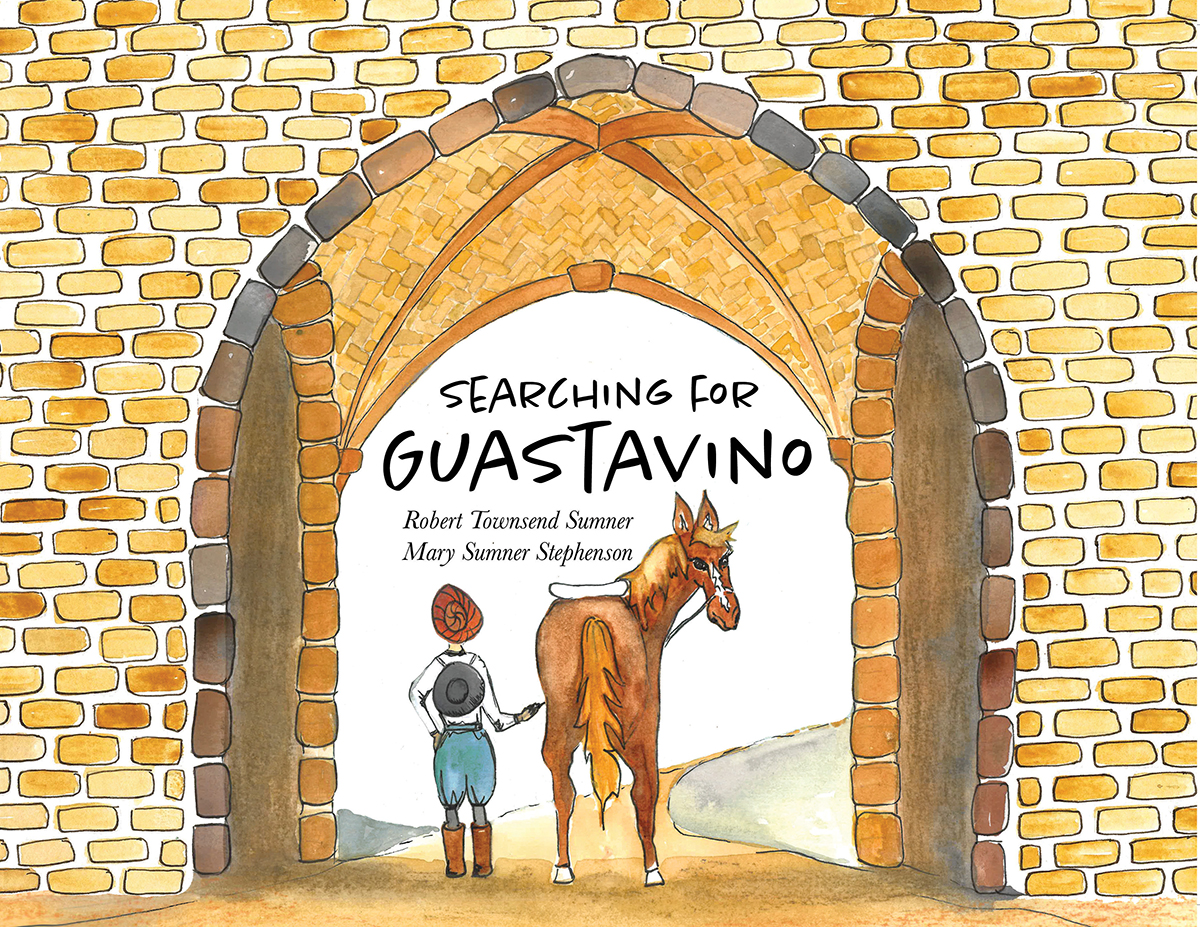
Earlier this year, Stephenson and her father, Black Mountain resident Robert Townsend Sumner, published a children’s book highlighting the Spanish architect’s legacy.
Titled Searching for Guastavino, the book follows Francisco and Maria, a couple living on Manhattan’s western shore. One morning, the two are startled awake by a crash. Upon further inspection, their blue and gold tile ceiling has shattered.
In the pages to follow, Maria travels to Harlem on horseback looking for someone to repair the ceiling. A young boy selling newspapers tells her that Guastavino is the “most skilled tile master in the world” and that she must seek his services. And so begins her journey to find the elusive architect.
In the coming pages, Maria gallops across the city, introducing readers to Guastavino’s most famous works along the way. Though the story is completely fictional, Sumner hopes it helps kids understand our country’s roots as a melting pot.
“For me, Guastavino represents the importance of immigrants,” he says. “They bring their expertise—and, in this case, genius—to America.”
To encourage children to learn more about Guastavino, the book includes a QR code that can be scanned to access a list of nearby Guastavino sites. For WNC residents, there’s the Biltmore Estate as well as the Basilica of St. Lawrence.
Guastavino’s final public project and final resting place, the basilica boasts an enormous elliptical dome that seems to float above the nave. As the Asheville Citizen described in 1909, “This mighty vault was built bit by bit over nothing, above the church floor.”
Readers can also visit Rhododendron, the architect’s former estate in Black Mountain.
“The ability to go visit his sites helps kids make a connection outside of the pages of a book,” says Stephenson. “After seeing these places in person, children can really understand who Guastavino was and the value of his contributions.”
To learn more about Searching for Guastavino or to purchase the book, find @SearchingForGuastavino on Instagram. You can also purchase the book at regional bookstores.