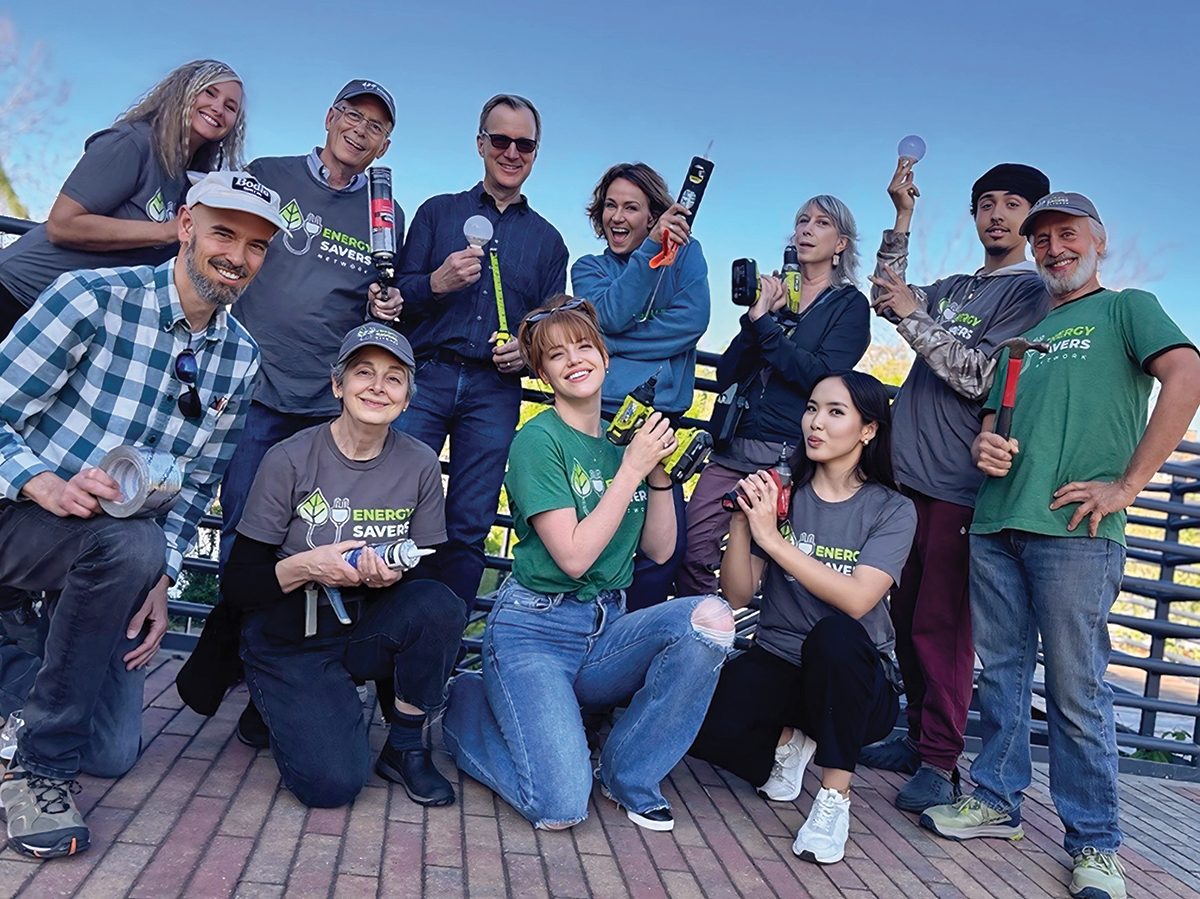
Energy Savers Network team
By Kathleen O. Brown
For Leicester resident Tonya Lawrence, the home energy efficiency work that Asheville-based Energy Savers Network (ESN) provides for free has great personal significance. As part of its ongoing partnership with Duke Energy, ESN earlier this year provided Lawrence with energy efficiency upgrades that would have cost her thousands of dollars. Upgrades to her home included an HVAC heat pump replacement, insulation installation, and window and door home repairs—work that resulted in a 21 percent reduction in air leakage in her home.
“I am so thankful for Energy Savers Network,” Lawrence says. “They weatherized my house, did much needed structural repairs including duct work and window repair and also installed a new HVAC system. I am a cancer survivor still going through chemo treatments and can only work part-time. This help was huge in my life. My light bill went down $200 a month. Everyone was so nice and helpful. I am eternally grateful.”
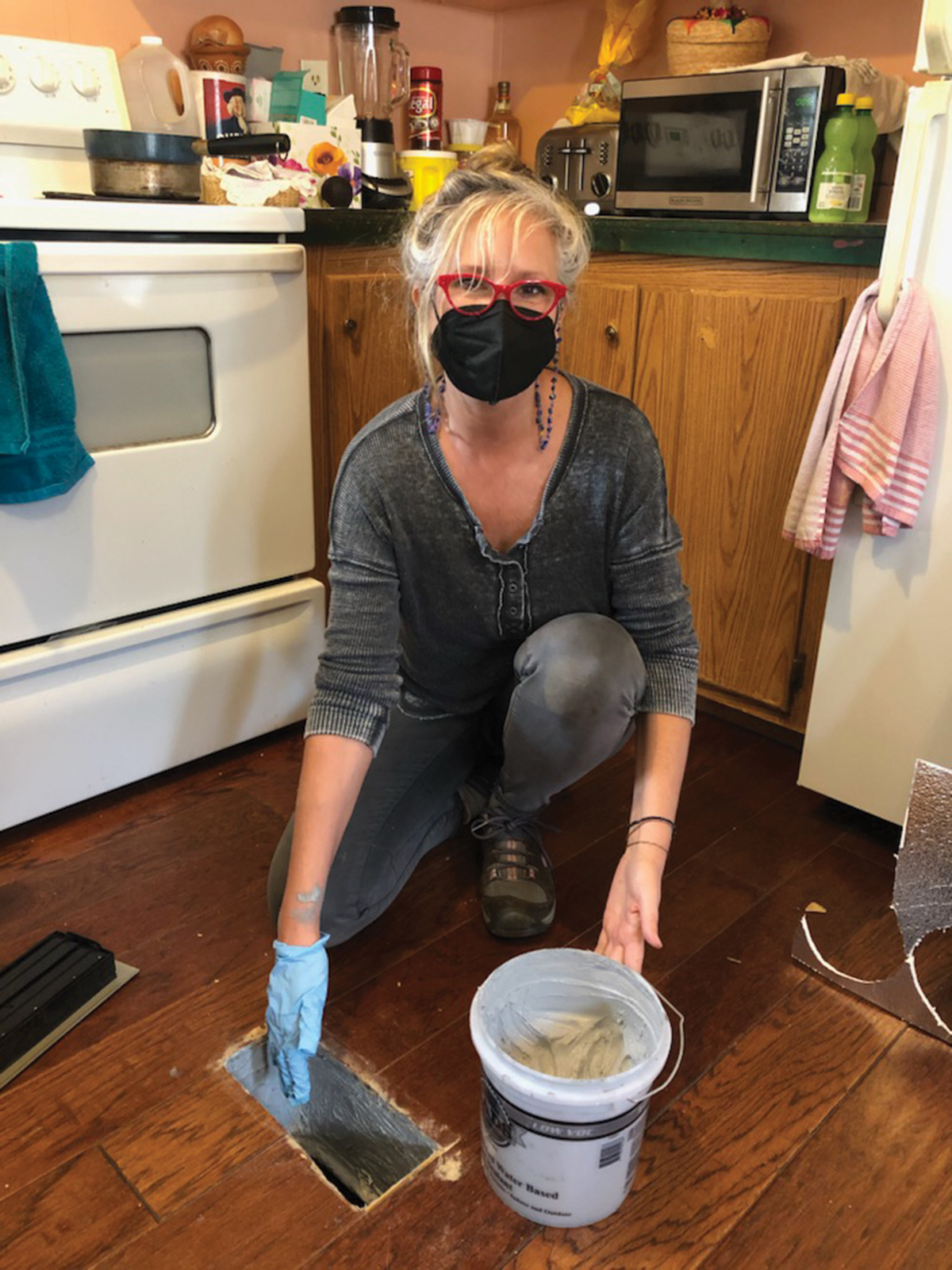
Steffi Rausch
ESN’s upgrades at Lawrence’s home also mark a milestone for the nonprofit, representing the completion of weatherization services for its 1,500th home. In collaboration with Duke Energy’s Income-Qualified Weatherization Program, ESN provides comprehensive energy efficiency upgrades at no cost to eligible homeowners in Buncombe, Haywood, Henderson and Madison counties.
Duke Energy’s program is designed to help income-eligible customers save energy and money. From sealing air leaks to upgrading old appliances, the program strives to make energy efficiency accessible to everyone, regardless of financial standing. The program also provides access to health and safety home repairs.
Since its founding in 2016, ESN has been working to help reduce utility bills and improve people’s overall quality of life by mobilizing volunteers and professionals to provide energy efficiency services to those who need them most. By focusing on weatherization and replacing faulty or inefficient equipment, the nonprofit works to reduce electric utility expenses for households in Western North Carolina and thus help the community become more sustainable and equitable.
According to the ESN, residential energy consumption is the fourth largest use of energy in the US—with a third of it wasted. “Economic relief and environmental stewardship aren’t mutually exclusive,” ESN board member Jim Tolbert says. “At ESN, they are deeply interconnected. Every household we serve doesn’t just lower a family’s utility bill—it lowers our community’s carbon footprint. We are helping the climate by helping our neighbors.”
In addition to weatherizing 1,500 homes, ESN’s work includes carrying out significant mechanical and structural upgrades and home repairs. Working alongside a team of contractors, the nonprofit has upgraded 90 HVAC systems with heat pumps that reduce energy use by up to 75 percent and has upgraded 10 electric water heaters with heat pumps that reduce energy use by up to 60 percent. ESN also has completed 30 insulation upgrades to improve comfort and reduce energy use and has performed 114 home repair projects to improve health and safety.
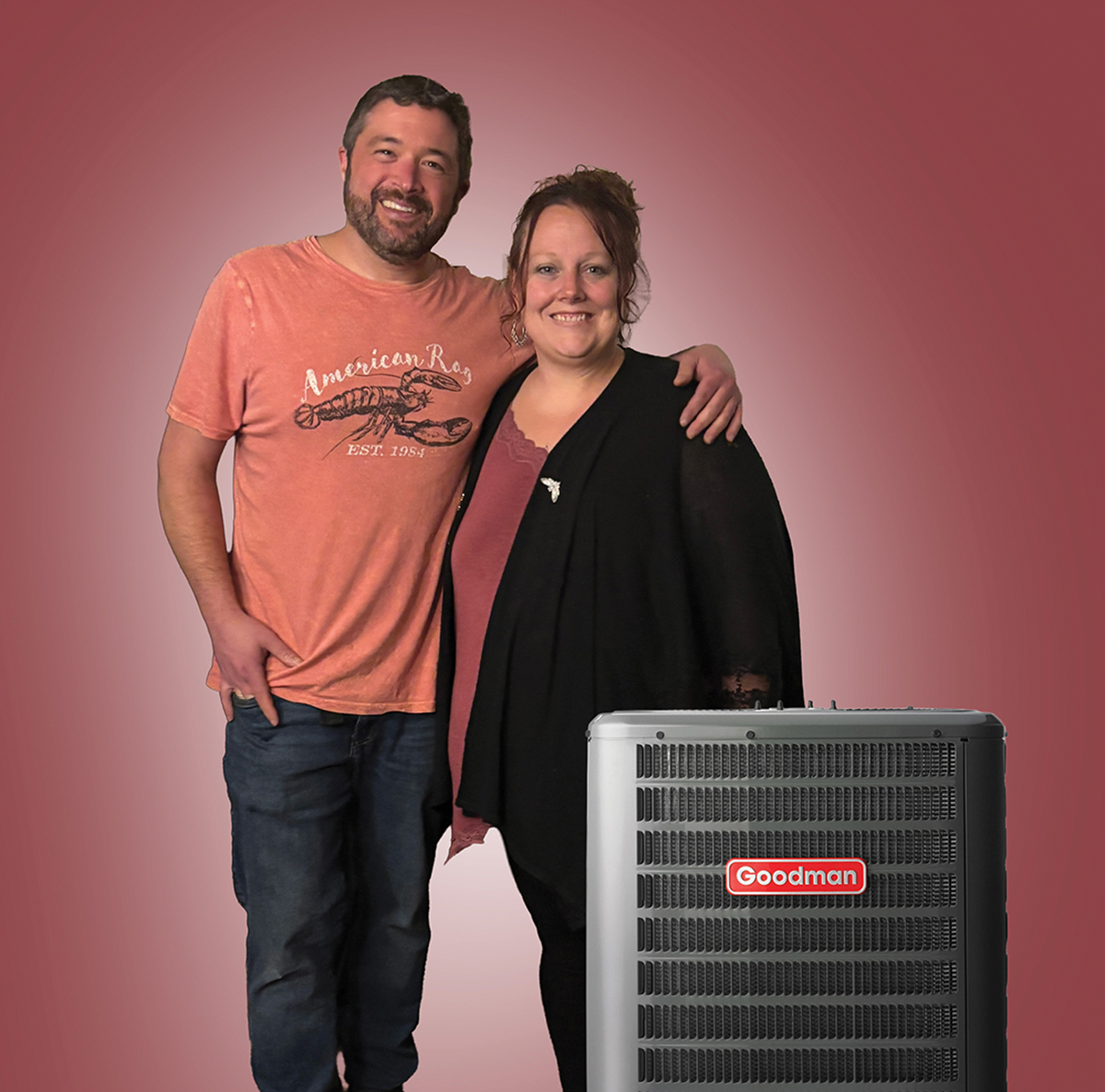
Energy Savers Network provided Brandon Cremisio and Tonya Lawrence, a cancer survivor, with a heat pump replacement and other energy-saving home improvements
In addition to engaging professionals for the work, ESN director of operations Steffi Rausch says volunteers play a key role, and the nonprofit is actively seeking more volunteer assistance. “Volunteers do a number of energy-saving measures like changing out light bulbs with LEDs, caulking and foam spraying gaps under sinks where plumbing lines come into the house, sealing air ducts with mastic, installing water aerators, sealing up window AC units and insulating water heaters and their pipes,” she says.
“The more experienced volunteers might do door weatherstripping if they feel comfortable working with a saw,” Rausch says. “They will also see how a blower door works to find the air leaks in the home.”
ESN prefers regular volunteers who can commit to monthly or biweekly volunteering, she says, but the nonprofit will work with “one-timers,” too. “Basically, we prefer ‘handy’ volunteers that like using tools,” Rausch says. “But they don’t have to be experienced—just willing to learn.”
Learn more about volunteering with Energy Savers Network at EnergySaversNetwork.org/volunteer. For more about the nonprofit, visit EnergySaversNetwork.org.