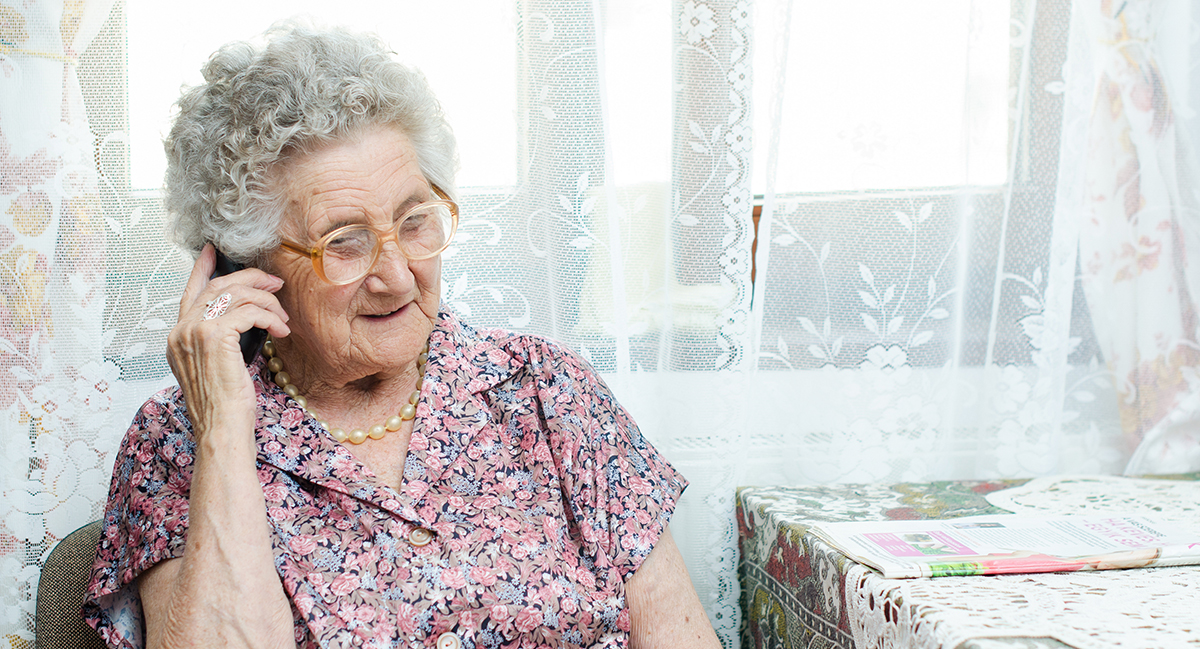
senior woman talking on phone indoor
By Emma Castleberry
Several community partners united during the pandemic to launch The Social Bridging Project, an effort to keep senior adults connected and engaged with their community and prevent the negative outcomes of social isolation.
“Many older adults throughout WNC communities were experiencing the impacts of being socially isolated or lonely before the arrival of the COVID-19 pandemic,” says Jeff Jones, program coordinator for the project. “This remains true at this stage in the pandemic and will remain true after the pandemic has ended. Our program has already adapted to meet a wide-ranging number of needs and concerns, and we will continue to do this in the future.”

Jeff Jones
According to the American Health Foundation, North Carolina ranked 30 of 50 states for incidents of social isolation in 2022. The National Institutes of Health reports that the risk factors for social isolation include recent life changes such as retirement, loss of mobility and transportation, and loss of hearing or vision. Living in a rural, unsafe or hard-to-reach area along with socioeconomic challenges and digital inequities can also increase the risks. “As far as outcomes are concerned,” Jones says, “social isolation and loneliness lead to increased risks of anxiety, depression and functional decline. One’s physical health can also suffer. Researchers link social isolation and loneliness to increased risks of high blood pressure, heart disease, obesity, a weakened immune system and death.”
The Social Bridging Project’s response to this issue is simple: volunteers make weekly phone calls to individuals experiencing isolation with the goal of understanding the needs of each community member they speak with. The phone calls can act as a social lifeline and also a way to connect community members with other important resources like technology support, transportation services and meal deliveries. “It made me feel like [loneliness] was a recognized problem,” says one person who has used the service. “It wasn’t just my problem. Back in my grandmother’s time, she had family around her…and it was a community where she could walk from one family to the next. But now there’s a lot of older people where the children are in other states…and we forget that we need to be a community. Now that I’ve lost my vision and can’t be on Facebook, I can’t stay in touch with my family anymore.”
Partners in The Social Bridging Project include the North Carolina Center for Health and Wellness (NCCHW) at UNC Asheville, Healthy Aging NC, the Center for Healthy Aging at Mountain Area Health Education Center (MAHEC) and Dogwood Health Trust. The team features UNC-Asheville alumni that regularly collaborate with faculty and students who want to be involved as callers. Dogwood Health Trust just awarded a $150,000+ one-year grant to the project that will allow for improved health equity by expanding outreach to Black, Indigenous, and people of color (BIPOC). “The collaborative aspect of the project has been essential to our success,” says Jones.
Lauren Alexa Gambrill is an MPH candidate at UNC Gillings School of Public Health who volunteers to make weekly check-in calls with The Social Bridging Project. “I couldn’t ask for a better internship or team to learn from,” she says.
“The Social Bridging Project is a collection of passionate professionals with a drive for making compassionate connections with older adults, persons who are homebound and other members of our community who may otherwise feel left behind.”
Refer yourself or someone you know for a wellness check-in call by going to HealthyAgingNC.com. For more information about the program, including volunteer opportunities, email socialbridge@unca.edu or call 828.412.0431.