By Elspeth Brown
When guests come to my house, much to their dismay, I will offer them a beautiful Oregon pinot noir or an aged sauvignon blanc in a plastic wine glass. It never fails that they ask me, “Elspeth, you own a wine store. Don’t you have any nice wine glasses?” Nope. Between children kicking soccer balls and throwing baseballs in the house, and two rambunctious dogs, one with a Great Dane tail, there is no way I can keep anything nice in the house, much less a wine glass. But hiding way back in one of my kitchen cabinets is one delicate, beautifully constructed Riedel red wine glass that I save to drink a Barolo or a Châteauneuf-du-Pape out of—because it matters.
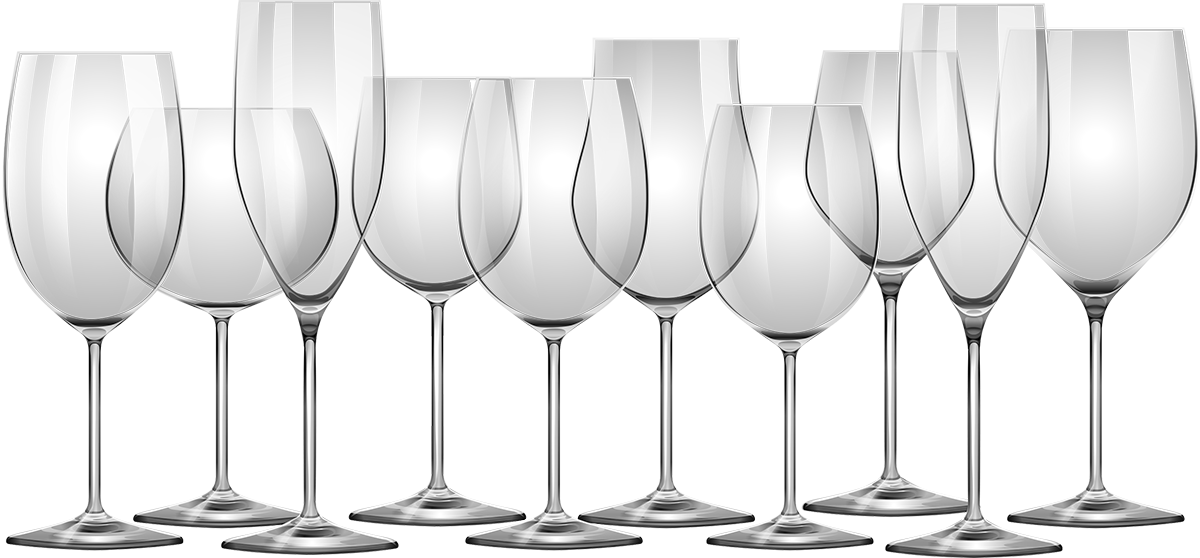
There are multiple types of wine glasses specifically designed for certain grapes, but the main ones are champagne flutes, stemless glasses, the white wine glass, the red wine glass and the universal glass.
I have been approached many times with the question of whether the size of the glass really matters in the scheme of wine drinking. It does.
Champagne flutes are designed to be long and narrow. This is to ensure that the bubbles do not dissipate, and the yeasty flavors stay fresh. Stemless glasses have been around since medieval times, but have just made a huge resurgence in the last ten years. Stemless glasses are great because of their ease and maintenance. They are particularly handy with a shaky hand or in a rowdy household. Stemmed glasses offer benefits such as allowing for swirling and helping to keep the correct temperature of the wine. Holding the stem of the glass with your hand as opposed to the bowl prevents your wine from heating up, which will affect the taste.
The traditional white wine glass is slightly narrow at the rim to concentrate the aromas. Typically, red wines such as Cabernets or Bordeaux blends are high in alcohol and tannins. The red wine glass has a wider rim that allows the ethanol to evaporate and soften the tannins, making the red wine more enjoyable. There is also a universal glass that was developed in 1999 by German sensory scientist Ulrich Fischer. It is somewhere between a white and a red wine glass and embodies all the benefits of each. It has a long stem and a tapered rim to intensify the aromas of either a red or white wine.
In 1973, Austrian glassmaker Claus Riedel changed stemware from the traditional colored glass to a plain, thin, sophisticated, long-stemmed wine glass that affected the appearance of stemware forever. He was the first in history to understand the effect of the shape of a glass in relation to an alcoholic beverage. Riedel is now one of the largest glass companies in the world and one of the most highly regarded in the wine world.
The age-old debate of what wine glass is the best will probably never end. But, be assured that my favorite glass has always been the one filled to the top. May your glass of choice always be full.
Elspeth Brown is the owner of Maggie B’s Wine & Specialty Store, 10 C South Main Street, in Weaverville. For information, visit MaggieBsWine.com or call 828.645.1111.