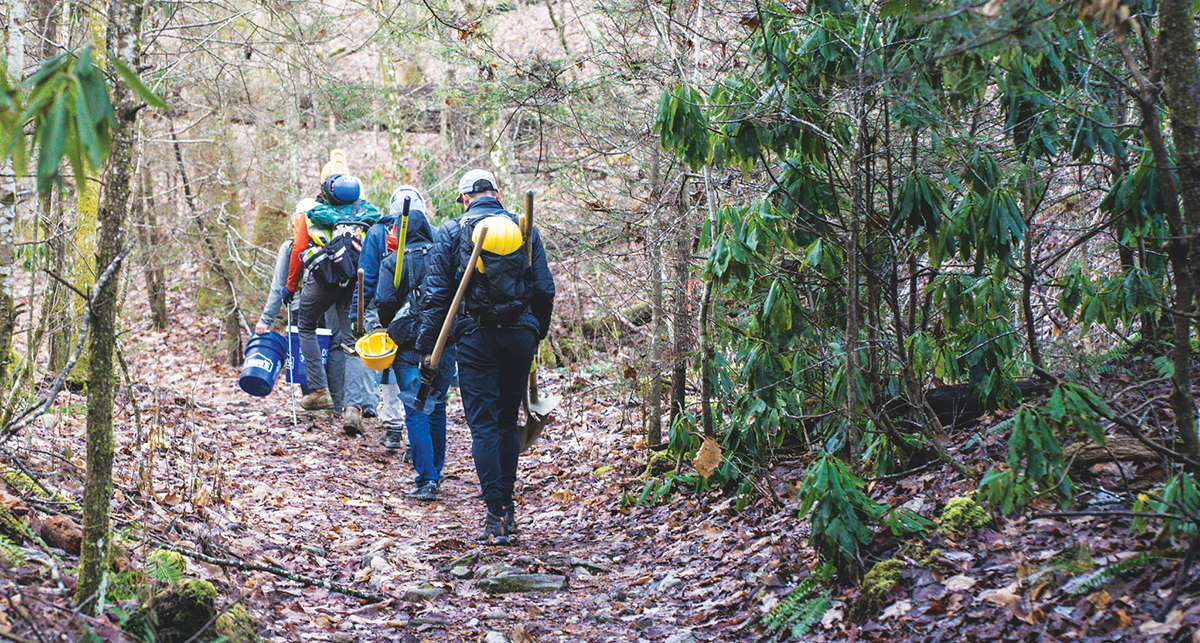
Pisgah Area SORBA volunteers. Upper Black Mountain Trail in the Pisgah Ranger District. Photo by Pisgah Paparazzi
By Emma Castleberry
Butter Gap Trail, a multi-use recreational trail located in the Pisgah Ranger District near Brevard, was initially constructed as a logging trail to remove timber from the area. When the Forest Service began managing the land, the trail was repurposed and is now classified as a legacy trail. “While these trails can be appealing to mountain bikers, as they are often steep and technical, the trails themselves were never designed to support their extreme use today,” says Natalie Narburgh, executive director of Pisgah Area SORBA (Southern Off-Road Bicycle Association). “Increased users coupled with our more extreme weather events cause a rapid degradation of these types of trails.”
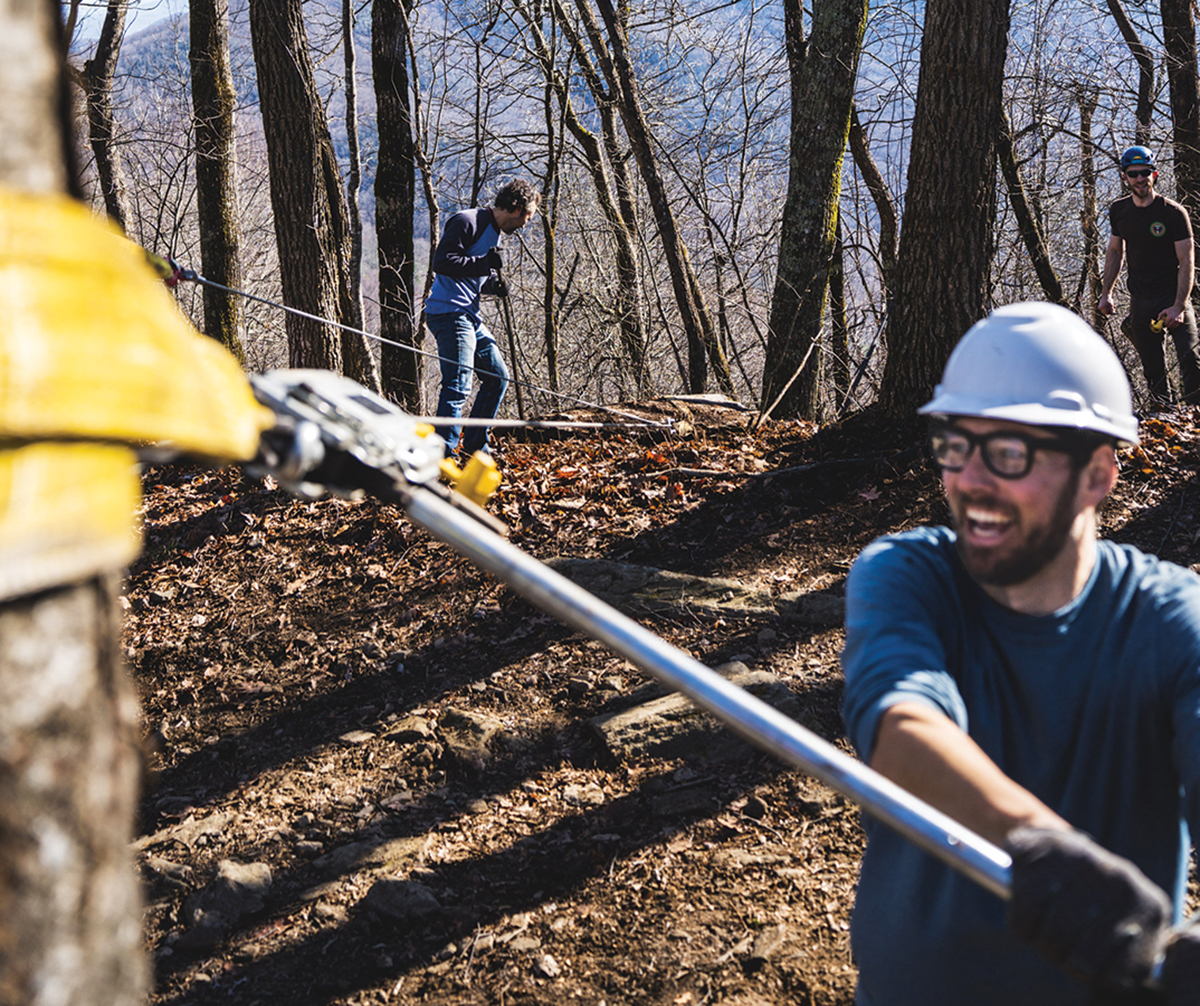
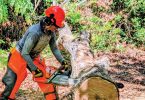
Pisgah Area SORBA volunteer. Upper Black Mountain Trail in the Pisgah Ranger District. Photo by Pisgah Paparazzi
In 2013, the US Forest Service (USFS) identified Butter Gap Trail as unsustainable after conducting several trail assessments in the area. “USFS and other land managers consider the sustainability of a trail based on three sub-categories of sustainability: ecological, social and economic,” says Jeff Maitz, a trail specialist for the Pisgah Conservancy who works closely with USFS employees in the Pisgah District Ranger Station. “Sustainability is achieved at the junction where recreation resources are socially relevant and supported, ecologically resilient and economically viable.” Butter Gap Trail has degraded to the point that it presents a threat to the surrounding watershed and environment, meaning it no longer meets the sustainability standard of ecological resilience. “Ultimately,” says Narburgh, “a sustainable trail is designed to minimize the volume and velocity of water located on the trail. This water is what causes a trail’s demise, and these old logging paths were not created with recreational sustainability in mind.”
In collaboration with the Pisgah Conservancy and USFS, Pisgah Area SORBA is leading the Butter Gap Trail Project in an effort to realign the trail and make it environmentally sustainable, while also improving the user experience. The project will include decommissioning more than a mile of degraded trail; adding five miles of new trail; and performing heavy maintenance on two miles of the existing trail to ensure it can withstand extreme weather. Another feature of the project will change a section of Cat Gap trail, making it available to hikers only and creating an alternative route for mountain bikers. This will not only reduce trail user conflict, but also establish year-round trail access for mountain bikers (current biking access is limited to six months out of the year). “We hope our alignment additions and user changes will allow for more access to this area,” says Narburgh. “Butter Gap itself is wild and beautiful. You feel truly immersed in the forest when you’re back there. Not to mention, the trail itself parallels Grogan Creek as it descends downhill. There’s even a spot towards the bottom where you can catch a view of Grogan Creek Falls. It’s quintessential WNC.”
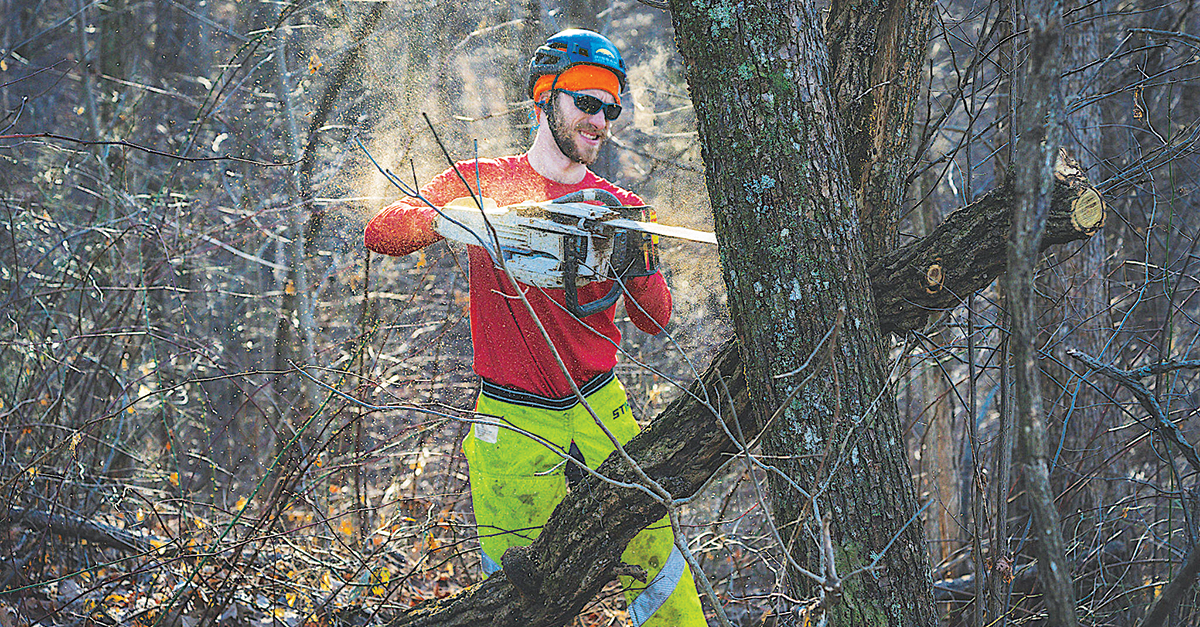
Pisgah Area SORBA volunteer. Upper Black Mountain Trail in the Pisgah Ranger District. Photo by Pisgah Paparazzi
With an expected completion date of December 2023, the project will cost between $275,000 and $350,000. A state Recreational Trails Program grant awarded to Pisgah Area SORBA in 2018 will cover $100,000 of that cost. The Transylvania County Tourism Development Authority (TCTDA) has also committed $45,000. “We’re using occupancy tax dollars collected from visitors to our area to protect and improve the public lands in our county so that they will be here for generations to come,” says Aaron Baker, TCTDA board member. “The Butter Gap Trail improvement project is really the improvement of an entire trail system and the land and waters around it.”
Those interested in supporting the project can contribute volunteer hours or donate to Pisgah Area SORBA. “Our organization relies on both our community’s financial support and our volunteers’ time to accomplish projects such as this,” says Narburgh. “We have a lot of gratitude for our community and look forward to welcoming new supporters.”
For more information, visit PisgahAreaSORBA.org.