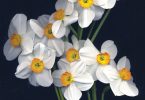
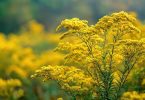
Above: Nature journal by Yvonne Woulfe
Compleat Naturalist: Observing Nature 101
“You can see a lot just by observing. You can observe a lot just by watching.” ~Yogi Berra

Laura & Hal Mahan
Observing is the most basic skill of being a naturalist, or one who studies nature. Do you notice a bright red male cardinal in the tree outside your window? Do you notice when the dogwood trees come into full bloom? Did you notice with this year’s mild and early spring that your flowers bloomed far earlier than in past years? Well, then you are an observer of nature. You may want to learn the names of birds, trees, flowers, insects, but it’s really not necessary in order to enjoy the wonders of the world! At first, it’s fun just to open your eyes, develop an awareness, and notice the things that are happening in your surroundings. And then you will start to wonder. We can follow in the footsteps of early naturalists and explorers by keeping a journal of observations. Nothing fancy, mind you. Just jot down simple observations about what you see around you.
Start in your own backyard. Record the dates when you see things in bloom. If you are artistic, draw or paint some simple pictures. If you are not artistically inclined, then snap some digital photos and keep an electronic journal.
Before long you will discover that one thing leads to another. A good naturalist always has questions. You might want to know the name of a strange previously unnoticed plant. What is that insect eating the oak leaves? How do birds build their nests? What kinds of insects are attracted to your flower garden? What kinds of organisms live under the leaves?
Starting a nature journal is a wonderful activity for kids, parents, and grandparents to share, and an effective way to get kids outside and away from the television and computer. And it doesn’t have to be difficult! You do not need to know the names of plants, insects, and other animals—in fact, it’s fun to make them up.
Here’s a simple way to begin: Take a long piece of twine and lay it on the ground in the shape of a square. Make the shape at least a foot or two long on each side. Then sit and observe. Write down a list of what’s within the square. Have the kids draw pictures.
Now, move the square to a different type of area and see how the contents are different. Do they differ at other times of day? It would also be fun to put permanent stakes where your observation square is. Then, next year look again and see how it has changed.
For Further Reading:
The Forest Unseen: A Year’s Watch in Nature, by David G. Haskell
Keeping a Nature Journal: Discover a Whole New Way of Seeing the World Around You, by Clare Walker Leslie & Charles E. Roth
Laura and Hal Mahan are owners of The Compleat Naturalist, located at 2 Brook Street in the Historic Biltmore Village. To learn more, visit compleatnaturalist.com or call 828.274.5430.