By Casey First
The Red-winged Blackbird (Agelaius phoeniceus) is part of the Icteridae family, which includes other blackbirds, orioles and related species. The male is a glossy black with striking red and yellow shoulder patches that they can puff up or hide, depending on how confident they feel. This species exhibits distinct sexual dimorphism as seen by the contrast in appearance of the female who is brown, streaked and more sparrow-like, with subtle coloration that provides excellent camouflage in the dense vegetation where she nests.
Both species are about the size of a Robin when fully grown, measuring around 9 to 10 inches in length. They have a slender, conical bill suited to open seeds, excavate grains and pry small insects out of plants.

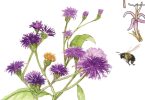
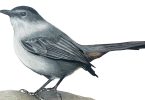
Stephanie Sipp, illustrator
Red-winged Blackbirds are year-round residents here in Western North Carolina where they can be seen in marshes, meadows, fields and lightly wooded forests. Most commonly, they prefer to reside in fresh and saltwater marshes and wetlands, but can be seen anywhere with standing water and good vegetation. They are often a familiar sight perched high on phone lines at the edge of farms.
The male’s signature call is a bold conk-la-ree, used for territorial defense and attracting mates. He also uses sharp check notes as alarms. The female’s calls are softer and less conspicuous, including chit or tik sounds to communicate and signal alarm, especially near the nest.
The diet of the Red-winged Blackbird is highly adaptable, varying with the seasons. During spring and summer, they primarily eat insects, including beetles, caterpillars and spiders, which provide essential protein. As fall and winter approach, their diet shifts to seeds and grains, which they often forage from fields or wild plants. Red-winged Blackbirds are common visitors to bird feeders, especially during migration and in winter when natural food sources are scarce. Try offering them sunflower seeds, cracked corn, millet or even suet. They tend to forage on the ground (or sometimes up in shrubs and trees) so try using a ground feeder or platform feeder.
They prefer nesting in dense, tall vegetation near water, such as marshes, swamps and wet meadows. They also nest in grasslands and occasionally in urban areas. Nests are often built in cattails, reeds or grasses, typically anchored among vegetation near or over water to reduce predation risks. The female builds the nest alone, using grasses, reeds and other plant materials. She lays three to four eggs, which are pale blue to greenish with speckles. She will have no more than two broods per year. The male aggressively defends the nesting territory against other birds, animals and even humans. He uses vocalizations and physical displays to deter intruders and protect the nesting site.
Since their numbers are so abundant, the Red-winged Blackbird population is generally stable, with no significant declines reported. However, since they are dependent on wetland habitats for nesting, agricultural expansion and urban development can impact their breeding success. Advocating for the protection of our wetlands is not only good for this species’ success, but for so many others and for the overall health of our planet.
Casey First is owner of North Asheville Wild Birds Unlimited, located at 946 Merrimon Avenue, Suite 120. Monthly bird events are free and open to the public, with no registration required. To learn more, visit NorthAsheville.wbu.com. Stephanie Sipp is a professional nature illustrator and educator who creates joyful images of animals, birds, flowers and places which are celebrated by followers both regionally and online.