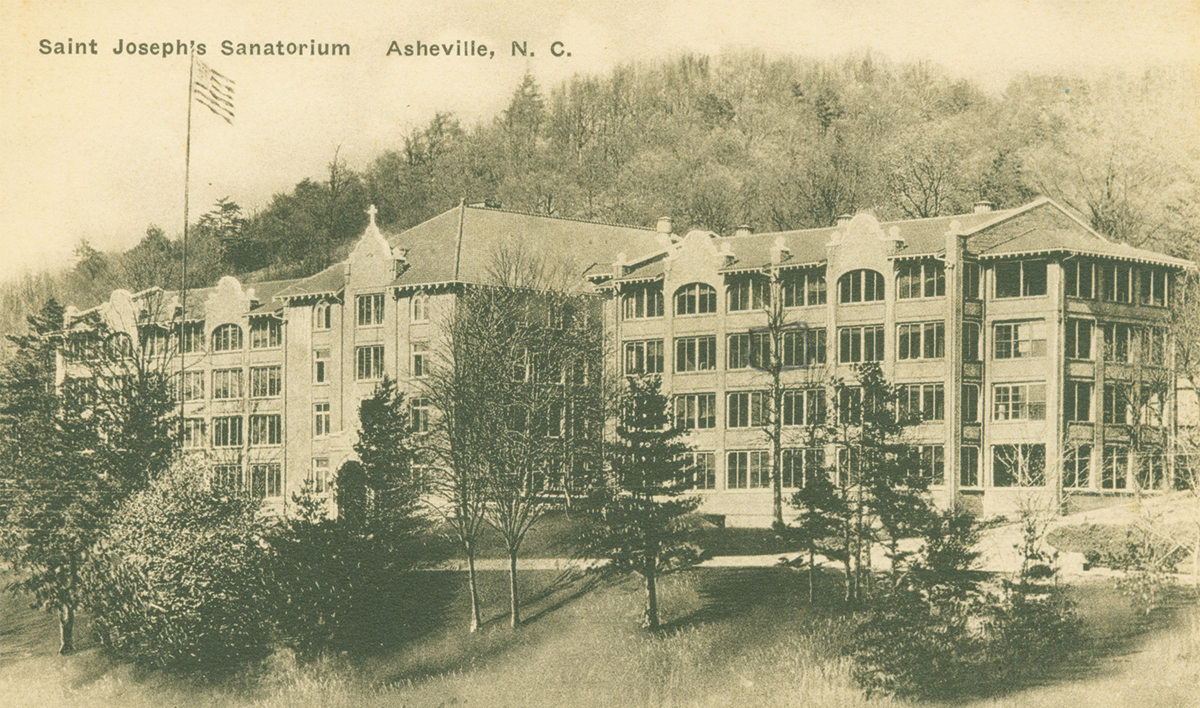
Saint Joseph’s Sanatorium. Buncombe County Special Collections, Pack Memorial Library, Asheville
Before visitors began flocking to Asheville for craft beer and mountain views, they came because they were dying of a disease with no cure.
Starting in the late 19th century, thousands traveled to the mountains drawn by the belief that air and altitude could soothe a rattling cough. Soon enough, Asheville became one of the country’s most concentrated centers of tuberculosis care, with dozens of sanatoria dedicated to treating the so-called “White Plague.”
That history is the focus of “Asheville, North Carolina: The Origin of the American Tuberculosis Sanitarium Movement,” an article published last December in the Annals of Internal Medicine by David O. Freedman, an Asheville resident and professor emeritus of infectious diseases at the University of Alabama at Birmingham.
According to Freedman, Asheville’s mild climate and moderate elevation were thought to offer ideal conditions for patients. “The altitude is not so high as to have greatly decreased oxygen and was purported to be ideal for reducing the work of breathing,” he says.
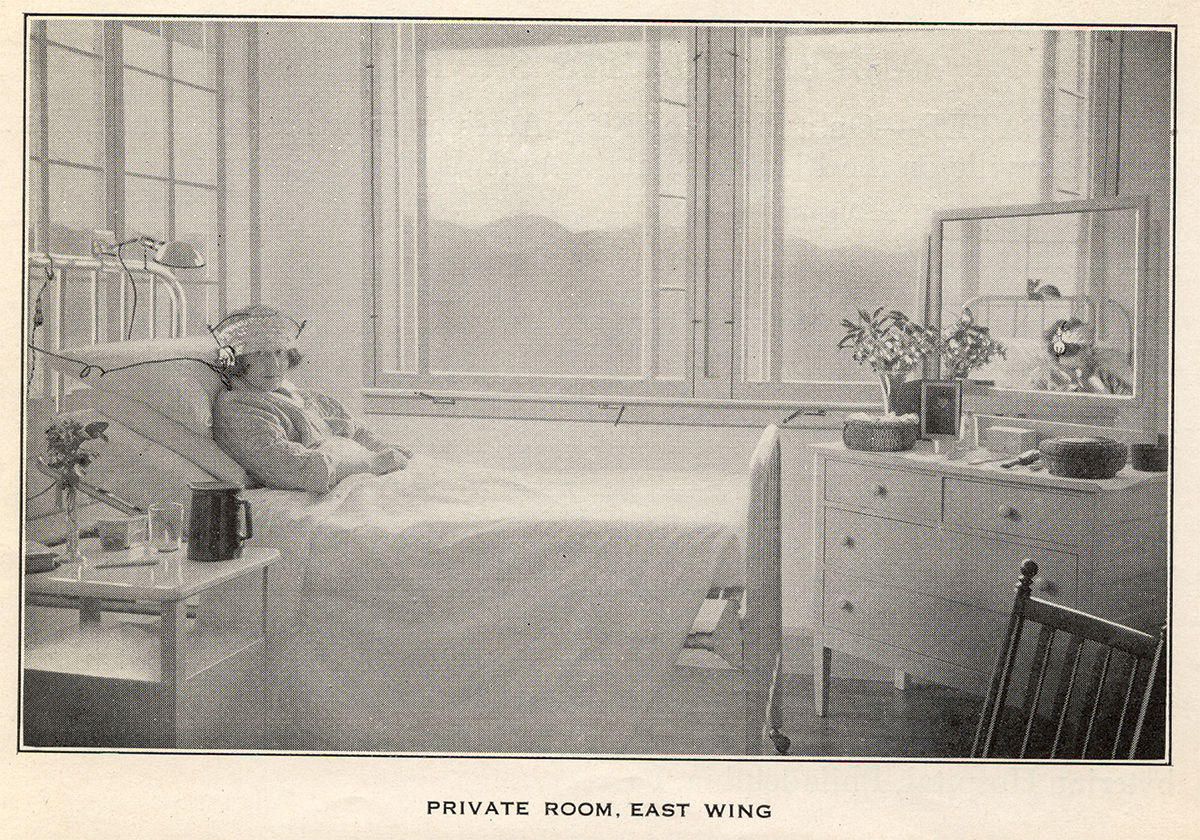
A tuberculosis patient. Buncombe County Special Collections, Pack Memorial Library, Asheville
As early as the 1870s, physicians such as William Gleitsmann of Baltimore advertised Asheville’s “pure, clean mountain air” as salubrious, helping establish Western North Carolina as a destination for pulmonary care just as the railroad made the region accessible.
“The arrival of the Western North Carolina Railroad in the 1880s made Asheville easy to reach from major cities like New York, Philadelphia and Charleston,” says K. LeAnne Johnson, director of the Swannanoa Valley Museum & History Center. “This was crucial because many TB patients were too weak to endure difficult travel.”
Once patients arrived, daily life was highly regimented. “Most patients followed strict daily schedules meant to conserve energy and strengthen the lungs,” says Johnson. Long hours of bed rest—often outdoors, even in winter—were standard. High-calorie meals were encouraged, while talking, reading and walking were carefully limited.
A patient’s specific experience, however, varied depending on wealth and race. Freedman notes that Asheville’s earliest tuberculosis facilities were designed for the affluent, with luxurious amenities like heat, running water, electricity, Persian rugs, velvet drapes and gourmet food.
By the early 20th century, tuberculosis care expanded beyond luxury settings, with modest boarding houses for people of lesser means. However, African American patients were largely excluded from Asheville’s private sanatoria due to segregation and cost, forcing many to seek care elsewhere—or to go without entirely.
In the 1920s, state-run sanatoria in rural areas became more common, gradually drawing tuberculosis care away from cities like Asheville. Later, with the arrival of antibiotics, treatment shifted decisively toward medication rather than environment, reducing reliance on sanatoria and climate-based care.
Still, evidence of Asheville’s past remains.
“Asheville’s TB era left permanent marks on its architecture, neighborhoods, health institutions and identity,” says Johnson. “The city you see today—porch-lined hillsides, repurposed medical buildings and a reputation for wellness—was shaped in large part by thousands of people who came seeking breath and time.”
For more information, visit History.SwannanoaValleyMuseum.org.