By Paula Caycedo-Rosales
How many species of local butterflies could you name right now? Three? Four? Not long ago, I asked a group of friends this question. They enjoy walking through our forests and relishing the changing seasons. Even so, the person who knew the most named three. Environmental awareness runs deep in Asheville, and yet, this kind of answer is common. For many of us, butterflies are a familiar yet indistinct presence: we know they are there, we recognize their beauty, but we rarely stop to think about their natural history or the ecological roles they play. It is hard to imagine ourselves sharing the same living network with them.
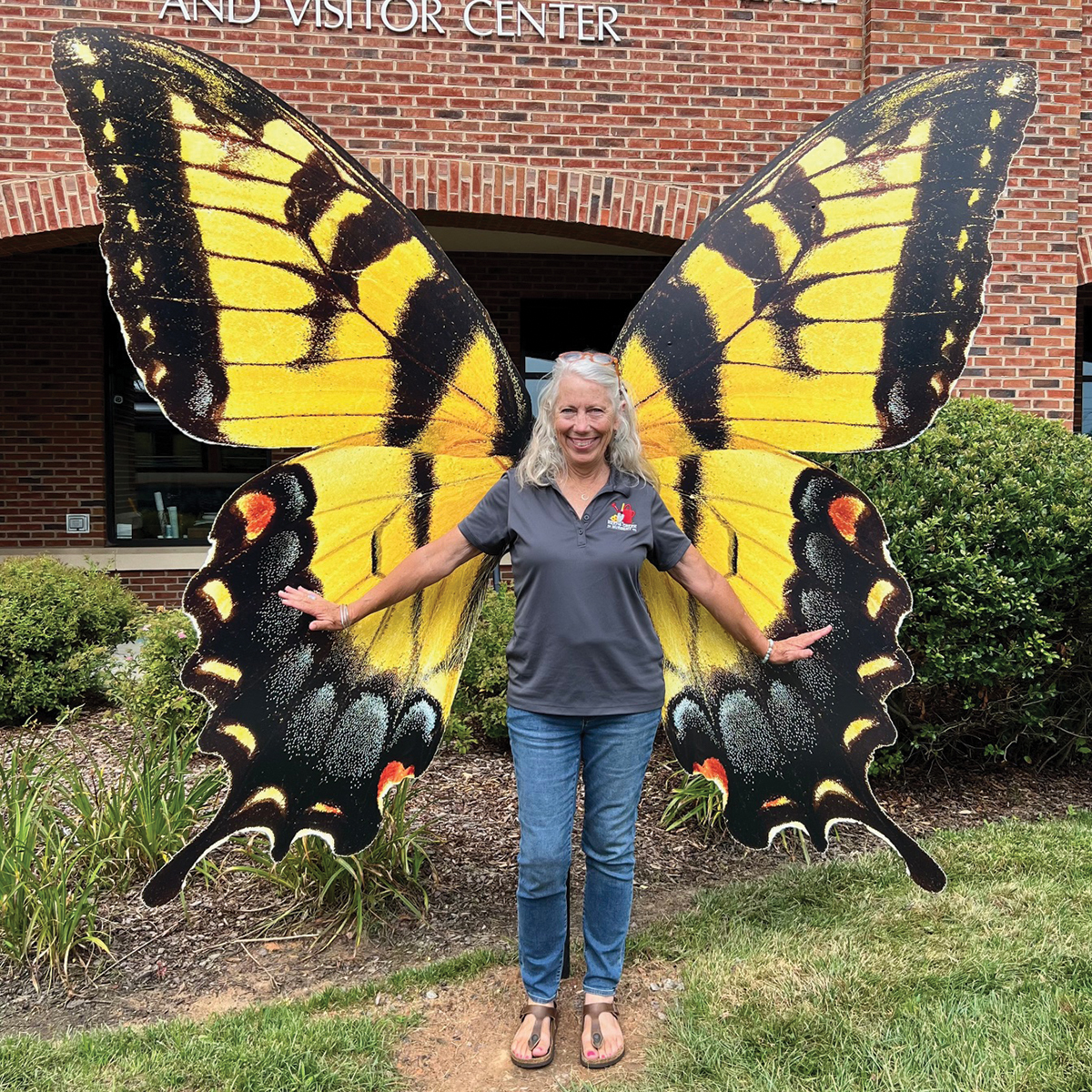
Ruth Gonzalez of Bee City USA – Asheville with Eastern Tiger Swallowtail Butterfly station at the Asheville Area Chamber of Commerce and Visitor Center
Butterflies: Indicators of Ecosystem Health
Bee City USA-Asheville launched the Asheville Butterfly Trail to serve as a gateway to that knowledge. Western North Carolina is one of the most biodiverse regions in the temperate world. More than 1,589 moth and butterfly species live in Buncombe County alone, each connected to specific plants, complex life cycles and subtle relationships that sustain ecosystem function. Yet this knowledge often remains confined to books, university classrooms or scientific publications.
According to Butterfly Trail team member Ruth Gonzalez, each Trail station’s monumental wings are designed to capture attention. They invite people to stop, interact and take a photograph. But what follows is more profound. Each station includes an educational sign with a QR code encouraging visitors to explore further. Through scientific illustrations, carefully curated photography and texts translated into everyday language, the Trail makes ecological knowledge accessible.
So far, the Trail has mounted roughly half of its planned stations. “What better way to greet visitors than with stunning Eastern Tiger Swallowtail wings,” says Kit Cramer, president and CEO of the Asheville Area Chamber of Commerce. “We are pleased to be the home of the first Trail station and the place to pick up a Trail brochure.”
Along Glenn’s Creek Greenway, on the campus of the University of North Carolina Asheville, the Common Buckeye is part of a green corridor used daily by students and neighbors. At the Beaver Lake Bird Sanctuary, the Summer Azure station highlights an ecological relationship that often goes unnoticed: butterfly and moth caterpillars are essential food sources for young and migratory birds. And at Reems Creek Nursery in Weaverville, the Gulf Fritillary connects the beauty of a butterfly with tangible gardening choices, using native plants.
As for the newest station, Jennifer Jackson, assistant manager of the Town of Weaverville, says, “Not only do locals love our Red-spotted Purple Trail station but it also draws tourists who might not otherwise come to Weaverville. We hope visitors will come butterflying in our nature park.”
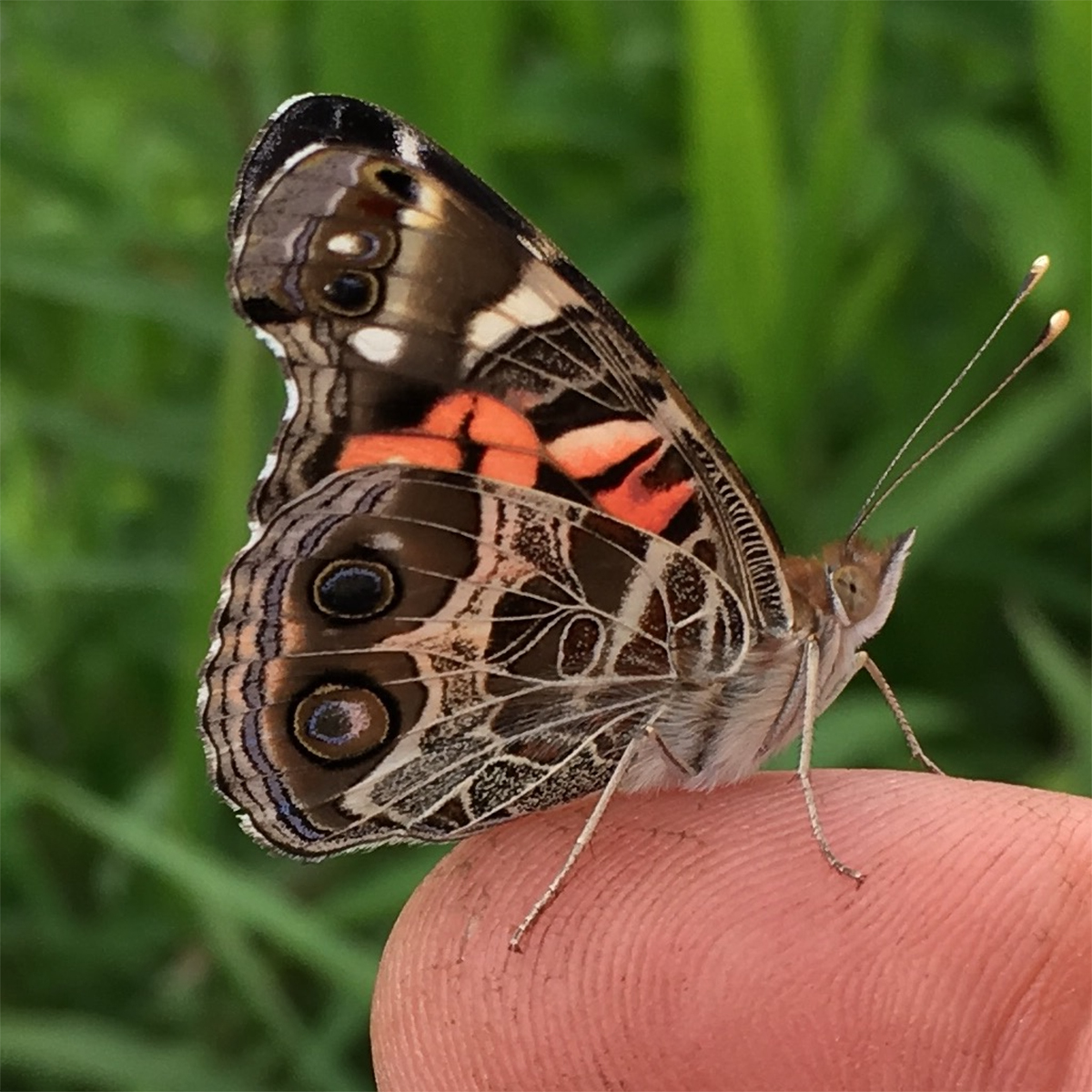
American Lady (Vanessa virginiensis). Photo by Pete Dixon
Public Art: A Powerful Tool for Raising Environmental Awareness
The Asheville Butterfly Trail is part of the global movement to use public art to translate complex issues—such as biodiversity loss—into emotional, memorable experiences. Here, the conversation is not about distant ecosystems but about the butterflies that inhabit our own gardens.
“Butterflies are not only pollinators; they are also an essential part of the food web,” says Tom Tribble, former president of the Blue Ridge Chapter of the Audubon Society. “Their presence signals environmental health, and their absence signals environmental stress. By not using pesticides and incorporating native plants into urban and suburban gardens, we create functional habitats that allow us to share the landscape with other species. More butterflies mean more birds.”
What’s Next?
The next phase of the Trail includes a station at Black Mountain Primary School, dedicated to the American Lady, and another at Black Mountain’s Veterans Park, future home of the Monarch. Bee City USA-Asheville is grateful to the many donors who made the first five stations possible. Now, the Lipscomb Family Foundation has awarded $10,000 for the Primary School station, leaving $5,000 to raise, and Bea McQueen has donated $5,000 in memory of her sister for the Veterans Park station, leaving $10,000 to raise.
These funds cover the direct costs of mounting a new station, as well as ongoing maintenance and promotion for decades to come. Once the Trail is complete, trained guides will lead school and visiting tour groups.
On Wednesday, April 22, Earth Day, the Asheville Butterfly Trail will host a dedication ceremony for the Weaverville station—an opportunity to remember that nature does not begin where the city ends, it runs through it. The station is located at 11 North Main Street, next to the clock tower.
Perhaps the next time someone asks how many butterflies you know, the answer will be different.
Visit the virtual Trail at BeeCityAsheville.org/butterfly. Contact info@beecityasheville.org for more information. Paula Caycedo-Rosales is a member of Bee City USA-Asheville Leadership Committee.