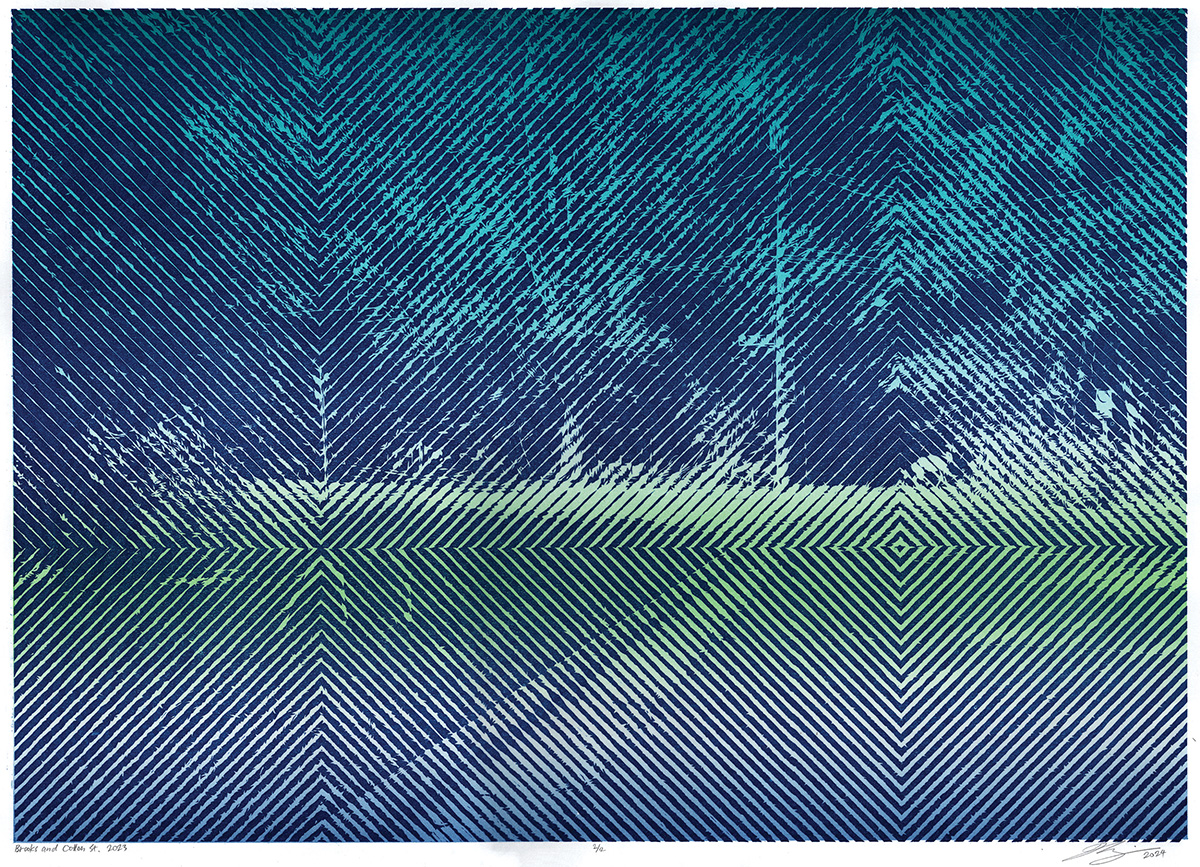
Brooks and Cotton. Taro Takizawa, artist
By Gina Malone
Often, we think of artists as driven to create. In fact, says printmaker Taro Takizawa, the quiet times are crucial as well. “I always feel like I should be productive in the studio,” he says. “We are educated and trained to feel this way, I believe. I came to accept that sometimes I just need to stop making so that I can input new ideas and inspirations.”
Taro’s work is part of Pattern Play, a group exhibition running through Saturday, June 20, at Penland School of Craft’s FOCUS Gallery in Bakersville. An assistant professor of Art at UNC–Wilmington, he will also teach a workshop at Penland—Color and Abstraction: Printing with Chipboard—July 12–24.
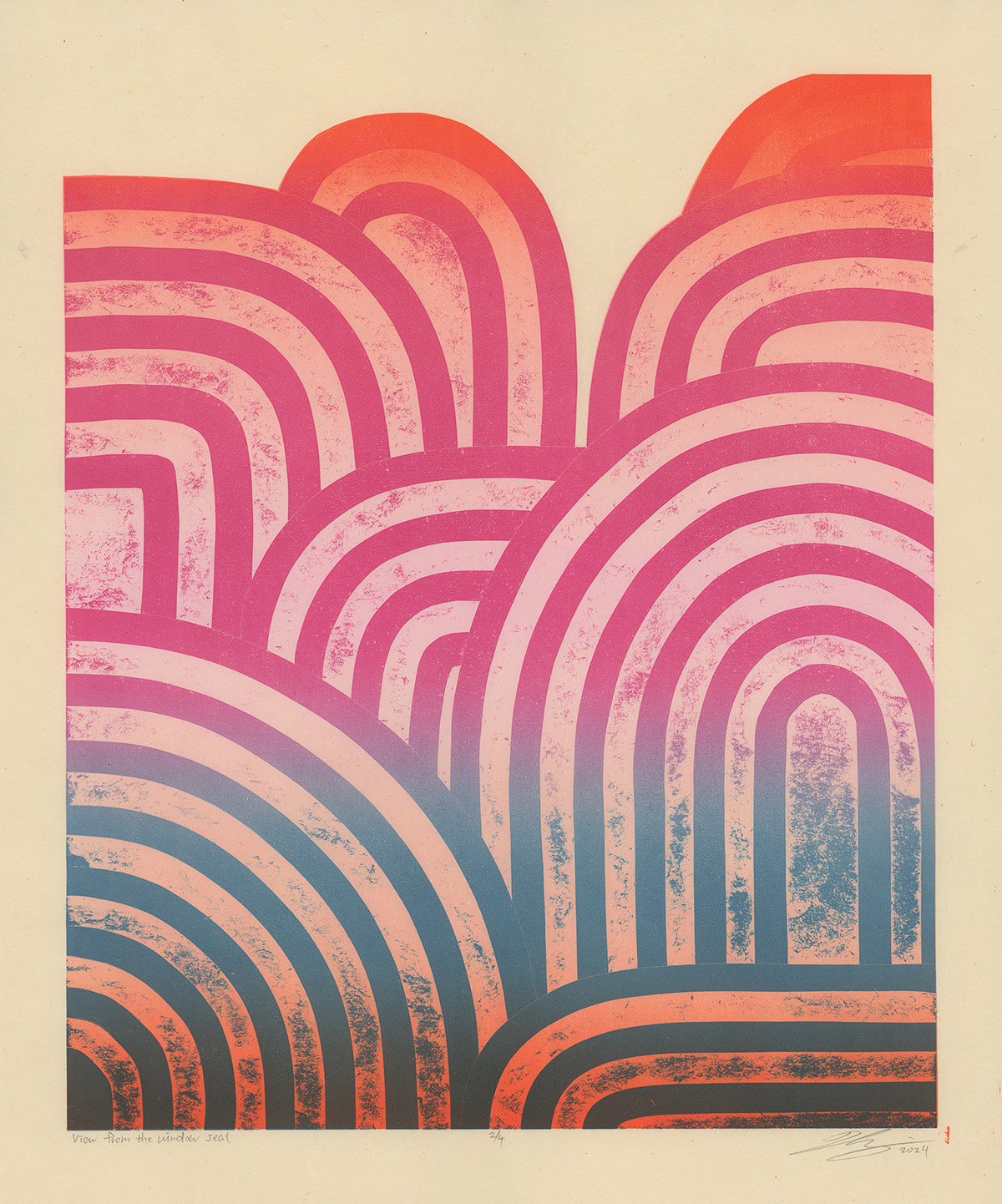
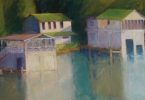
View from the Window Seat. Taro Takizawa, artist
“My work is heavily related to nature,” he says, “how I interpret nature. A lot of my fascinations are toward water: its ripples, waves, reflections, and other light and shadows in nature. I always liked looking at moving water—the ocean, rivers, lakes—since I was growing up in Japan. During my busy life, I try to cherish and take in as much as I can when I am out on a walk, hike or bike ride. I try to be present, aware, and notice things that might interest me. I’m usually obsessed with the overwhelming patterns in nature and things we don’t get to see in urban areas.”
Taro uses various printmaking techniques, but recently he has found a way to bring another element into his process. “My main technique for the last few years has been relief printing using recycled chipboard (as opposed to linoleum or wood to carve),” he says, “printing on handmade Japanese paper.” Primarily a printmaker in 2D, Taro also takes part in large-scale wall installations.
“When selecting work for the Pattern Play exhibition, I was looking for innervating pieces that were unique in material and technique while relating to each other through luminous color and dynamic surfaces,” says Betsy DeWitt, Penland Gallery manager. “Beyond the surface are carefully considered and intricately rendered works that reference ancestral tradition, historic techniques and cultures spanning the globe. Taro’s angular and undulating prints are fresh in form while paying homage to Japanese block prints (Ukiyo-e) of the 17th to 19th centuries. His low-relief prints reference their historic counterparts while using a contemporary recycled material—chipboard—in lieu of wood as the printing block.”
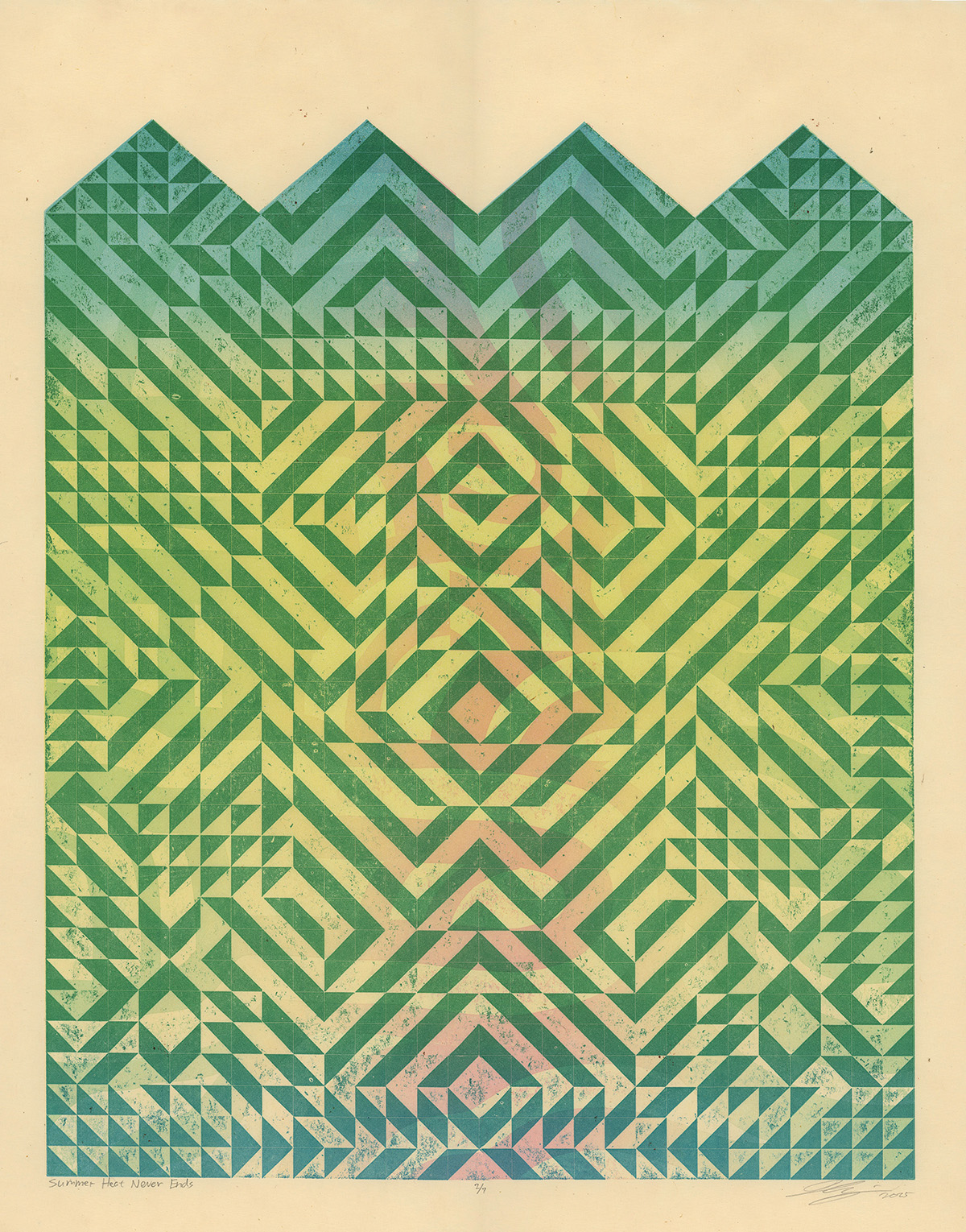
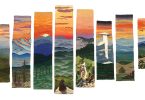
Summer Heat Never Ends. Taro Takizawa, artist
Born and raised in Japan, Taro says it was elements of the culture there that formed the foundation for his art practice. “I grew up playing outdoors and reading manga (Japanese comic books), and was influenced by the Japanese aesthetics, which everyone does if you are raised in Japan,” he adds. “Both of my parents studied abroad, which planted an idea that I wanted to study abroad, too, so I moved to the US to pursue my higher education after finishing my high school. My dad did watercolors for one of his hobbies, and I was always drawing, apparently, even before I can remember. My drawings, by high school, were highly influenced by manga, which is really different from what I am doing now.”
With the aim of a tenure-track academic position at UNC-Wilmington, Taro has completed residencies and taught at various institutions as a visiting artist/teacher. “I feel like every move gave me different challenges, but also some amazing experiences and people I would never meet if I stayed in one place,” he says.
He finds that concentrated studio time, however, helps his creativity in the most productive way. “I can take risks, make small leaps and discover a new trajectory,” he says. “Most of the time this happens in residencies where I am away from my daily life, in a completely new place, with new people, a different studio, a different environment. This sets me up for trying out something new, and I am usually surprised with how things unfold: some won’t work, and something I never really thought of can stick. It’s really exciting.”
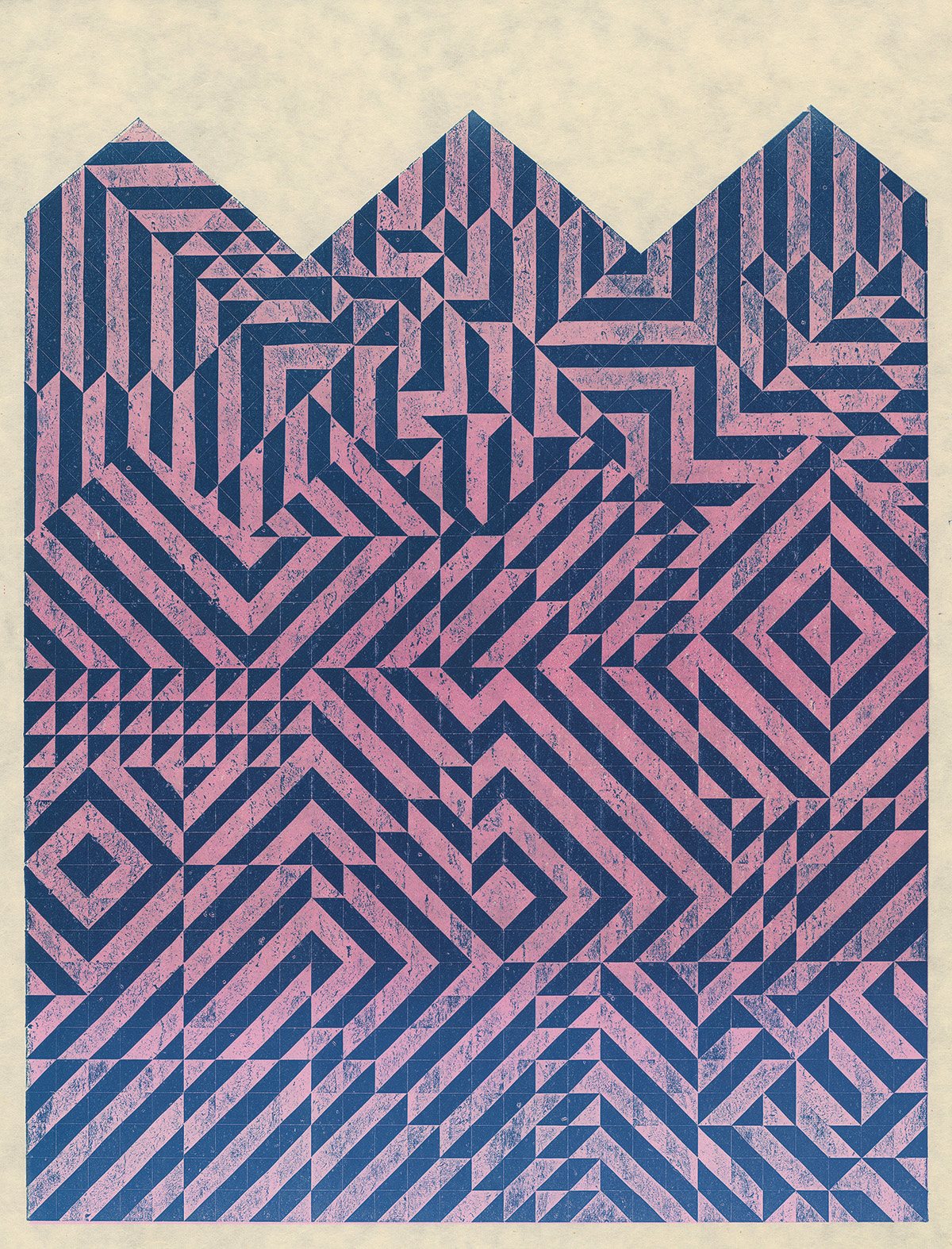
Evenfall. Taro Takizawa, artist
In 2022, he began a yearlong residency at the Lawrence Arts Center, in Kansas—an experience that gave him the satisfaction of feeling like a full-time artist. “Until then, I was without a dedicated studio space, and that residency opportunity really helped me get back into my studio practice and catapulted me into my career,” he says. “The following year, I returned to academia as a visiting faculty member at UNC-Chapel Hill, and this was another unexpected but fruitful year easing back into teaching because they had really amazing students to work with.”
Taro believes that art is a lifestyle. “An art career is about small steps and small detours, and the people in the field who help each other,” he says. “I am privileged to get to meet and know amazing people in the field, and I also want to contribute to arts and education so that more people feel like they belong here.”
For more about Taro Takizawa’s art, visit CargoCollective.com/tarotakizawa and follow on Instagram @tarotakizawart His work is available for viewing at UNC–Wilmington. Email for an appointment at takizawat@uncw.edu. Pattern Play will be on display through Saturday, June 20, at Penland Gallery in Bakersville. Learn more at penland.org/exhibition/pattern-play-2. For registration information about Takizawa’s class at Penland School of Craft, visit Penland.org/workshop/color-and-abstraction-printing-with-chipboard.