Photo courtesy of Great Smoky Mountains National Park Archives
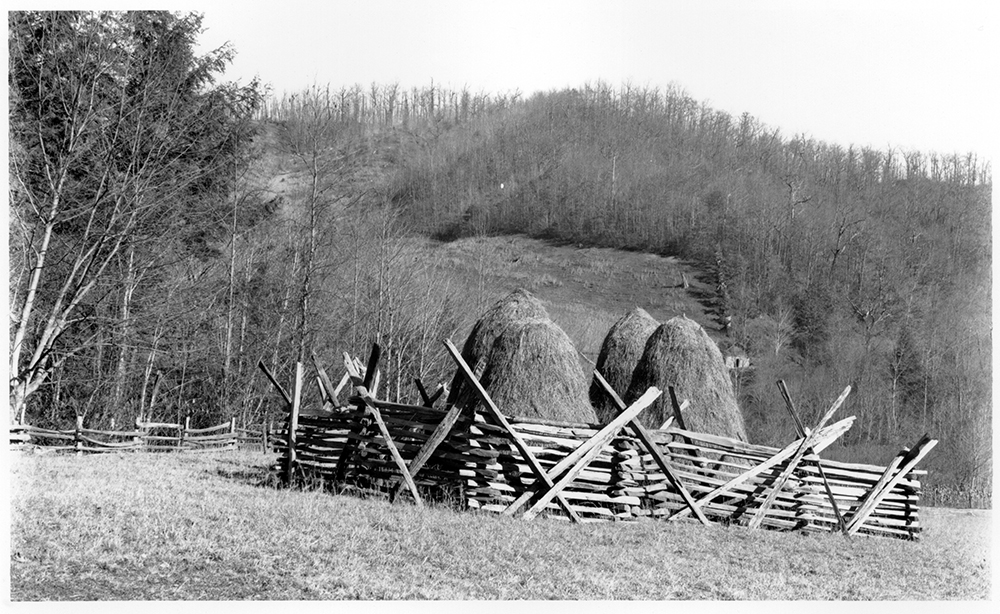
Until the late 19th century, Appalachian agriculture relied heavily on the traditional English practice of ‘common rights to unenclosed land.’ Individuals had a right to hunt, fish and graze their livestock on unfenced land, regardless of ownership. In practice, this meant that mountain farmers relied heavily on free-ranging their hogs, cattle and sheep on the forest mast and mountain bald pastures. Cultivated crops—rather than pasture lands—were fenced. Following the Civil War, the rapid growth of population and the rise of commercial farming led to increasing demands for fence laws and an end to the open range. By the 1890s, fence laws had been enacted in all Appalachian states and a way of life came to an end.
Digital Heritage Moments are produced at Western Carolina University in Cullowhee. To learn more, visit digitalheritage.org. You may also hear Digital Heritage Moments each weekday on radio stations WKSF-FM, WWCU-FM, WMXF-AM, WPEK-AM and WWNC-AM.