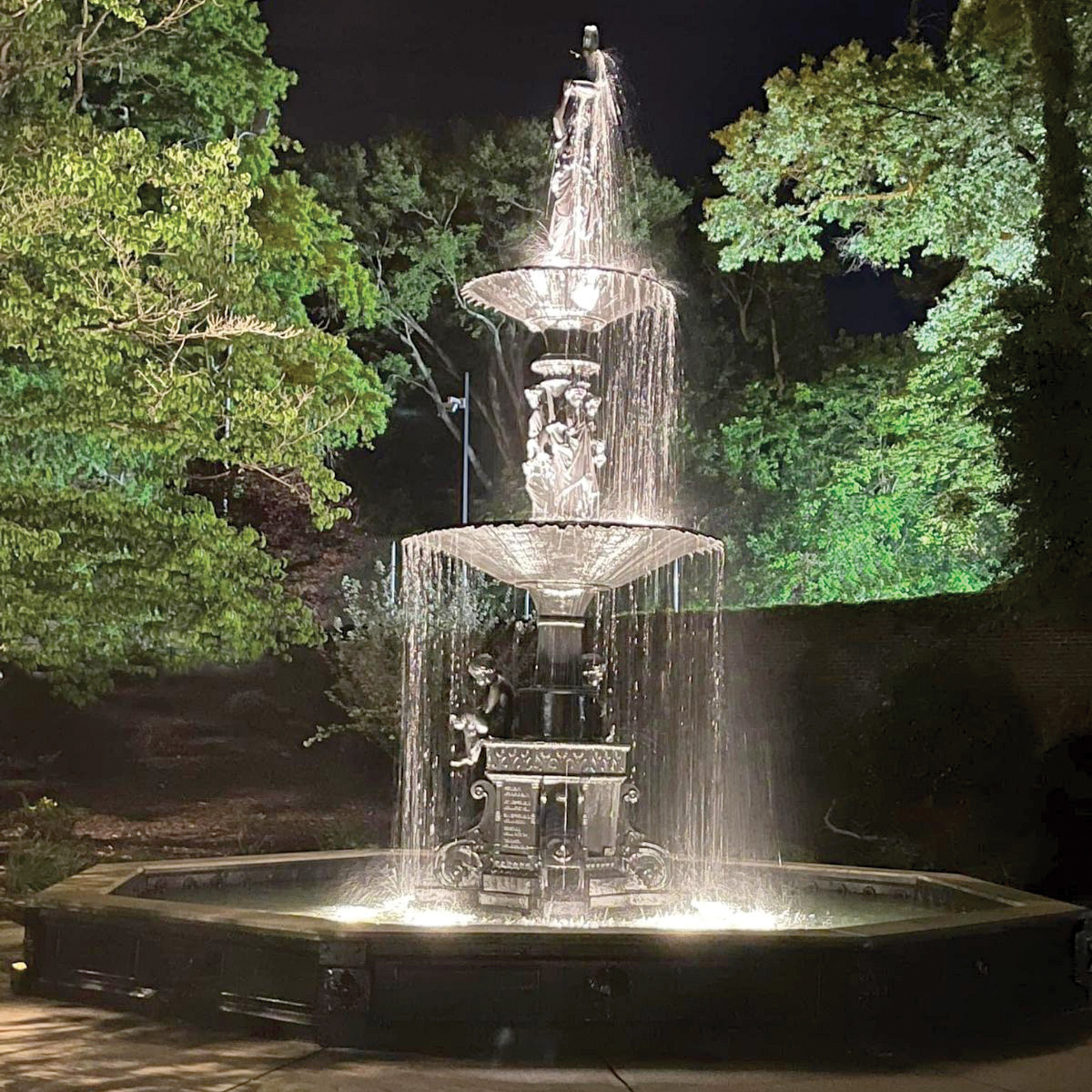
Bicentennial Fountain
Anderson County was established by an act of the South Carolina General Assembly on December 20, 1826, and will be celebrating its bicentennial this year, alongside America’s 250th anniversary.
Originally carved from the Pendleton District, Anderson County grew from an agricultural community into a textile powerhouse following the development of long-distance hydroelectric power in the late 19th century. Over time, manufacturing diversified the local economy, while projects such as Hartwell Dam and Lake Hartwell expanded opportunities for tourism and recreation.
The Anderson County Museum has spent the bicentennial year highlighting the community’s stories through programming designed to present a broad view of Anderson County’s history and identity.

Photos courtesy of Anderson County Museum
“Our programs and educational exhibits ensure that our history is not just about what has happened in the past, but we also want to be looking at the present and what’s going on today,” says Beverly Childs, the museum’s executive director. “We tell stories that are so diverse. I think it reinforces our community and all the identities that we share with everyone.”
Among the year’s initiatives, the museum held Carolina Day programming in June tied to both South Carolina’s semiquincentennial and Anderson County’s bicentennial. A commemorative book chronicling 200 years of Anderson County is expected to be released in September, and a bicentennial parade is planned for Sunday, October 4.
“Our approach is not only telling the complete history of our county but also just sharing the excitement of the bicentennial,” Childs says.
One chapter of that history stands out to Childs as especially transformative: the development of hydroelectric power.
“[When] hydroelectric power started here in our county, it not only powered the city but it also powered the textile industries,” Childs says. “I think without that generation of power, we would not have gone from an agricultural community to a textile community and then on to a manufacturing community.”
That progression helped create the diverse economy Anderson County enjoys today, one that continues to attract both domestic and international companies.
“I think that started everything in my humble opinion for Anderson,” Childs says. “It made our economy more diverse. It certainly sustained us through the many years.”
As the county enters its third century, Childs hopes the bicentennial leaves residents with a deeper appreciation not only for Anderson County’s accomplishments but also for the responsibility of continuing to build on that legacy for future generations.
Learn more about the bicentennial celebrations at AndersonCountyMuseum.sc.gov.