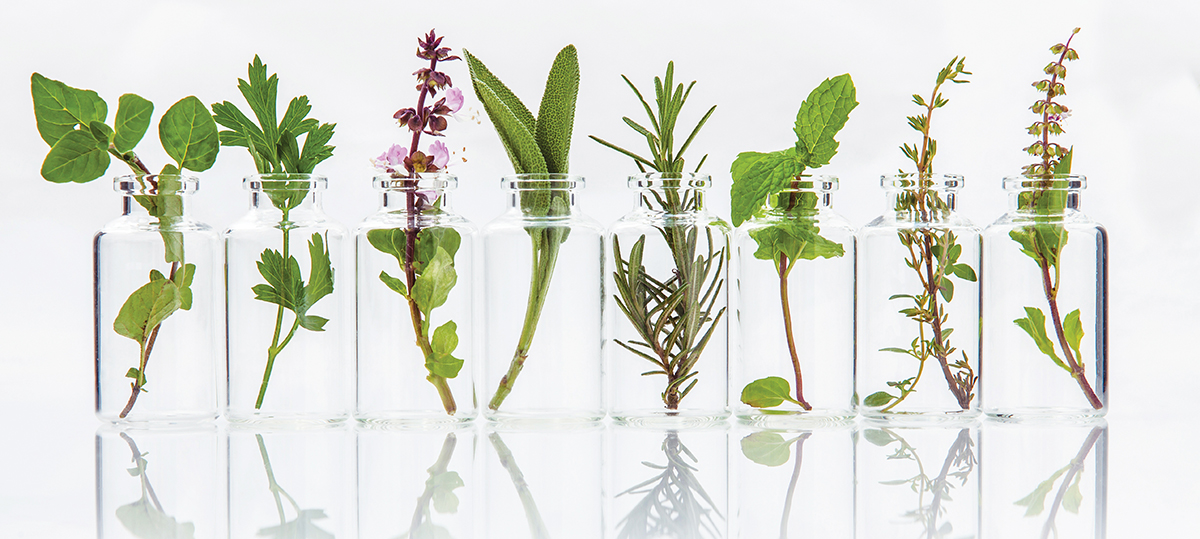
Bottle of essential oil with herb holy basil leaf, rosemary,oregano, sage,basil and mint on white background.
By Gina Trippi
I like the scent of herbs in the air. Local gardener Alison Hack agrees and says, “You should focus on planting herbs that have been successful in the Asheville area, including cilantro/coriander, parsley, chives, thyme, rosemary, sage and oregano.” Alison advises to plant early in September so herbs have time to set roots before the first cold weather arrives and, with days getting shorter, ensure your herbs get at least six hours of direct sunlight. This protocol promises herbal aromas wafting from your garden.
But would you expect to find herbal aromas in your wine glass? How is that possible?
From a science perspective, two compounds play a big role in the taste of wine. Methoxpyrazines are naturally occurring compounds that produce the herbaceous green pepper taste you find in cabernet franc, or lemongrass and jalapeño in sauvignon blanc. Terpenes is an aromatic compound that adds to the herbal taste in cooler climate white grapes such as riesling.
Other factors including geography, climate and aging contribute to the complexity of herbal flavors in grapes. Syrah, for example, from Northern Rhône, or sangiovese from Chianti often present flavors of rosemary, thyme, bay leaf and dried oregano. And many red grapes grown near the Mediterranean offer indigenous wild herbs, what the French call garrigue. And aging red wines can change a palate of fresh berries to dried leaves, herbs and tea. The variations are infinite!
Pairing wines presenting herbal flavors with food follows the basic rule: that is, to match the intensity of the flavor in the food, either by complement or contrast, with the wine. The goal is to skirt the edges but not overpower the food.
For a versatile wine with herbal undertones, Chef Sam at Quench recommends Field Blend Tradición from Viñas del Cenit in Spain. This blend of 65 percent tempranillo, 20 percent doña blanca, 10 percent verdejo and 5 percent godello revives the ancient process of combining red and white grapes. Sourced from 80- to 100-year-old vines, the wine presents herbal flavors of rosemary and sage. From the Quench menu, Chef Sam suggests you pair Tradición with pastrami beets, a vegetarian dish. “The smokiness from the ingredients used to cure the beets calls for the herbaceous flavors in Tradición and the addition of white grapes in this wine brings acidity and balance,” says Chef Sam.
Cabernet franc from the Loire Valley in France is particularly herbaceous. Lamé Delisle Boucard Bourgueil Cabernet Franc 2023 is a great example. “That distinctive green character comes from the naturally occurring compound, pyrazine, which gradually diminishes as the grape ripens,” says Andy Hale, wine buyer at Metro Wines. “In Loire, where the climate is cooler, the grapes retain more of those compounds, giving the wines their signature aromas of tomato leaf, green pepper, jalapeño, oregano and fresh herbs.” Pair this wine with rustic mushroom dishes. Both the dish and the wine present the earthiness and the umami flavor reminiscent of undergrowth.
Herbs are in the air and in your wine glass!
Gina Trippi is the co-owner of Metro Wines, 169 Charlotte Street in Asheville. Committed to the community, Metro Wines offers big-shop selection with small-shop service. Gina can be reached at gina@metrowinesasheville.com or 828.575.9525.