
Story & Photo by Leah Shapiro
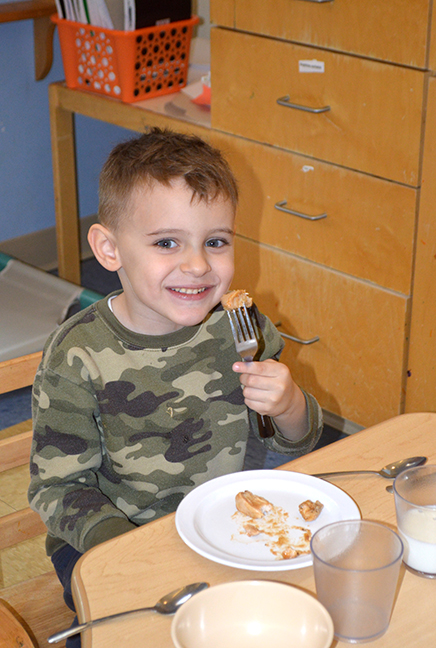
Rainbow in My Tummy
As you may know from personal experience with young ones, children can be picky eaters. At the dinner table, you may find them exploring their choices (perhaps with their fingers) and exercising their decision-making abilities. Yet, children are also very impressionable and inquisitive. When given access to fresh fruits and vegetables, they can learn by example and by asking adults questions about what’s in front of them.
“Our lives are surrounded by food,” says Kate Justen, executive director of FEAST (feastasheville.com), a nonprofit organization in Buncombe County that offers hands-on cooking and gardening education programs in schools during the day and after school, from kindergarten through eighth grade. “You can’t go through a day without thinking about food in some way because you have to eat every day. So it’s always at the forefront of people’s lives, but we kind of treat it as something that is not important for some reason.”
FEAST (Fresh Easy Affordable Sustainable Tasty) focuses on the process of building healthy relationships with food. Children learn basic cooking skills, such as chopping and cleaning the kitchen area. But perhaps most importantly, they get the chance to explore healthy options and why they feel how they feel about certain foods.
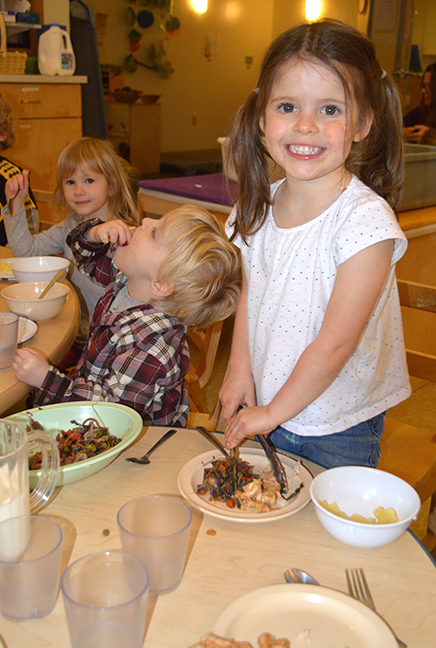
Rainbow in My Tummy
“In classes, we talk about what it is that kids do not like about the food,” says Kate. “If someone says ‘I do not like tomatoes,’ we will ask questions to find out why. Do you like pizza sauce? Salsa? Have you had roasted tomatoes? Pureed? Cooked versus raw? Chopped small? Seasoned with different herbs and spices?” The statement “I don’t like tomatoes” can then be qualified and the students will know how they do like them prepared.
Kate says, “You never know what may turn someone off when it comes to food. It could be listening to someone else talk about how much they do not like something, so they won’t even try it. On the flip side, positive verbal encouragement can be a great motivator when it comes to trying new foods.” One of her students ate bok choy and loved it. Three years later, the whole family is eating it as part of their regular diet.
It’s never too early for children to begin eating healthy and balanced meals. Verner Center for Early Learning in Asheville developed Rainbow in My Tummy (rainbowinmytummy.org), a nutrition program based on widely accepted best practices and designed for childcare centers. Two-thirds of a child’s caloric intake is often served by their childcare center through breakfast, lunch, and snack. Ensuring that this portion is nutrient-rich is very important for a child’s development.
“The idea is that over the course of a week, they will eat the whole color of the rainbow in naturally colorful foods,” says Kelly Brandon, director of resource development at Verner. Kitchen staff refer to seasonal recipe guides that feature fresh fruits and vegetables, lean meats, whole grains, no artificial ingredients, and no trans fats.
More than a hundred childcare centers across 20 states have purchased the Rainbow in My Tummy guides to change the quality of food offered in their centers and support healthier lifestyles of the children who attend.
An important part of the Rainbow in My Tummy program is for teachers to eat the same food during mealtime. “If other children are eating the food, and the teachers are eating the food and talking about how yummy it is, the other children are much more likely to eat it,” says Jacque Penick, executive director of Verner.
Growing Minds (growing-minds.org) is another way for people to learn more about food. This farm-to-school program of Appalachian Sustainable Agriculture Project (ASAP) works with preschool through high school students. “The four components are edible gardens, farm field trips/farmer visits, classroom cooking/cafeteria taste tests, and locally-grown food served in meals and snacks,” says Emily Jackson, program director. Additionally, for the last seven years, Growing Minds @ University has worked with college students for gardening, cooking, and taste testing opportunities with younger eaters.




Nice article. Healthy food makes our health good. For the young people, we must teach our children about eating healthy diet so that they remain healthy and fit through-out the life. Thank you sharing this information.