By Emma Castleberry
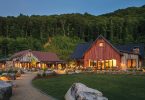
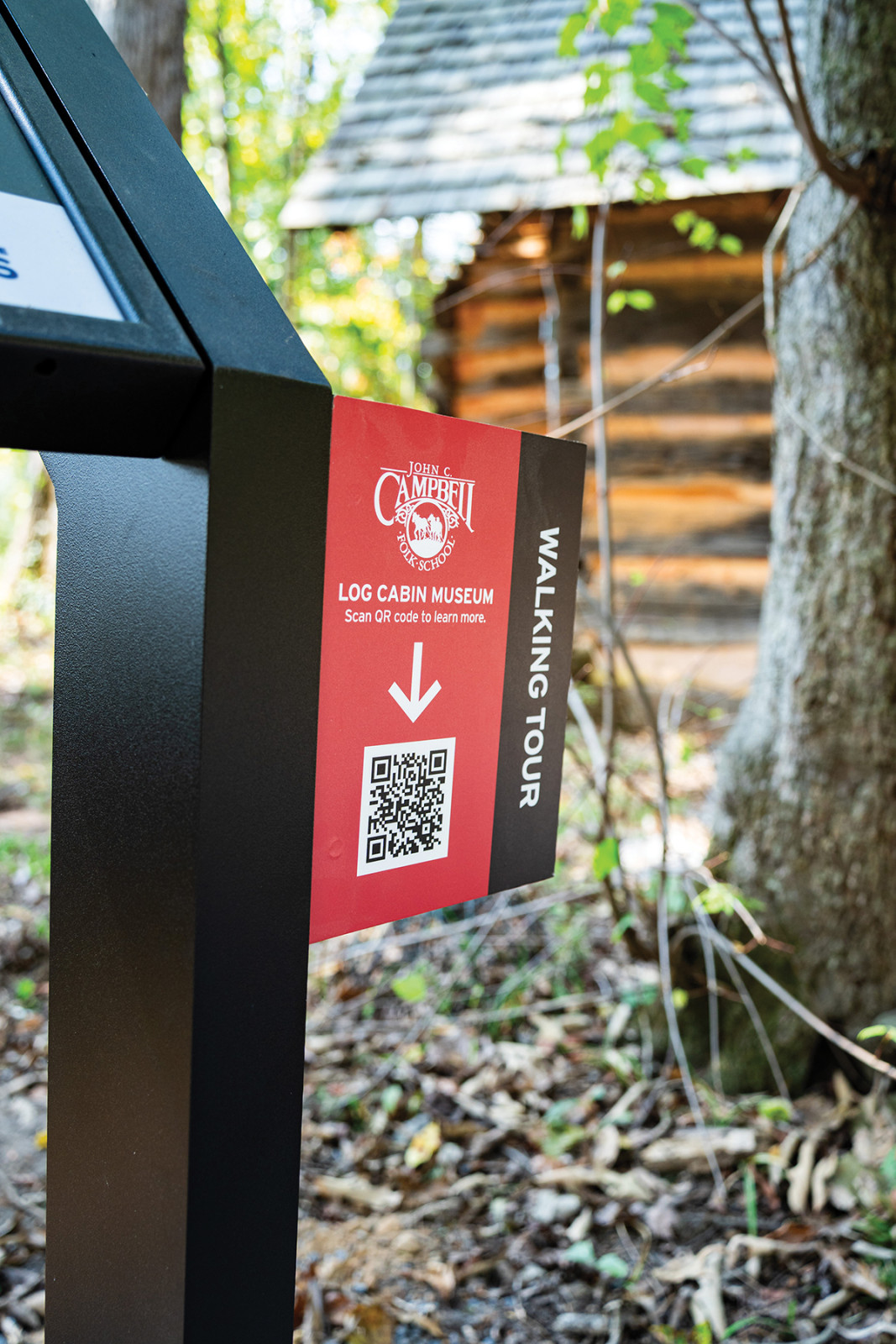
The John C. Campbell Folk School in Brasstown has unveiled a new self-guided walking tour as part of its centennial celebration, offering visitors an immersive way to explore the school’s century-long history of Appalachian craft, music and community. The tour features interpretive panels across campus, each paired with QR codes that link to stories about the school’s founding, its Danish folk school roots and the people who have shaped its enduring legacy.
Courtesy of John C. Campbell Folk School
“This tour helps us honor the vision of our founders while making our history more visible and accessible to all who visit,” says the school’s executive director Bethany Chaney. “It’s a great way to educate visitors because it allows them to engage with our story directly, in their own time and at their own pace.” Chaney adds that the Folk School campus has always been “a living classroom, full of inspiration at every turn,” and that the tour invites guests to “discover the layers of history, craft, music and community that have been cultivated here for more than a century even if they aren’t a student.”
The tour’s content spans both the school’s origins and the broader cultural traditions that have shaped the Southern Appalachian region, highlighting the stories of founders Olive Dame Campbell and Marguerite Butler and explaining how they were inspired by the Danish folk school model.
A major component of the tour acknowledges the deeper history of the land itself, developed in collaboration with consultants from the Eastern Band of Cherokee Indians (EBCI). “Our goal was to highlight how Cherokee traditions and ways of life have shaped this region for generations, while also recognizing that we are still here, still carrying those traditions forward today,” says Bud Smith, a consultant and representative of the EBCI. “It includes our craftsmanship—basketry, pottery, carving, beadwork—that continues to inspire and inform regional art. It also includes agricultural practices which have had a lasting impact on how people live with the land here.”
For Smith, the inclusion of Cherokee voices in the Folk School’s centennial project represents meaningful progress. “Too often, the story of the Cherokee people is left out of the broader narrative of Appalachia,” he says. “For the Folk School to recognize that its campus rests on our ancestral land, and to actively include our culture and history in this centennial project, is a step toward greater visibility and understanding.”
Chaney hopes the walking tour will deepen visitors’ connection to the region’s culture and craft. “By learning about the people who built the Folk School, the Cherokee traditions that continue to shape Appalachian arts and the community members who have sustained us for generations, visitors gain a richer appreciation for why these crafts, songs and stories matter,” she says. “Our hope is that people leave the tour with a deeper respect for the creativity and resilience of this region, and perhaps a desire to become part of the story themselves.”
The walking tour is free and open to the public year-round. Also, mark your calendar for an evening blacksmithing event, Forge After Dark, on Friday, November 7, and an auction on Saturday, November 8. The Folk School is located at One Folk School Road, Brasstown. Learn more at FolkSchool.org.