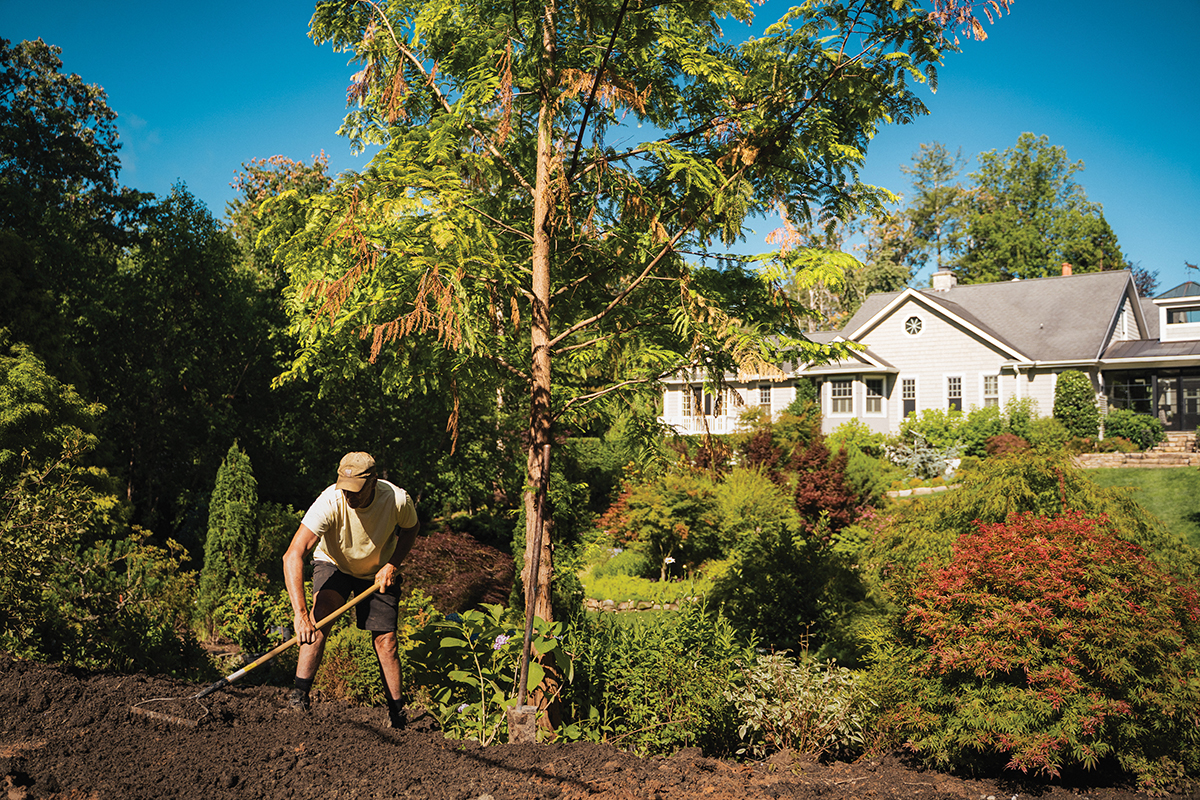
Chuck at work in his gardens. Photos by Robb Leahy
By Gina Malone
Chuck Hutchison had a storied past when he and his wife retired and moved to Asheville 17 years ago. He grew up on an Ohio dairy farm, played football at Ohio State when Woody Hayes was coach, played seven seasons in the NFL and had a career in business. He had earned a rest. “I entered retirement with plans to play golf, mentor young leaders and devote more time to charitable work,” he says. “None of it provided the fulfillment I expected. For most of my life, I had been energized by challenges, problem-solving and building something meaningful. Retirement ended my career, but it did not change who I was.”
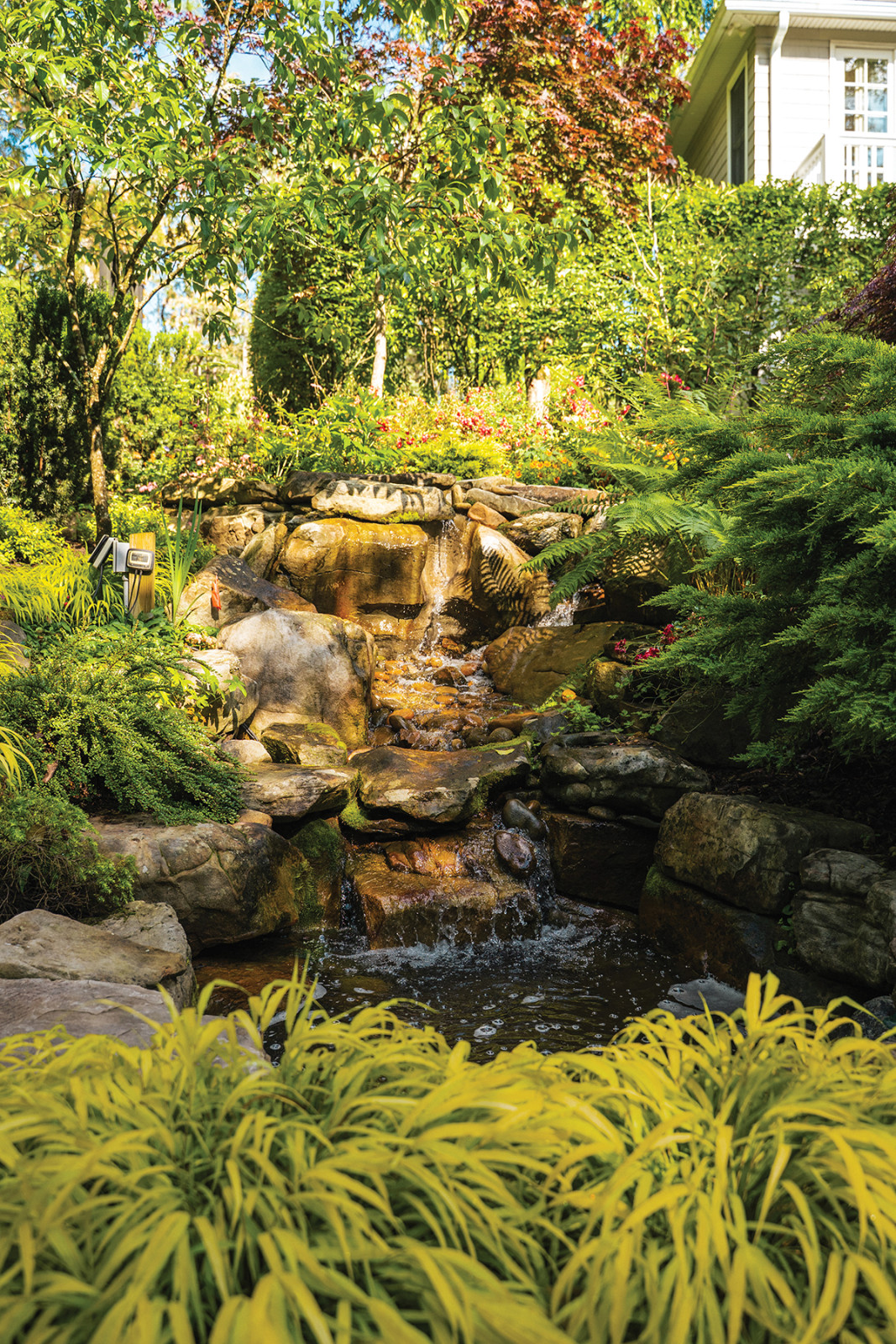
Photo by Robb Leahy
For the last 14 years, he has found an occupation that offers the purpose and the peace he needs: turning his nearly two acres of property, called Bucky’s Run, into lush gardens. The gardens have received recognition from the Smithsonian Archives of American Gardens and Hutchison has written a book titled Getting My Hands Dirty that was recently named a finalist for the 2026 Next Generation Indie Book Awards. But receiving national attention and gaining experiences to write about are not the reasons he began the project.
“My original goal was simply to create something beautiful,” he says. “I wanted to improve the land around our home and experience the satisfaction of building something with my hands.”
Beyond the visible reward, however, are the mental and emotional benefits. “The garden became a place where I could think, reflect and make sense of difficult experiences,” Hutchison says. “It taught me that meaningful growth cannot be forced or hurried. You cannot yell at a plant and make it grow. Eventually, I realized I had created more than a landscape. The garden had become a teacher and a reflection of my own life.”
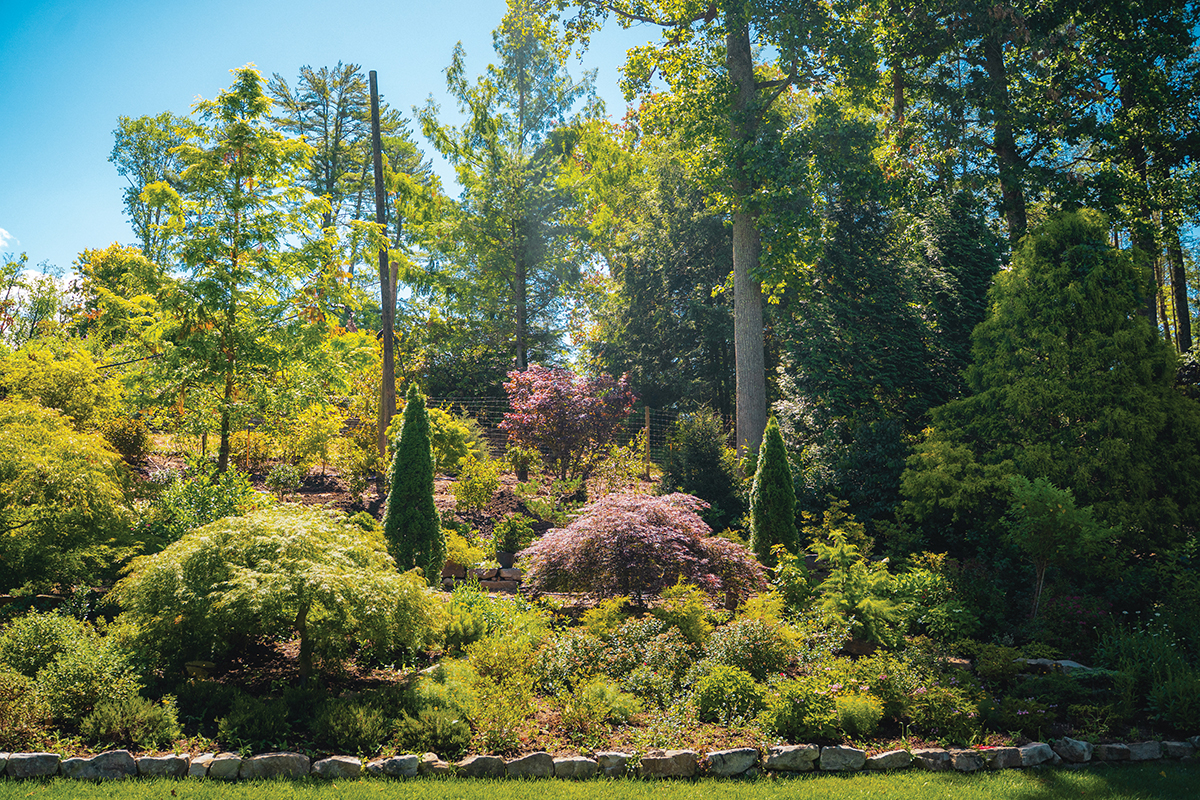
Photo by Robb Leahy
Along the way, there were no landscape designs or hired experts. “The vision, design and daily work have been largely my own,” he says. “I have learned a great deal from generous gardeners and horticulturists, but the garden was not created from a professional master plan. It evolved through observation, experimentation, mistakes and discovery. I dug every hole by hand, built every retaining wall and selected more than 3,000 plants representing over 400 varieties. I estimate that I have spent more than 26,000 hours working in the garden.”
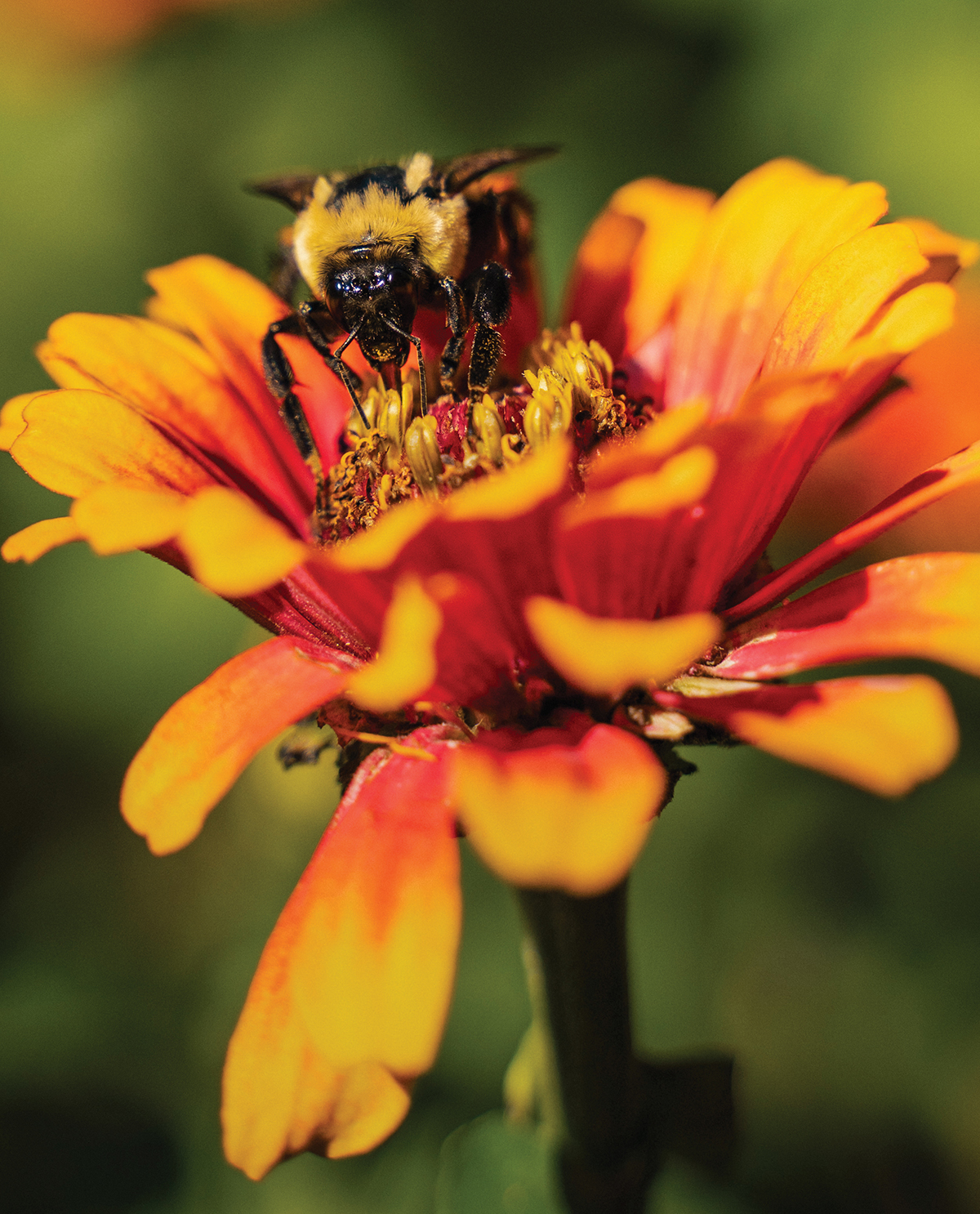
Photo by Robb Leahy
To him, the garden is “an autobiography written in living color.” While others may see the individual elements—plants, paths, stone walls, water features—Hutchison sees memories. “Every major chapter of my life is represented somewhere in the garden,” he says. “Certain plants remind me of family members and friends. Trees mark important moments. Some areas celebrate joy, while others reflect disappointment, loss, perseverance and hope.”
The French Broad Garden Club sponsored the property’s application for the Smithsonian Archives. This involved documenting and photographing the garden, and completing all else that was required. “They deserve the credit for making the recognition possible,” Hutchison says. “I remain deeply grateful that they believed the garden was worthy of being preserved as part of America’s gardening history.”
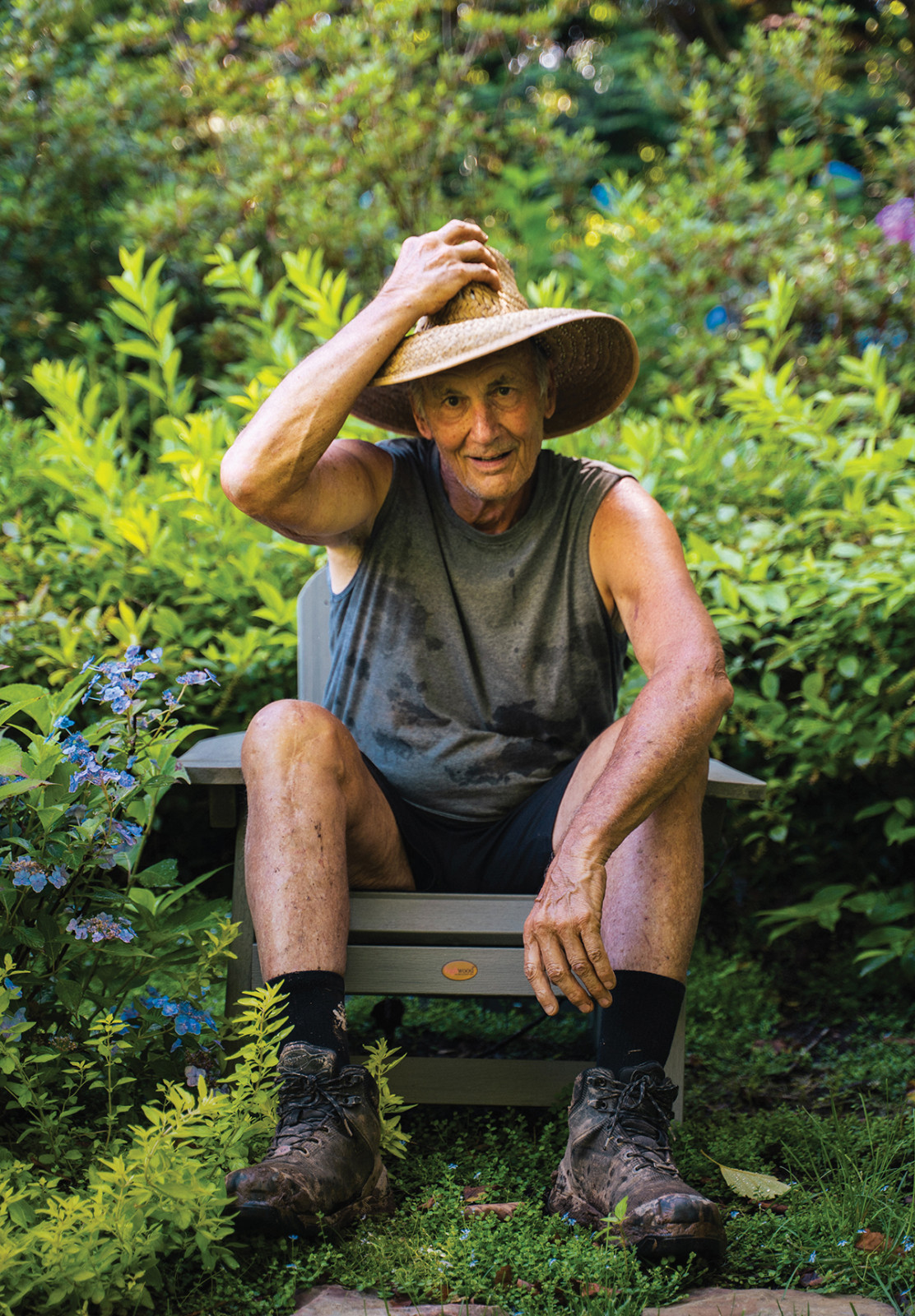 When he began writing the memoir, Hutchison thought that he was telling the story of the garden. Instead, he says, “It turned out to be the place where I finally became quiet enough to understand the story my life had been telling. Change, disappointment, uncertainty and loss are part of every life. My story is not unique because difficult things happened to me. It is one example of how a difficult season can become the beginning of something meaningful rather than the end of the story. It is never too late to begin again, discover a new purpose or build something worthwhile. Sometimes the first step is no more complicated than picking up a shovel and starting with the ground beneath your feet.” That, along with hope, is what he hopes readers take from the book.
“My wife occasionally asks whether I am finally finished,” Hutchison, now 77, says. “My answer is always the same: ‘Honey, I’m closer to being done than when I started.’ The truth is, a garden is never finished. Like life, it continues to grow, change and reveal new possibilities.”
Learn more and order copies of his memoir and a new book, The Climb, soon to be released, at ChuckHutchison.com.