Photo by Sam Robertson
By Emma Castleberry
Greta Lee’s West Asheville home did not come together through a single renovation, a carefully mapped design plan or a series of purchases made all at once. Instead, it evolved over years, shaped by what Lee could afford, what she happened to find and—most importantly—the people she encountered along the way.
Lee calls her home a work of “sustainable living art,” where salvaged materials mingle with original artwork and where nearly every object carries a story.
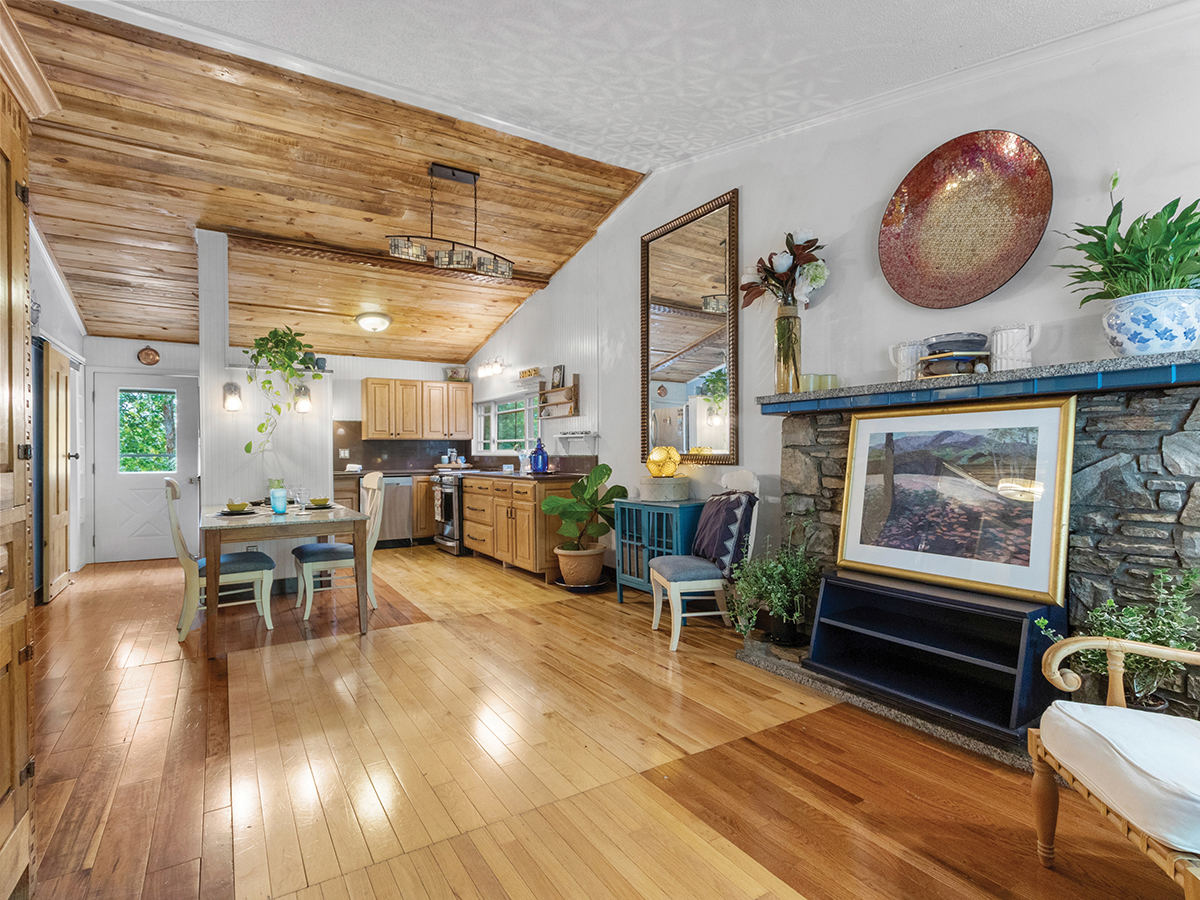
Photo by Sam Robertson
“I try to think of the whole lifecycle of art, from beginning and middle to end, and how it can loop around and how it can keep going,” Lee says. “It’s kind of like regenerative agriculture in that sense. My art moves, it changes. I like to be as organic and local as possible.”
The story of the house is also intertwined with Lee’s history with The Laurel of Asheville, where she worked for many years, first in accounting and later in advertising sales. After a divorce, Lee saved the commissions for two years to afford a down payment on her home.
“That represented freedom and independence and security,” Lee says of owning a home.
Once the house was hers, transforming it became a long-term project. Lee remodeled it piece by piece, often purchasing materials and furnishings secondhand or from businesses she had encountered through her work with The Laurel. Habitat for Humanity ReStore became a particularly important resource, supplying everything from flooring and tile to furniture.
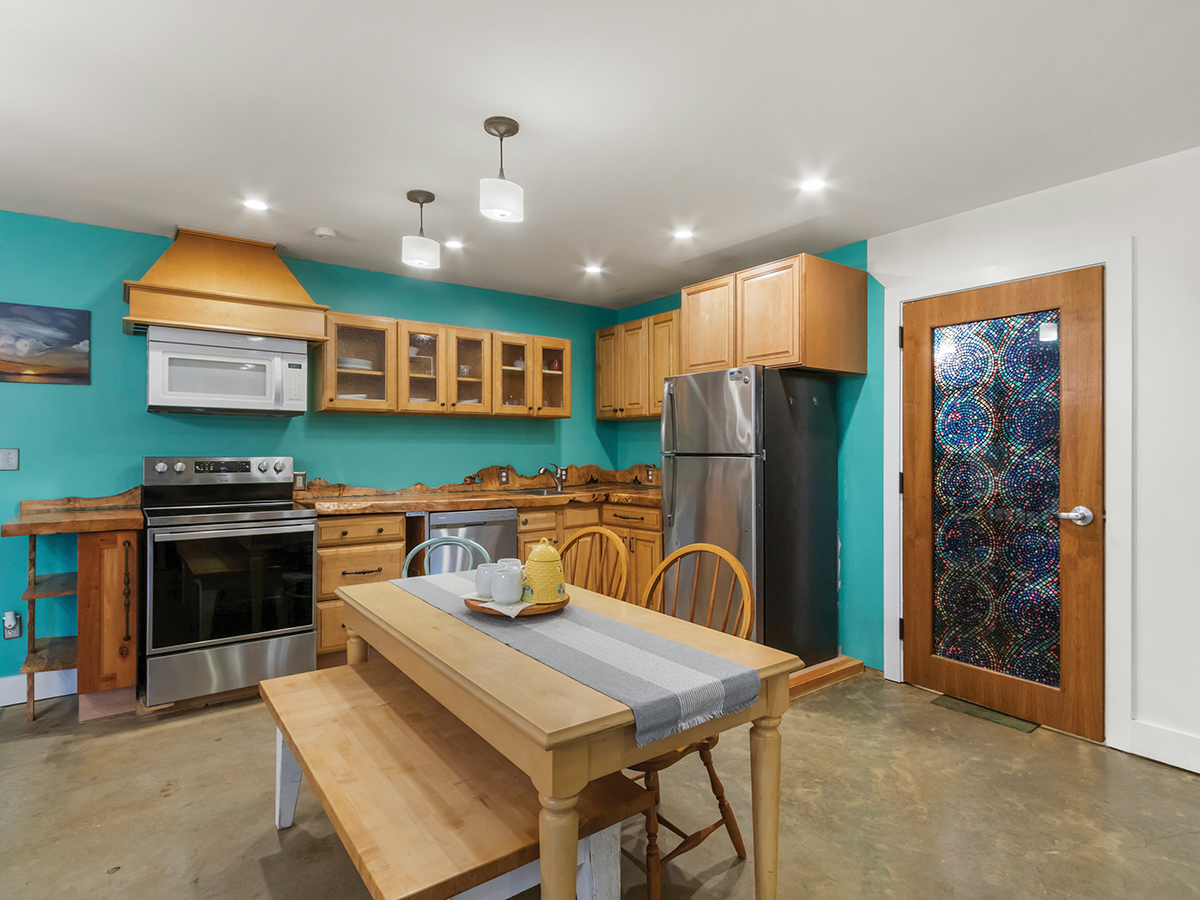
Photo by Sam Robertson
“Following my customers, delivering magazines to their businesses, I was able to buy items from many of my advertisers and small business owners on a very tight budget,” she says. The home’s Silestone countertops and maple cabinets were purchased from a business that was one of Lee’s advertising clients. The custom-made maple countertops were crafted by a local craftsman she met through her work. Lee remained steady in her commitment to the renovation, but admits that tackling it piecemeal was sometimes tedious.
“The slow approach was very uncomfortable, many, many times,” she says.
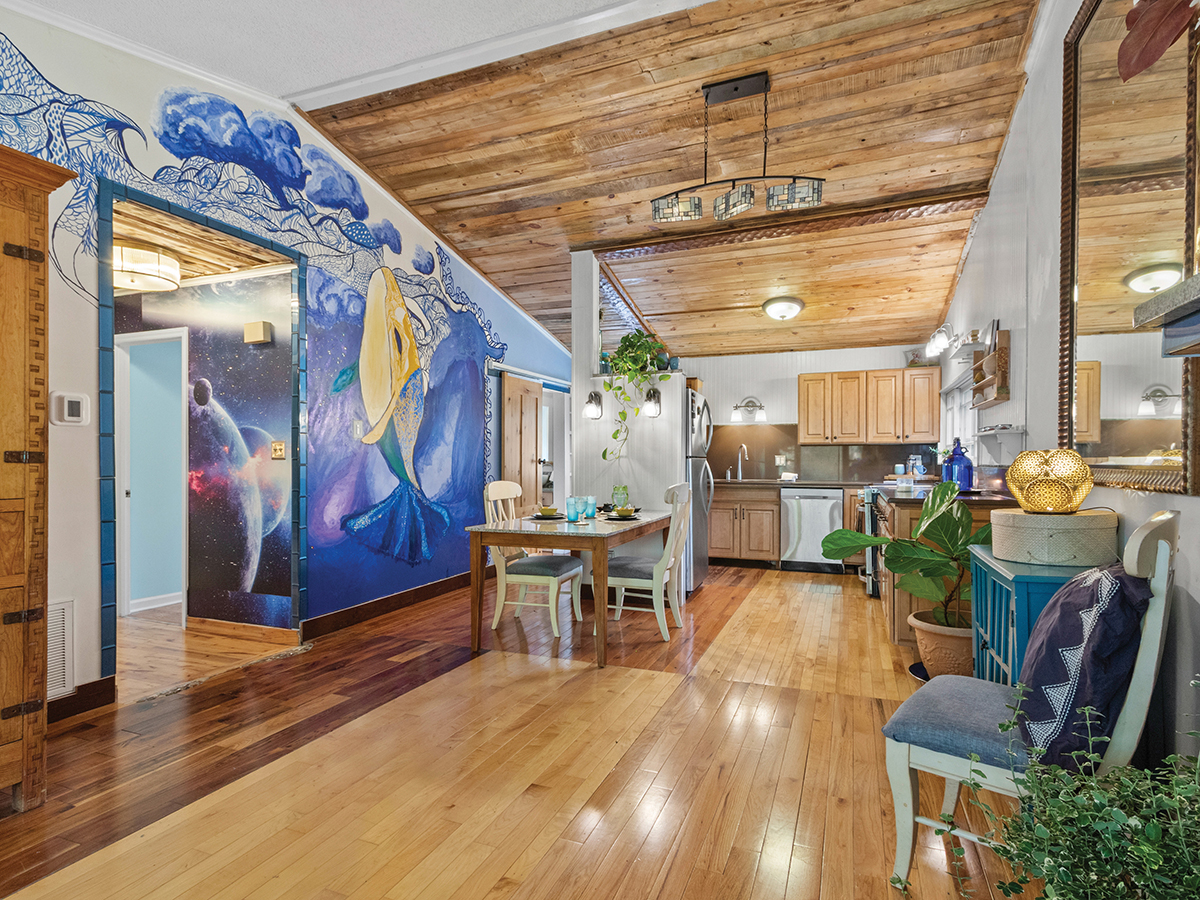
But waiting also gave Lee the opportunity to build the house differently. Instead of deciding exactly what she wanted and buying it new, she waited for the right materials to appear. This resulted in some of the most distinctive parts of the home. Her floors, for example, incorporate former display samples of hickory, pine, oak, maple and other woods. Arranged together, the varied boards resemble a quilt.
The natural surroundings influenced her choices, too. Lee was drawn to the property in part because of its oak and cedar trees and its position above the French Broad River. The mountains, waterways and plants of Western North Carolina are reflected in the home’s interior.
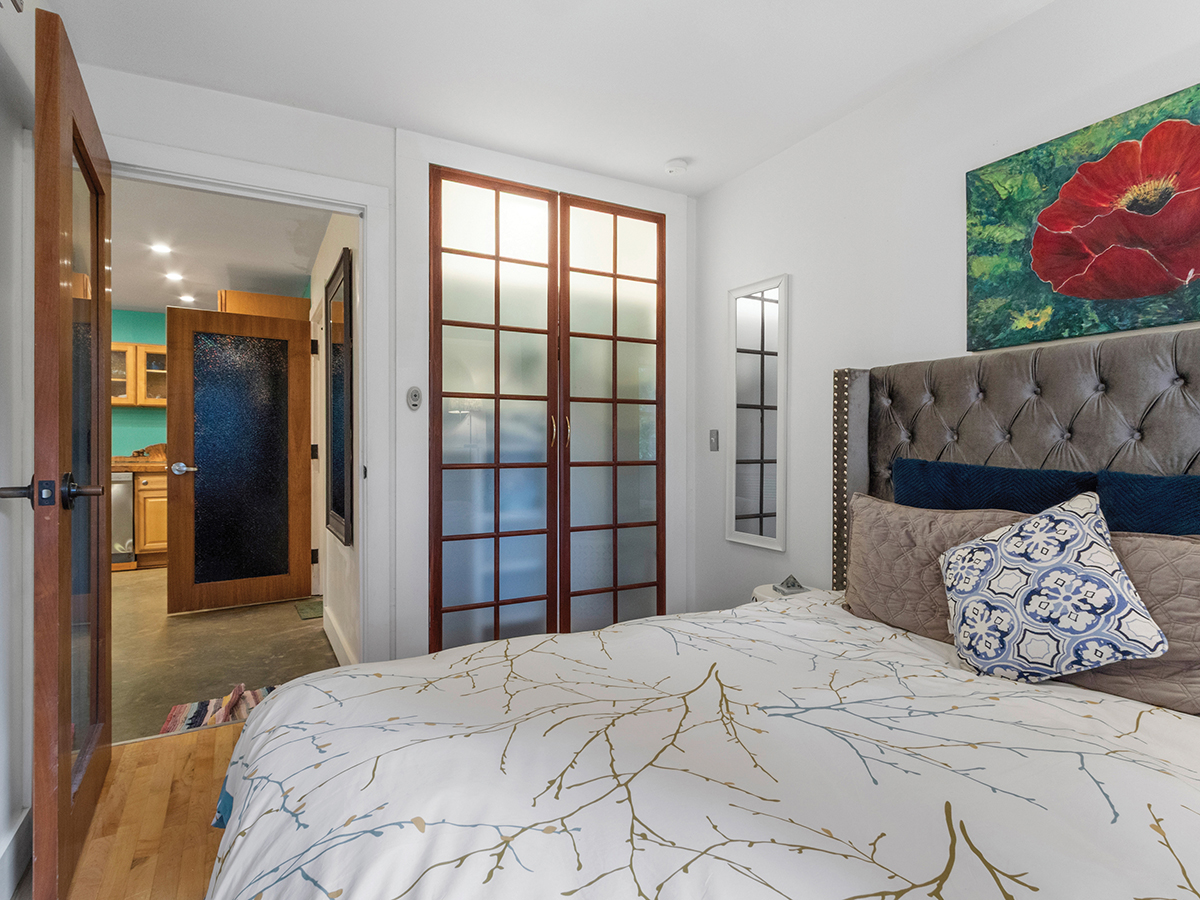
Photo by Sam Robertson
Original artwork adds another layer, including, most notably, The Cosmic Whale, a large mural by Lee’s daughter, artist Savannah Camp. Lee commissioned Camp to create the work in 2020 after Camp lost her job during the COVID-19 pandemic. Lee gave her daughter freedom to determine what the mural would become, and Camp completed the detailed work in about a week and a half.
“The Cosmic Whale is a reflection of the stars on the whale’s back…and I think that’s our purpose here on Earth—to reflect light to the Earth,” Lee says.
Today, the dining room beneath the mural is Lee’s favorite place in the house. She can sit at her thrifted granite table with the mural in view, remembering the experience of watching her daughter create it.
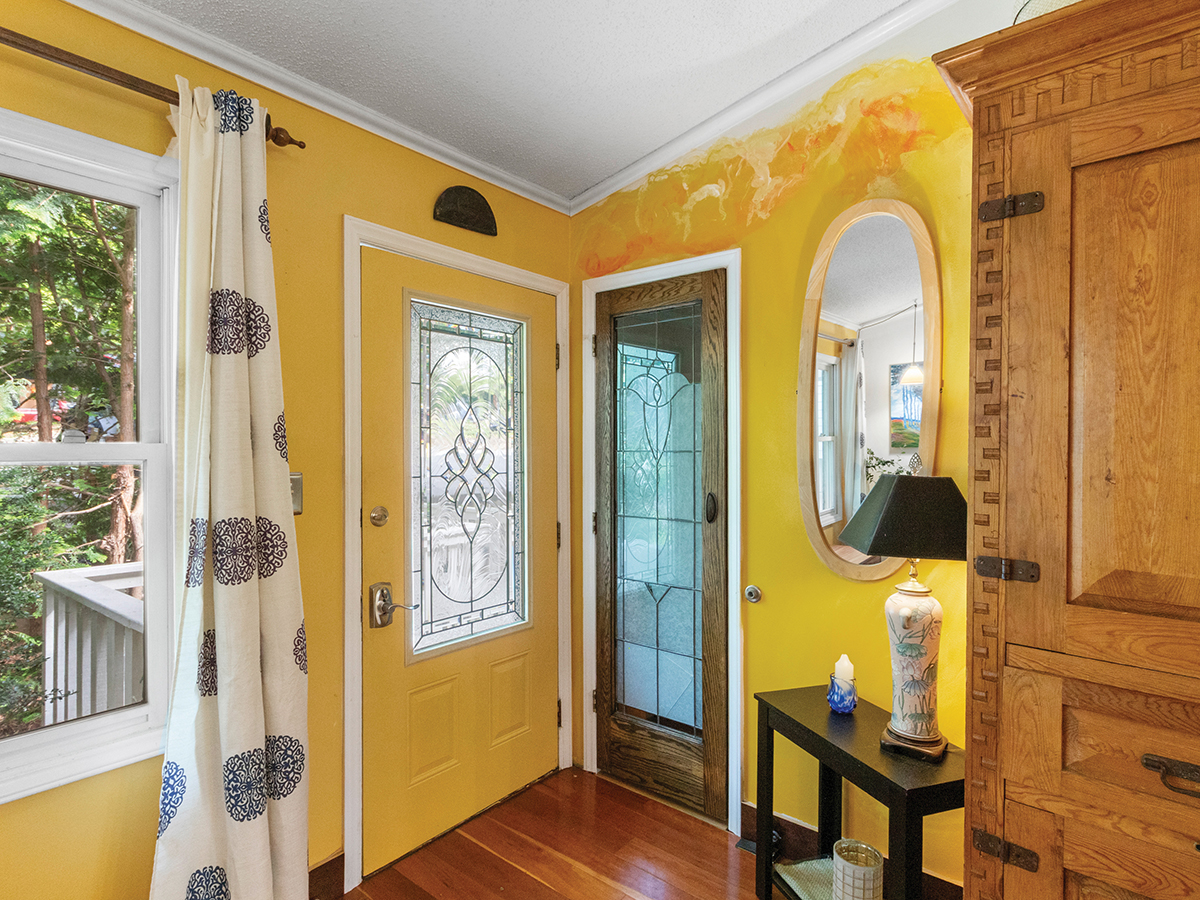
Photo by Sam Robertson
“Seeing her create art is what living in Asheville does,” Lee says. “You see the art, you want to make the art, support the arts.”
West Asheville and the French Broad River corridor have undergone substantial transformations during the years Lee has lived there, from the appearance of new trails and community infrastructure to the destruction of Hurricane Helene. For Lee, the disaster reinforced the importance of the community connections that have always been part of her idea of home.
“The spirit of our community is a giving one,” Lee says. “I’m proud of all the connections I’ve made in my community. I love my neighbors.”