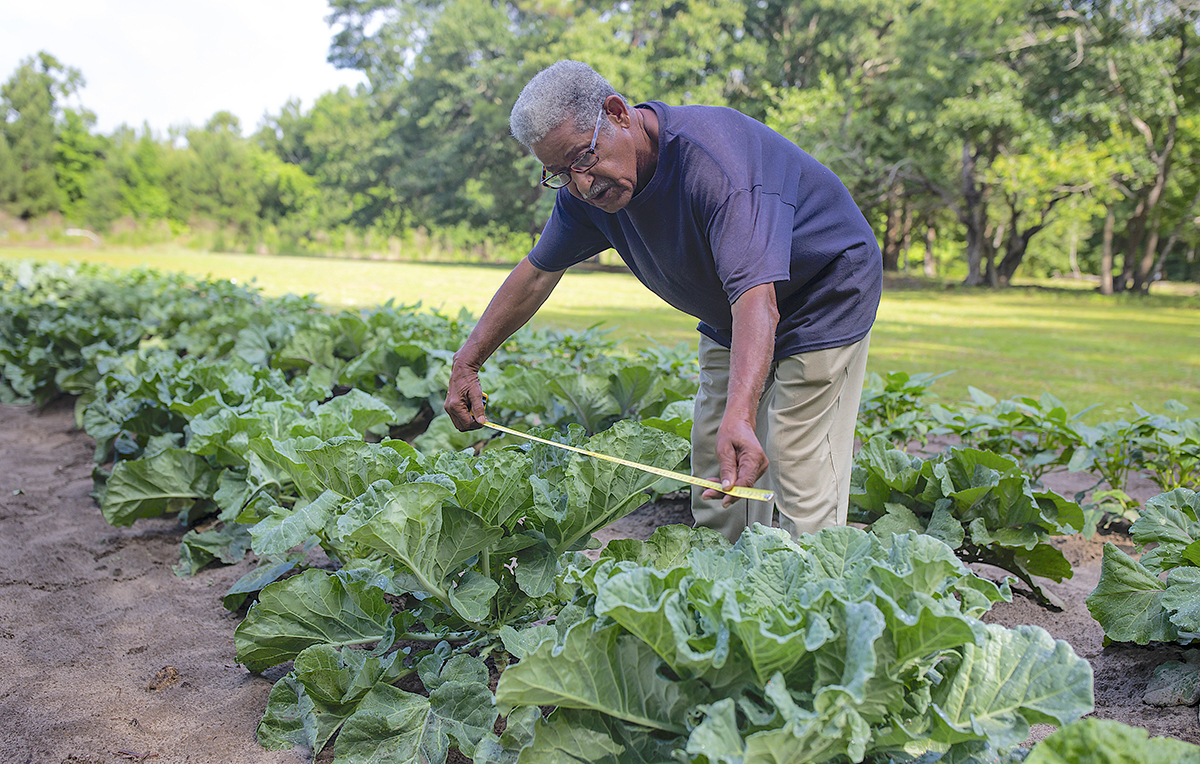
Levi Grissett harvests his legendarily large collard green plants on his family land in Supply, NC. Photo by Madeline Gray
By Bellamy Crawford
Vegetables may not inspire artistic expression in everyone, but for the many collaborators of the experimental publication Crop Stories, a single vegetable can be an artistic muse while simultaneously playing a critical role in several fundamental areas of our culture. “The content in Crop Stories takes a deep dive into specific plants, helping to build a broader connection to and more significant understanding of our local food systems,” says director of local nonprofit The Utopian Seed Project (TUSP) and Crop Stories project manager Chris Smith. Each publication highlights the historic origins of a particular crop, its ongoing journey through time and ever-changing geographic landscapes, its cultural significance and its contribution to collective identity. But Crop Stories is much more than an informational magazine; it includes creative works that celebrate the spirit and beauty of a specific vegetable.
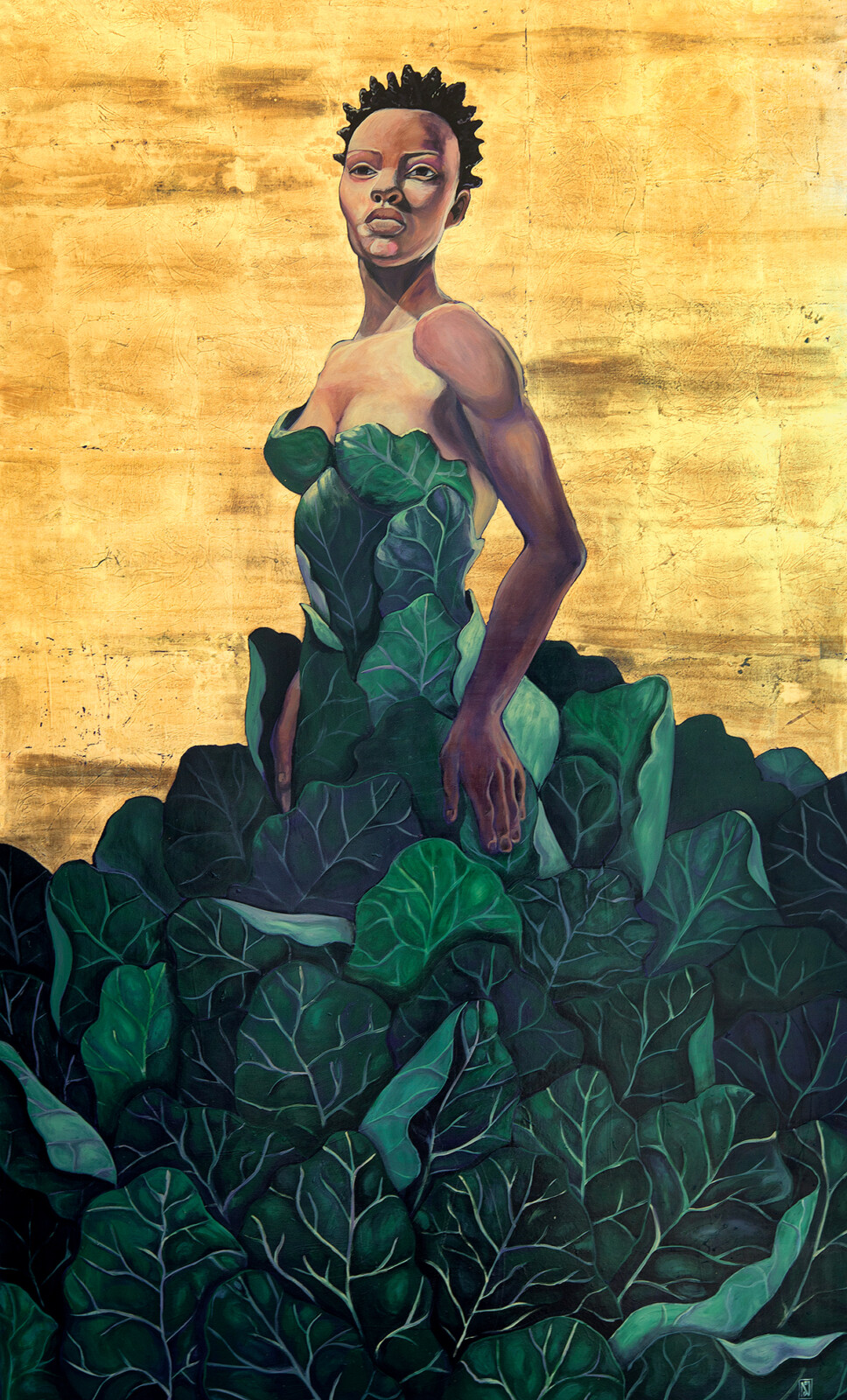
Collard Queen. Natalie Daise, artist
The Crop Stories project is a recent acquisition of TUSP, which is dedicated to exploring regional biodiversity in food and farming by conducting crop and variety trials at local experimental farm sites. “Crop Stories is not a new idea, but a reincarnation of a publication first initiated by writer André Gallant and editor Keia Mastrianni,” Smith says.
The latest issue of Crop Stories, co-edited by journalist and scholar Dr. Cynthia Greenlee and food advocate and artist Melissa DeSa, is dedicated to collard greens. “When Chris asked me to co-edit this volume with him and Melissa, part of me wondered if we would have enough articles about collards to justify a whole issue,” says Greenlee. “Though I understood how beloved the collard is in my native North Carolina, I somehow couldn’t imagine that too many people would come out of the proverbial woodwork to write about this sturdy plant.”
Greenlee’s doubt dissipated as Smith and DeSa invited writers, farmers, artists and scholars to contribute to the issue, almost all of whom universally and enthusiastically agreed to participate. “I think so many said ‘yes’ because collard lovers tend to think of these greens as the James Brown of vegetables—the hardest working plant around,” says Greenlee.
Crop Stories celebrates the depth and complexity of food and farming, something most people don’t get access to in our industrial-led food system. “We want richer conversation around our food and our food systems, and we believe food should also be fun,” says Smith. The project aims to be self-sustaining by raising enough money through sales to launch into its next edition. “Any profits will be used to further explore the Crop Stories concept through podcast and film,” Smith says.
Learn more about Crop Stories and purchase a copy of the Collards issue at UtopianSeed.org. If you’d like to contribute to the sustainability of the publication, find opportunities to support the project at Patreon.Com/UtopianSeedProject.com.