Gary Corn’s blazer. Photos by Jennifer Packard
By Lauren Stepp
On February 3, 2019, Gary Corn and his spouse, James Blanton, were sipping wine in their Tryon gazebo when Blanton’s phone lit up. It was a notification from eBay. A precious piece of local history was on the market and the two needed to act fast.
“We bought it right then and there for $250,” Corn says, pulling a receipt from a drawer in his kitchen. The receipt is for three bolts of Biltmore Industries homespun wool—one herringbone gray, one navy blue and one verdant green. To a layperson, this find would be unspectacular, even pricey. But to Corn and Blanton, history buffs who own Polk County’s nearly century-old Mill Farm Inn, the fabric was a steal. Those familiar with the global prominence of Biltmore Industries might think so too.
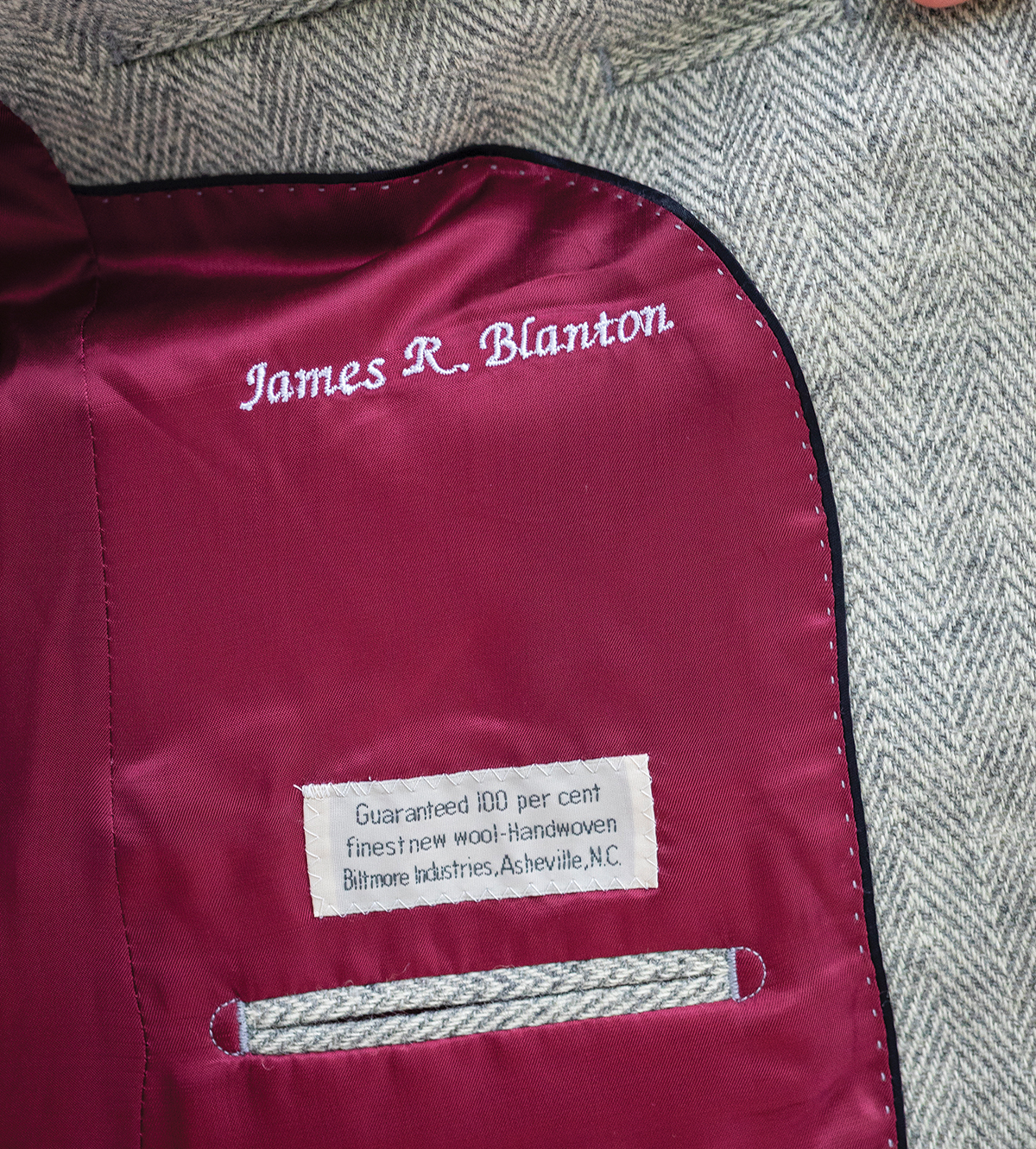
James Blanton’s blazer
The story starts in 1901 when northern missionaries Eleanor Vance and Charlotte Yale started offering free woodworking lessons to neighborhood children at Biltmore’s All Souls Church. News traveled quickly to Edith Vanderbilt, the matron saint of Appalachia.
Seeing the classes as a way of providing locals with a profitable trade, Mrs. Vanderbilt helped launch a full-on craft education enterprise called Biltmore Estate Industries in 1905.
By 1909, the venture had moved away from wooden bowls and picture frames and was instead digging deep into the cultural fabric of Western North Carolina. Mountain folk had been weaving for centuries, and Biltmore Estate Industries sought to refine the timeworn practice. Working on looms made in-house, local women processed crude wool into high-quality fabric that would later be sold to affluent tourists visiting the area.
But the idea didn’t truly take off until 1917 when Mrs. Vanderbilt sold Biltmore Estate Industries to Fred Loring Seely, manager of the Grove Park Inn. Seely was an enterprising man. After shortening the company’s name and moving the looms to the inn, he began tapping into his sprawling social network to spread the good word of Biltmore Industries.
“Anybody famous who came to the Grove Park Inn went home with a bolt of Biltmore Homespun,” says Blanton. “Mr. Seely was a marketing genius.”
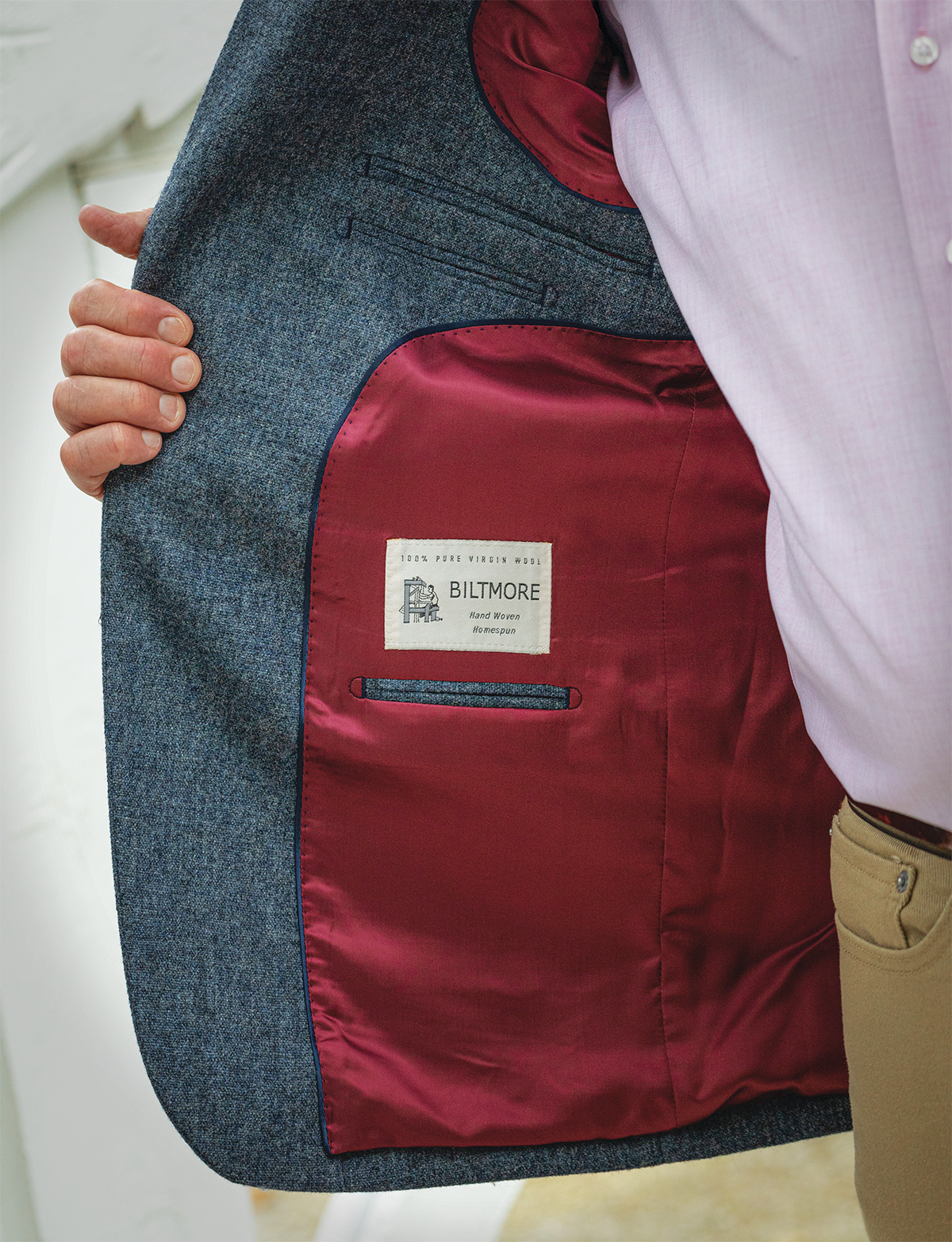
Gary Corn’s blazer
Soon enough, Thomas Edison, Eleanor Roosevelt, Helen Keller and Herbert Hoover all wore the Asheville-made fabric. A lesser-known man by the name of Dr. Hans Von Dyerhausen was also a believer. In 1955, the doctor had three bolts delivered to his home at 2231 California Street NW in Washington, D.C.
“But he never used them,” says Corn. “We don’t know what happened between 1955 and 2019, but we purchased the fabric from a seller out of Englewood, Colorado.”
After that fateful eBay ping in February, the wool sat once again unused. It wasn’t until late this fall, when the couple commissioned Hendersonville clothier Jonathan Corwin to produce custom blazers, that the fabric finally came to life.
“Few people know about Biltmore Industries and the famous people who wore this fabric,” Corn says, noting that wool production at Biltmore Industries began to dwindle in the 1960s. Production officially ceased in 1981. “When we have our blazers on, we’re like walking history.”
To learn more about Biltmore Industries, visit Grovewood.com.