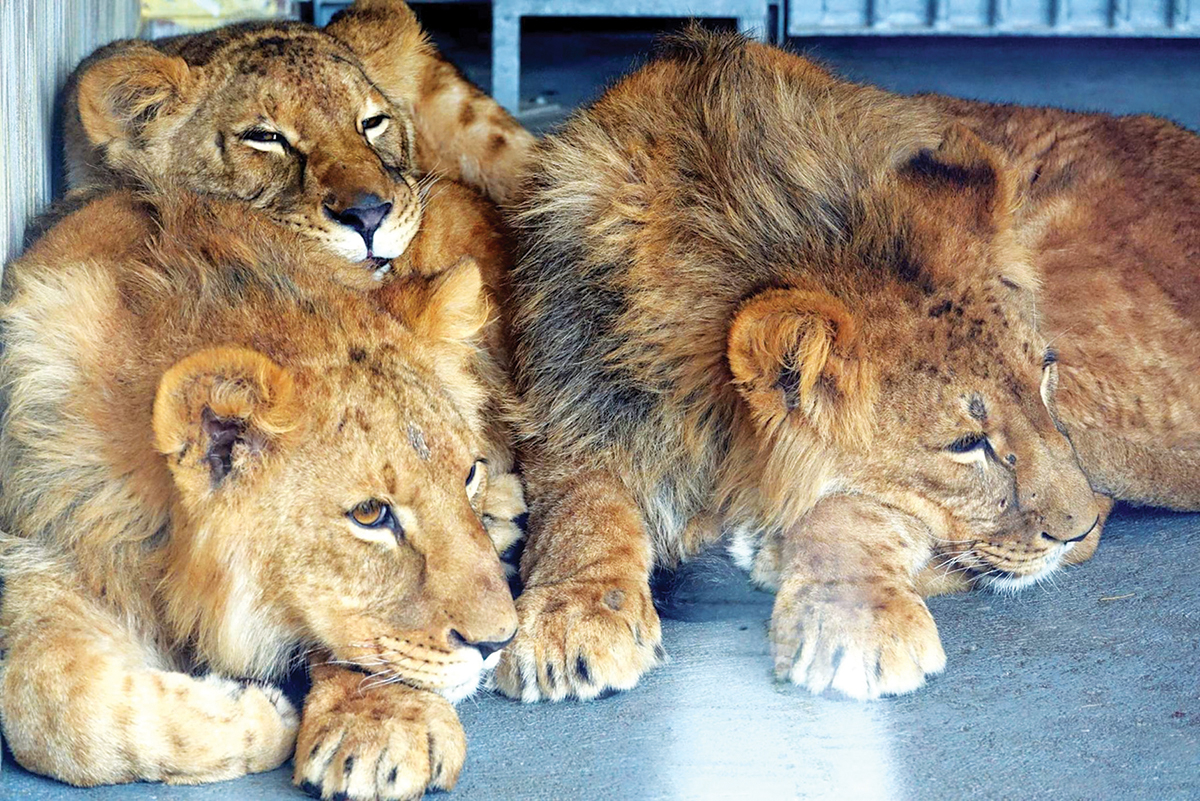
Lions evacuated from Ukraine in new home at Poznan Zoo in Poland. Image ©2022 Poznan Zoo
Saving the Animals
By Paula Musto
War is brutal, but it doesn’t affect only humans. The toll can be devastating as well on the animal world.
The International Fund for Animal Welfare (IFAW) is dedicated to animal rescue in hotspots around the globe, the latest being Ukraine, where operations have been in place since spring to evacuate both domestic animals and wildlife from the war zone.
“War is so destructive, it disrupts everything for humans and animals alike,” says Kelly Johnston, senior program officer for IFAW’s Disaster Response & Risk Reduction program, who spent three weeks in Poland this spring overseeing a team working at the Ukraine border. Wars and civil unrest typically result in sharp rises in animal homelessness, habitat loss, incidents of animal cruelty and increased competition with humans for resources including food, water and shelter.
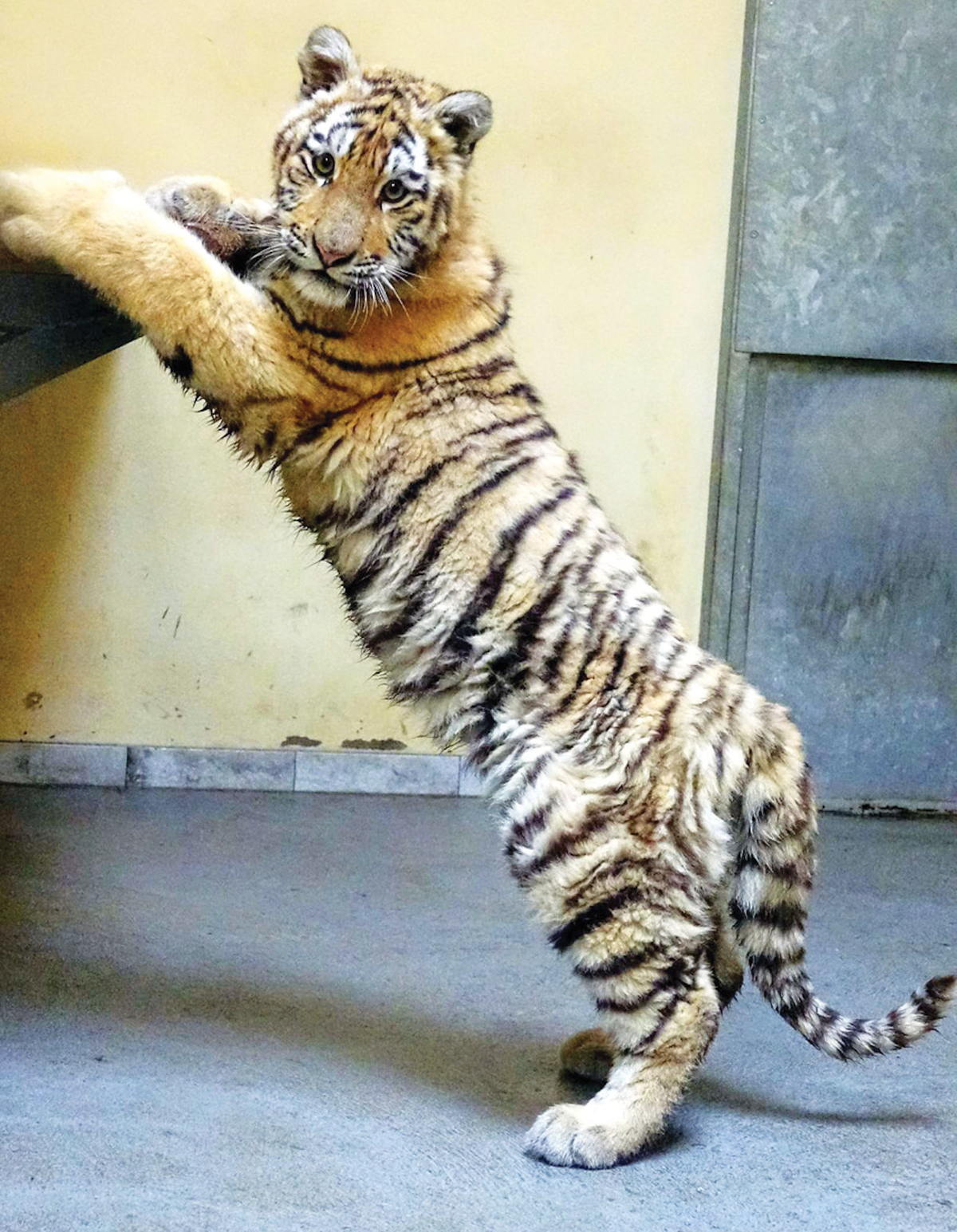
Young tiger evacuated from Ukraine in new home at Poznan Zoo in Poland. Image ©2022 Poznan Zoo
IFAW dispatched 50 responders to assist with the Ukrainian effort, working with locals to rescue thousands of animals. We’ve all seen the photos of Ukrainian refugees crowding train stations clutching their beloved pets and the kennels of homeless dogs and cats loaded onto trucks to be evacuated from decimated cities. What is not as visible are the efforts to save wildlife, be it zoo animals or other creatures caught in the line of fire.
In one particularly dramatic rescue, IFAW partnered with Poland’s Poznan Zoo to rescue 16 lions and tigers from a Kiev wildlife sanctuary. The animals were trucked through a 300-mile occupation zone and at one point were stopped by Russian forces. The refugee felines are now being cared for at zoos across Europe.
IFAW operates in 40 countries, responding to wars, civil unrest and natural disasters. Partnering with local agencies, IFAW has been on the scene during wildfires that devastated natural habitats in the US and Australia, has rescued stranded dolphins along the Cape Cod coast and worked in Germany to re-introduce and monitor wolf populations.
The organization helps operate an elephant orphanage in Zambia and helps free seals and whales entangled in fishing gear in oceans.
The missions are almost always the same: to rescue, rehabilitate and, when possible, release the animals back into the wild. The most difficult interventions, however, are those that involve military actions, such as the fighting in Ukraine, where the outcome is uncertain.
“War is a very different, and a difficult, experience,” Johnston says. “Many people refuse to leave, even with the bombing, because they cannot bear to leave their animals behind—animals and people are so intertwined that if you don’t address animal issues, people will suffer as well.”
Meredith Whitney, IFAW’s wildlife program manager, who also deployed to the Ukrainian border earlier this year, recounts stories of zookeepers who could not abandon the animals they care for and farmers who would not leave their horses. While humanitarian aid in a war zone is always priority, Whitney says, we need to recognize the destruction that human conflict causes in the natural world.
“Pets, livestock, captive animals and wildlife are all linked to the human condition,” Whitney says. “When you are impacting people, you are impacting animals and their habitats and our ecosystem.” Working in tandem with local partners, IFAW assisted in rescuing juvenile giant anteaters fleeing the 2019 wildfires in Brazil and, more recently, two cub European Wildcats—a threatened species—were found at the side of a road in Odessa when the mother was killed by shrapnel.
In addition, IFAW supports local rescue organizations and animal sanctuaries through grants, and lobbies for laws to protect animals and their habitats and to include them in international disaster relief planning.
In the first 100 days of the war, IFAW directly helped more than 42,000 companion animals, mostly cats and dogs, wild animals like bears, tigers and lions, and smaller species such as bats. Donors worldwide have been generous in supporting these efforts. To learn more about the organization and its work, visit ifaw.org.
Paula Musto is a volunteer for Appalachian Wildlife Refuge. Visit AppalachianWild.org for more information on how to support wildlife.