Local Farms Explore Elderberries as Native, Medicinal Crop
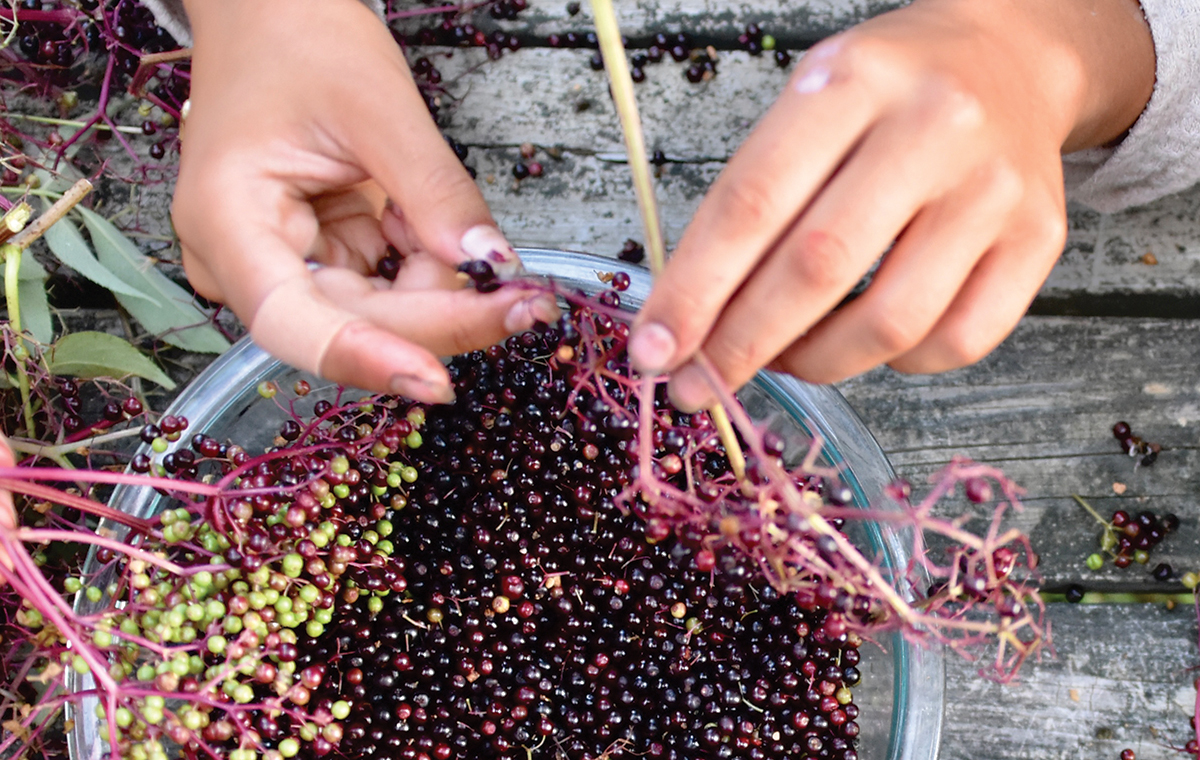
Harvesting elderberries. Photo by Lyric East
Driving along the rural roads of Southern Appalachia in June, you may notice the sudden proliferation of large, creamy-white flower clusters bursting from tall shrubs along meandering streambanks. This is perhaps the easiest time of year to spot the elderberry plant, whose showy flowers readily reveal their wild whereabouts.
Our region is home to two native species of elderberry: commonly called black elderberry (Sambucus canadensis) and red elderberry (Sambucus racemosa). The black elderberry is common and widespread as a cultivated plant. You may find them hanging over garden fences on walks around town in addition to those rural roadsides. I most often encounter the red elderberry growing wild along hikes in higher elevation areas. These species of elder are closely related to their European cousins, linking settlers of the mountains to a long lineage of relationship to the elder plant that pre-dates colonization.
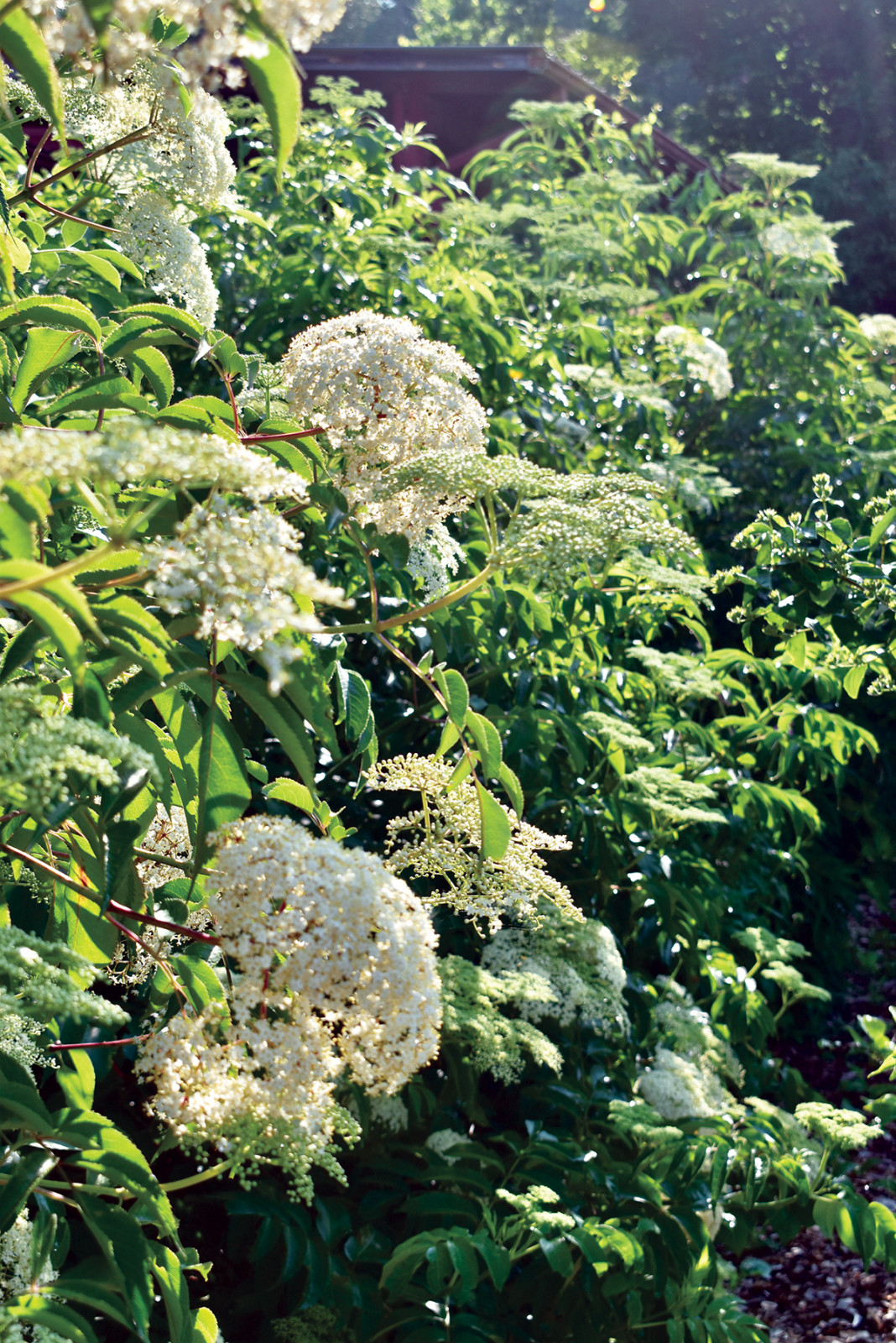
Elderberry in bloom. Photo by Lyric East
This centuries-old relationship has extensively explored the medicinal properties of the elder which, depending on which culture you ask, is believed to offer remedy for a wide spectrum of ailments. While all parts of the plant have been trialed over a few thousand years, the berries receive the most attention nowadays as an accessible, tasty and beautiful medicine-making ingredient. Often touted as a remedy for cold and flu symptoms as well as a general ally for the immune system, elderberries have grown in recognition from traditional folk medicine all the way to grocery store shelves lined with elderberry-infused cough drops.
Although they are native and thus grow well in the region, elderberries are not yet viewed as a commercially viable crop for local farmers. This is largely due to the saturated wholesale market (more than 95 percent of elderberries being utilized in the US come from international imports) as well as the processing labor required to de-stem the berries. Any home grower who has tried their hand at elderberry processing knows how tedious it can be to separate and sort the desirable berries.
Yet, the idea of a native crop that is both perennial and medicinal is an enticing challenge—and there are several farms in the area that are experimenting with elderberry as part of their farm economy and ecology.
Darby Farms of Rutherford County embraced elderberries as an opportunity a few seasons ago. “In winter of 2018, my wife Jeni was making her annual gallon of elderberry syrup for our family,” says Daniel Dover, co-owner of the farm. “Knowing how much it had helped us, she wanted to share the healing powers with other families. She made one post on a Facebook locals group, and within three days, she had over 300 messages asking how to buy the syrup.”
The farm chose to follow that bubbling enthusiasm and pursue a unique niche crafting and selling elderberry syrup as a medicinal wellness product. The timing felt right, as the benefits of elderberry were becoming more widely known and the Dovers were looking to pivot from raising pastured poultry. By providing ready-made syrups that incorporate a robust list of additional medicinal ingredients, the farm offers families a convenient and reliable source of medicine all year round.
If you enjoy crafting cauldrons of elixirs from scratch, Wild East Farm sells fresh-then-frozen bags of organically grown elderberries straight from the farm so you can explore making your own syrups. We process all the berries by hand and the team certainly agrees that the de-stemming process is quite time-intensive, producing purple-stained fingers as evidence of elderberry devotion.
Cooperative equipment sharing could be a key to successful elderberry production in the region. Soil Shine Farm in Madison County recently acquired a commercial elderberry destemming machine, which its owners intend to allow fellow farmers to utilize for processing their own harvests.
As awareness of and reliance on the many medicinal attributes of the elder plant continue to grow, local farmers will undoubtedly rise to the occasion to provide sustainably grown and produced elderberries and infused products. Keep an eye out at local farmers markets, as well as roadsides if you would like to meet the elder plant yourself. And of course, remember to stock up on elderberry medicine for an enduring winter wellness ally.
Find Darby Farm’s full line of elderberry syrups, as well as other wellness products, online at DarbyFarmsWellness.com. Frozen elderberries and other farm-grown foods are available from Wild East Farm weekly at the North Asheville Tailgate Market and RAD Farmers Market. Lyric East is an artist, writer and owner of Wild East Farm. Find her photos and quarterly publications at WildEastFarm.com.