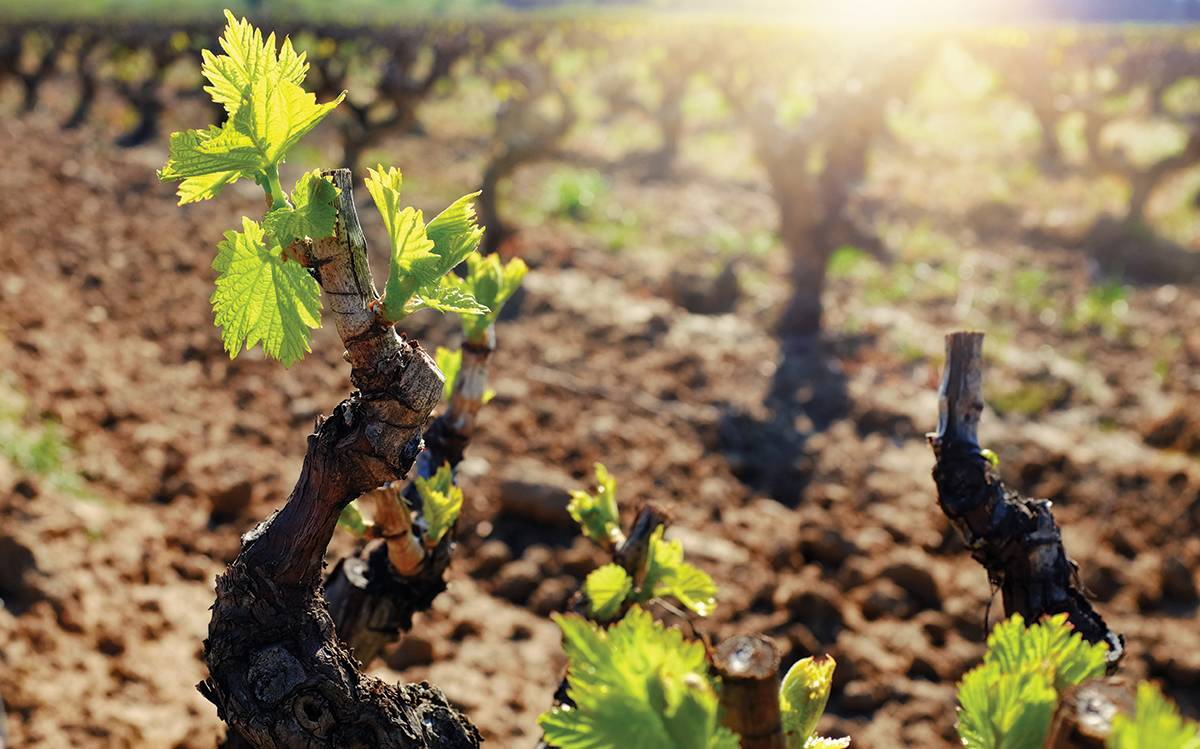
Close up of new grapevine shoots growing in vineyard.Colorful leaves with backlight from sunset.
By Elspeth Brown
One of my favorite restaurants in Charleston, SC has a stellar wine list. But what I enjoy most about choosing wine when dining there is the way the list is structured. All the wines from Champagne to Cabernet Sauvignon are listed by soil type. It was the first time I had ever seen a wine menu arranged that way. The wines were grouped in four different soil categories: Alluvial, Igneous, Metamorphic and Sedimentary. I was so impressed and intrigued that I started having soil series wine tastings. Each Friday night for a month, we pour wine only grown in a certain soil. Each week you get a chance to taste what grapes grown in a particular soil taste like. It has been a while since I have conducted it, but we are bringing the soil series tastings back this month.
Considered by winemakers to be a perfect combination, alluvial soil—composed of sand, clay, silt and gravel—is nutrient-rich. The soil is fertile and full of minerals, but it drains well to help promote deep roots. Alluvial soil can be found in Rioja, Burgundy, Bordeaux, Alsace, Napa and Mendoza.
Igneous soil is always popular with wine aficionados because of the interesting, cool, rich wines mostly grown in volcanic soil. This soil does it all. It drains well, but retains water. It holds heat, and is great for warmer regions. Plus, the high acid in the soil produces beautiful acidity in wines. Some famous wine-growing areas with igneous soil are Sicily, Napa, Beaujolais and Santorini.
Rocks subjected to intense heat and pressure create metamorphic soil. The soil will typically be made up of either shale, slate or schist. These soils absorb heat well and/or can reflect the sun, so it is great for a cooler climate. All of these factors go into producing structured, mineral-driven wines. Metamorphic soil can be found in areas such as Mosel, Priorat, Central Otago and Russian River.
Sedimentary soil, or sandy soil, might not sound as flashy as other soils, but it has a lot of great selling points. The soil is porous so it drains well, since roots generally sitting in stagnant, waterlogged soil will rot. Phylloxera, an aphid that lives on and eats the roots of grapes, cannot survive in sand, making it a clear choice for winemakers. South Africa, Barossa Valley and the Dao region of Portugal are all famous areas for sedimentary soil.
I get so excited about exploring soil and rocks! I think they are so intriguing, and the history behind each rock can tell quite a story. Whether you are a nerd about soil and rocks like I am or not, you can see how important it is for a winemaker to have just the right soil for the wine they plan to produce. Terroir, or land, can make or break a vineyard. Each soil adds a different aspect and layer to the wine. Half the fun is figuring out which soil and style you like most. Enjoy!
Elspeth Brown is the owner of Maggie B’s Wine & Specialty Store, 10 C South Main Street in Weaverville. For information, visit MaggieBsWine.com or call 828.645.1111.