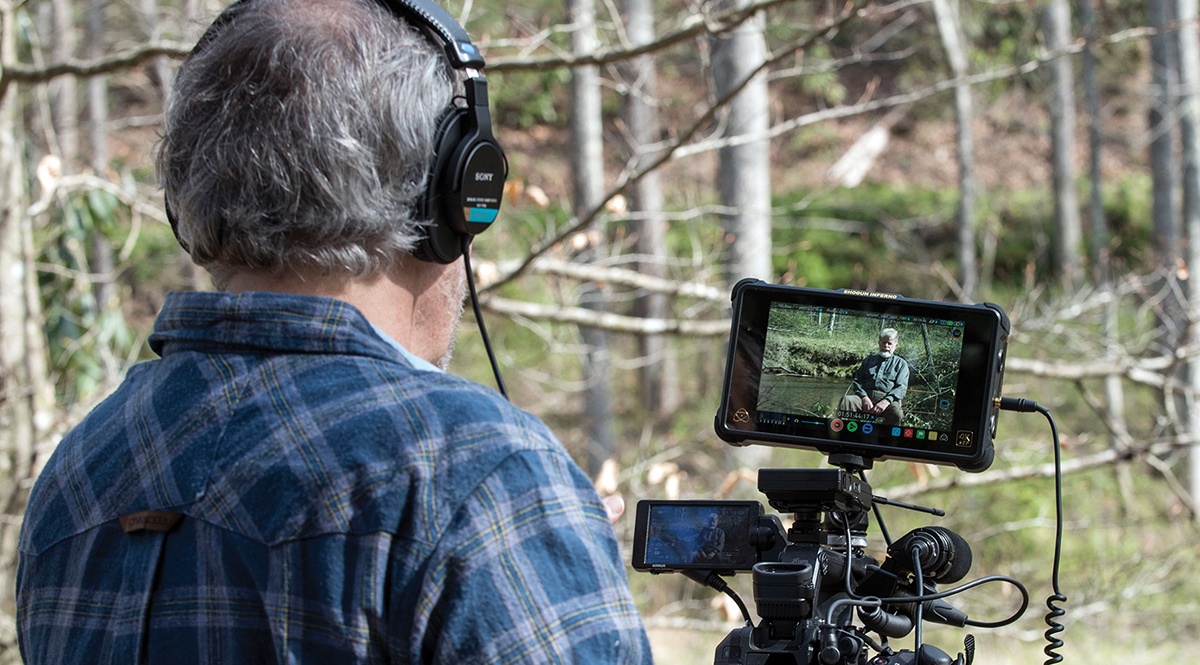
Filmmaker David Weintraub interviews David Whitmire in Rosman
By Natasha Anderson
The Center for Cultural Preservation (CCP), in Hendersonville, has begun a project to preserve its treasure chest of nearly 500 oral histories and make them available to the world through its website and through repositories around the country including the Library of Congress. CCP expects to complete the cataloging and digitization in 2022 and begin uploading the oral histories to the website and providing them to repository partners in 2023.
“History keeps us grounded, gives us a sense of place and connects us to a long chain of generational wisdom,” says CCP executive director David Weintraub. “Making these stories more accessible to the nation and the world puts the spotlight on elder wisdom in the Western North Carolina mountains.”
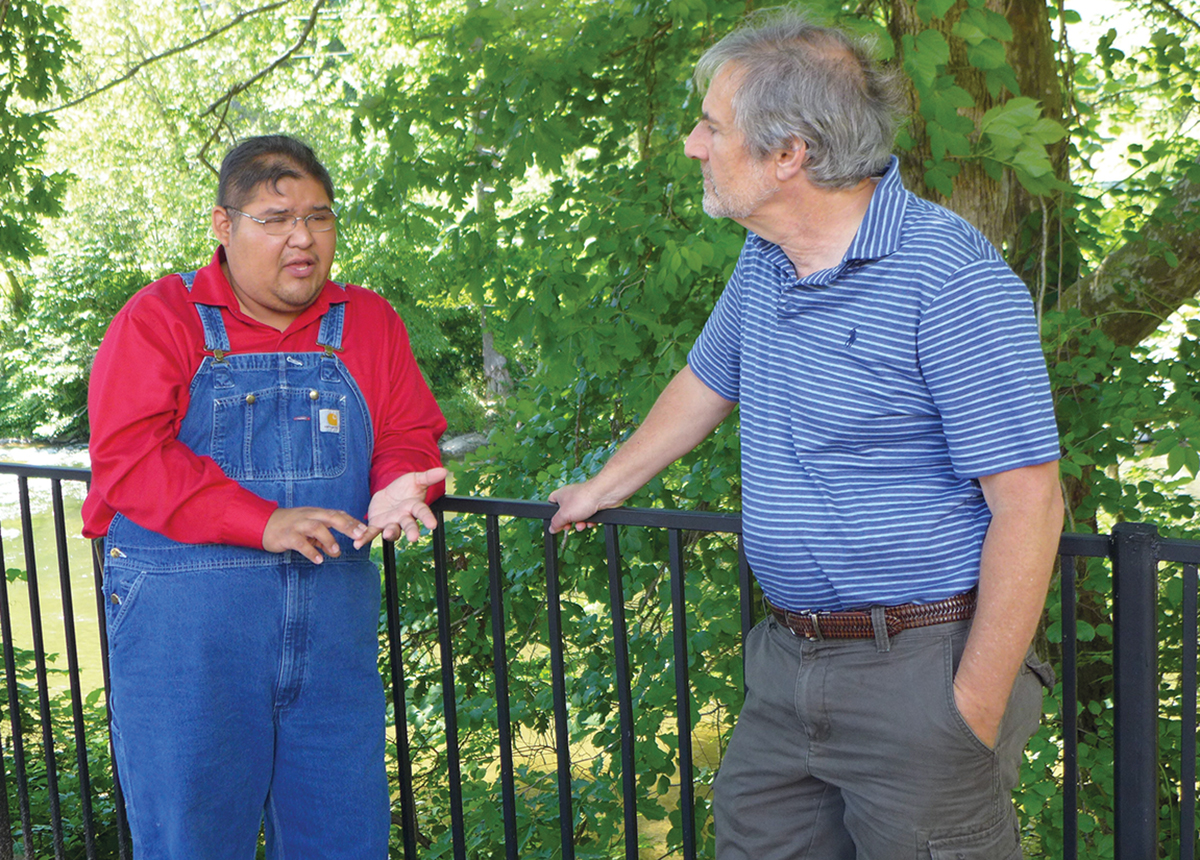
David Weintraub interviews Matthew Tooni in Cherokee
These hundreds, if not thousands, of hours of oral histories and associated B-roll film were collected by CCP and its volunteers over more than a decade. Hundreds of oral historian interviewees were discovered through word of mouth, introduction by past interviewees, connections through previous projects and through media publicity. According to Weintraub, many called to share their story after seeing some of the 40-plus films the Center produced over the years.
“They would tell me their story was just as important as the film they watched on PBS,” says Weintraub. “And they were right.”
Much of the media designated for the project is old and rapidly deteriorating, making the need to index, catalog and organize it a time-sensitive undertaking. Stories gathered include those of molasses makers, moonshiners, healers, spiritual people, textile workers and farmers. They include Cherokees, African Americans, Latinx and people from the British Isles.
“There are stories of people who were connected closely with their community, their land and their faith,” says Weintraub. “And stories of institutional racism and how some suffered no matter how hard they worked to be accepted as a crucial part of this community.”
CCP has established a relationship with the Library of Congress, with University of North Carolina’s Oral History Program in Chapel Hill, and with local institutions including Brevard College and North Carolina’s Western Regional Archives. These organizations and others will have access to the materials.
North Carolina Humanities and the Perry N. Rudnick Endowment Fund provided initial grants to kick off the project. CCP seeks additional funding and volunteers to complete the work of preserving, organizing and making the archives accessible.
“History is people—how they lived their lives, made do with the riches of the land, turned nothing into something, overcame famines, pandemics and floods and never gave up,” says Weintraub. “These stories give us a sense of peace that all the hardships have already been faced and people have already figured these things out.”
Learn more at SaveCulture.org or by calling The Center for Cultural Preservation at 828.692.8062.