By Casey First
The Barn Owl (Tyto furcata) is one of the oldest, most iconic and most widely distributed owls in the world, found on every continent except Antarctica. It is renowned for its unmistakable appearance that is characterized by a heart-shaped facial disc and pale white face outlined by a dark brown border. They have lanky, long legs, a body sporting various hues of white feathers accented by dark-brown speckles and wings full of browns and hints of gray.
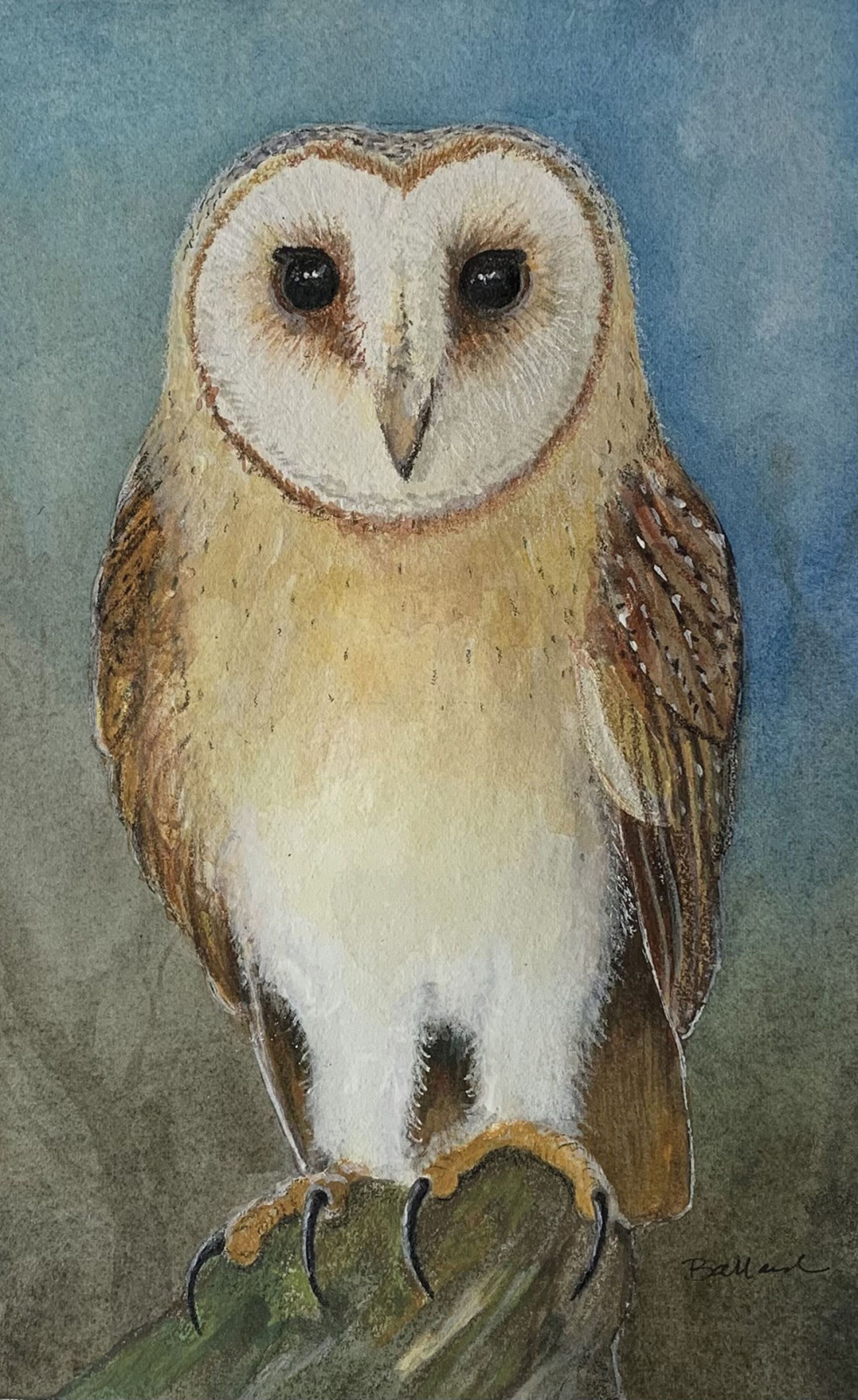
David Ballard, artist
The Barn Owl has a rich tradition in many cultures and is well-known in folklore and mythology, symbolizing mystery, wisdom, protection and even death. Like other owl species, the Barn Owl is the superhero of avians, graced with an acute ability to hear and see like no other. Nocturnal by nature, they hunt under moonlight and have an uncanny ability to fly buoyantly and effortlessly, descending upon their prey in a hushed and eerie silence. Unsuspecting field mice and other small mammals that scurry in the same open fields and vast expanses where these owls live make delightful prey.
Barn Owls are, however, very adaptable to a variety of different environments and can be found in deserts, marshes, woodlots and even in some congested cities. As their name indicates, they love barns and other abandoned buildings. Much like snakes, these owls swallow their prey whole, and to give their digestive tracts a break, they later cough up pellets of the digested food. These pellets have long been observed by scientists to better understand owl behaviors and to track their place in different ecosystems throughout the world.
One thing that remains constant wherever in the world we observe these owls is their signature sound that is not the hoot we might expect. Sounding more like a distressed scream, they give off short and sudden spurts that are sure to make your heart skip a beat. For all the lack of appeal in their call, these birds of prey, at the top of the food chain, make up for it with their contribution to maintaining biodiversity through small-animal population control.
Sadly though, their own population is at risk—primarily due to human intervention through loss of farmland, the introduction of rat poison and road construction. The good news is that we can do our part here in Western North Carolina. Try putting up a nestbox and keep their food safe by keeping toxic chemicals off your list. When not occupying a nest box, Mama Owl will make her nest in cavities of trees and in crevices located in many diverse areas, including burrows on the sides of water, large overhangs below cliffs and even in manmade structures like church steeples.
Once a nesting location is found, the same or different owls may use it over and over through the years. The Barn Owl will have between just a few to close to 20 eggs per clutch, and will lay eggs about twice a year. So, once they find a nesting box in your own backyard, you may be blessed with baby owls for years to come. Watch out: the teen Barn Owls can get rambunctious!
Casey First is owner of North Asheville Wild Birds Unlimited, located at 946 Merrimon Avenue, Suite 120. Monthly bird events are free and open to the public, with no registration required. To learn more, visit NorthAsheville.wbu.com. Artist David Ballard lives in Candler. Find his work on Instagram at d.ballard.art.