By Elaine Smyth
Despite its harsh-sounding, utilitarian name, Appalachian ironweed (Vernonia glauca) is a showy plant, with brilliant purple flowers that light up a garden. Like goldenrod, Appalachian ironweed is a member of the Asteraceae, or daisy, family and provides an important source of nectar for late summer bees and butterflies. Even hummingbirds have been known to stop and sip!
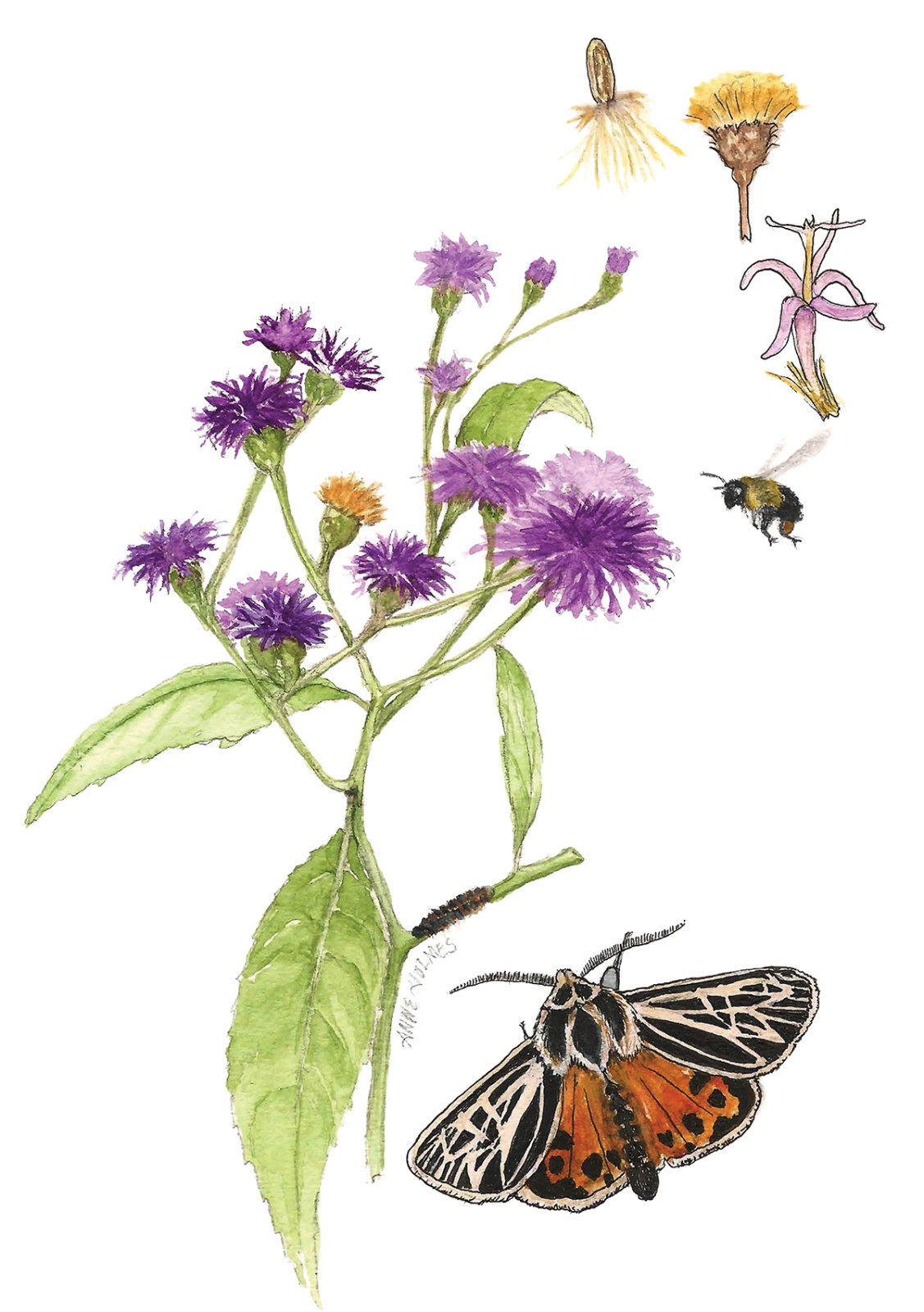
Anne Holmes, artist
Caterpillars of many moths, including the American painted lady (Vanessa virginiensis) and the Parthenice tiger moth (Apantesis parthenice, pictured), feed on its leaves. Some bees, such as the eastern ironweed long-horned bee (Melissodes denticulatus), are dietary specialists that forage for pollen almost exclusively from ironweed. Bees also use its hollow stems for nesting, and many birds eat its seeds during winter.
Appalachian ironweed thrives in indifferent soil and tolerates drought, making it an excellent option for a sunny slope or rock garden. It typically grows to a height of four to five feet, with a spread of three feet. It can be cut back severely in spring and again several times during summer to encourage bushy growth and increase flowering in the late summer and fall. (It has a tough and tenacious root system, so don’t let plants get started where you don’t want them!) In addition to producing vibrant fall color, ironweed offers a lot of winter interest in the garden. Its tough stalks remain upright, carrying golden-brown seedheads that turn into tiny constellations of silvery star-shaped “flowers” after birds and winter winds have removed the seeds.
In Western North Carolina, Cherokee people have long used a tea made from ironweed roots as a blood tonic to relieve abdominal cramps, regulate menstruation and ease post-childbirth recovery. Poultices from root infusions were also used for pain. Its tough stalks have also been used in bedding and basket making.
There are, in fact, three species of ironweed common to WNC: New York ironweed (Vernonia noveboracensis), giant ironweed (Vernonia gigantea) and Appalachian ironweed, the smallest and least common of the three. All are worthy additions to any native plant or pollinator garden.
Upcoming Events at Asheville Botanical Garden
Learn more and register for classes online at AshevilleBotanicalGarden.org.
Sunday, October 4 ~ Fall Bird Walk, with Dr. Andrew Laughlin – Free
Tuesday, October 6 ~ Collect Native Seeds to Plant Next Year, with Sarah Coury (C.P.A. series)
Saturday, October 17 ~ Autumn Edible Plants, with Roots Marshall – Free
Asheville Botanical Garden congratulates the North Carolina Native Plant Society on its 75th anniversary! Learn more at NCWildflower.org.
Asheville Botanical Garden, 151 W.T. Weaver Boulevard, is an independent nonprofit public garden showcasing 750+ species of native plants on 14 acres. Its mission is to promote and showcase the value and diversity of plants native to the Southern Appalachian region by serving as an educational resource and urban destination for nature study and enjoyment. Supported by members, donors and volunteers since 1960, the Garden is open daily, sunrise to sunset, year-round, free to all The ABG Visitor Center and Gift Shop are open 10 a.m. to 4 p.m. daily, featuring local products, garden-themed art, toys, tools, cards and books.